
Everybody's talking about taste. It's the word of 2026. And really, it just means a human looked at the problem and imagined something better.
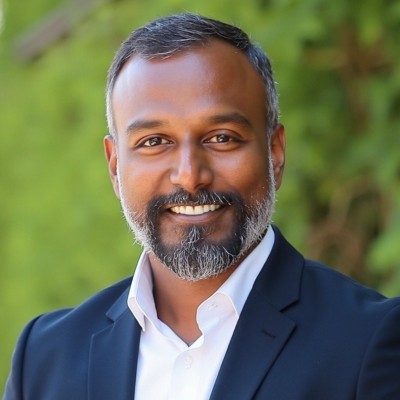 Philip SamuelrajFounder & CEO, Techjays
Taste is a design word. You look at a logo, a layout, a line of copy, and something tells you whether a person cared or a template filled the space. For the past year it's been tech’s favorite word, and it's stayed almost entirely in that lane. It's invoked when speaking about creative work and an eye for design that AI could never match. But as the frontier LLMs improve in all domains, practitioners at the forefront of implementation have had to evolve the ways they interact with it.
For Philip Samuelraj, "taste" has nothing to do with designs and logos. The power of the skill is in the technical calls. He is the Founder and CEO of Techjays, a firm that re-engineers entire companies to run on AI. He got here by way of Google, where he ran large language model products, including one of the company's first consumer-facing conversational AIs. He's been chewing on taste for weeks now, and says most of his internal meetings lately circle back to the same question: when every company runs some AI system that reliably gets the work done, what's left to compete on?
Samuelraj's firm maps every workflow in a business down to inputs, a processing step, and outputs, and the map is rigorous. But the map still leaves choices open, including how far to push the reimagining, where a human stays in the loop, and what counts as a result worth shipping. Those don't come off a spreadsheet. Judging them well is taste, and right now, he thinks it's scarce. "Everybody's talking about taste. It's the word of 2026," he says. "And really, it just means a human looked at the problem and imagined something better."
His answer comes down to the quality of the decisions made while a company is being rebuilt. Better models and faster processes will soon be available to everyone, so the judgment will make the difference. The skill is reading where the technology is headed and building for that. "Can you understand where the frontier is moving? That's where creativity is needed, in every single field," he says.
Knowing what's worth building
For years, bringing in an outside firm meant installing someone else's software and living with whatever it couldn't do. Samuelraj says that era is closing. At Techjays, "reimagination," not just transformation, is the name of the game. "It's a business problem, not a technology problem," he says. "It's our job to coach companies to get there. It's basically, how can we help companies create outsized value, and then capture some of it?"
The coaching opens with what he calls "the art of the possible," helping leaders recognize that, as he puts it, "the business doesn't need to have the same workflows in the reimagined AI world." Deciding which to keep and which to tear out is a judgment call. Leaders could obsess over this themselves, in principle, but the frontier moves too fast for someone running a construction firm or a logistics operation to track it and rebuild around it at the same time.
That's the room Samuelraj walks into: the practitioner who already knows what this week's tools can do. But knowing what's possible is only the entry fee. The scarce thing is the ability to decide which version is actually worth building. That's taste.
First off the line
Right now the payoff is concrete. Reimagine the stack, hand the clarified work to AI agents, and revenue and margin move. "Some of the companies will reimagine themselves early," Samuelraj says. "They're going to have an undue advantage, they'll do very, very well. Some of the leaders of today aren't going to be able to do it." He's watched a shift punish the slow before. "Digital transformation was brutal on existing companies," he says, and plenty of the names that topped their industries a generation ago didn't survive it. "Many of them are history."
A rebuilt stack is a lead with a clock on it, though. Eventually a whole field runs on more or less the same AI operating system, separated by inches, and the systems stop being a point of competition.
Playing the long game
What Samuelraj is describing goes past AI or enterprise transformation to a broader reinvention of the business, where leaders need the taste and creativity to stand apart long after the underlying technology has caught up. "AI will take care of a lot of the rote work," he says, "but the creativity, the context, the human connections, those are the skills that will be valuable." That's taste again, under another name. And it's the rare part.