

It's almost like a little bit of a magic trick. The customer doesn't need to see how we're shuffling the cards. They just need to know we're pulling their card every time.
 Brian HandleyPresident, Independent Foodservice Distributor
Foodservice distributors all sell much the same food to much the same restaurants. The people a restaurant deals with are what separate them, like a driver who fixes a problem at the dock and the sales rep who goes above and beyond taking down an order. Ordering apps took over much of the administrative burden, and the freed-up hours gave many distributors a reason to cut the sales force. One distributor used those hours to add salespeople instead, and that choice set the test for everything it bought afterward.
Brian Handley is president of an independent foodservice distributor that also runs a protein manufacturing plant, a third-party logistics business, and a retail market. Handley spent two decades in operations before taking the presidency, overseeing the spirits portfolio and East Coast winemaking at Constellation Brands, and distribution and transportation at Wegmans and Raymour & Flanigan. Handley also advises and sits on the boards of food and beverage technology companies.
"It's almost like a little bit of a magic trick. The customer doesn't need to see how we're shuffling the cards. They just need to know we're pulling their card every time," says Handley. He judges every potential new software system by the same measure. Routing, warehouse selection, and production all run underneath a single delivery, and a customer places one order against all three.
No room on price
Diesel drives more of Handley's cost base than fuel alone, in indirect costs as well as direct ones. "The rising cost of packaging materials is because of increased diesel, the rising cost of food itself is because of increased diesel. Most of our food is transferred via truck," he says.
The national cattle herd is at a 60-year low, tightening supply while demand holds. Handley expects the middle meats, tenderloins and ribs, to climb further as the holidays approach. "We are very heavily focused on protein, and a lot of that is our very close relationship with Certified Angus Beef," he notes. "Beef is at an all-time high right now. It's insane."
The business is smaller than the big competitors it sells against, and Handley asks every associate to act like an owner with their biggest customer. "We're privately held, we have no private equity, we're not publicly traded, so we can't differentiate ourselves on the buy side, meaning we're not going to be the cheapest in the market," he says. "What we can do is be the best when it comes to quality and service."
The app that added salespeople
Ordering software reached the category around the time Handley became president, and his company went a different way with it than most of its competitors. "When I joined the company six years ago, we were still using our ERP systems, a blue screen of death Linux system. We were opening up the laptop in front of the customer, inputting orders," he explains.
The apps his competitors shipped looked like consumer e-commerce, with product photography and nutrition data on every item. "In doing so they were justifying the cost by decreasing headcount," he says. "Each individual sales rep, maybe they had 30 customers before. Now, they were expected to cover 90 customers and force the customer onto the app."
The business built its own ordering app with a software company that builds them for independent distributors, and restaurants now place their orders through it. "Since rolling that out, we've increased our sales force by about 30%, because it's taking all of the menial tasks away from the day to day that is not driving value at the customer level," notes Handley. "If I'm a sales rep, instead of opening up my laptop, inputting orders, checking inventory, I can sit in front of a customer and ideate menu offerings or help them with plate costs."
Reimagining it means breaking the role into tasks, sending the repeatable ones to software, and building what’s left around judgment and the customer relationship. When a company gets that right, the freed-up hour comes back as revenue, not a smaller team.
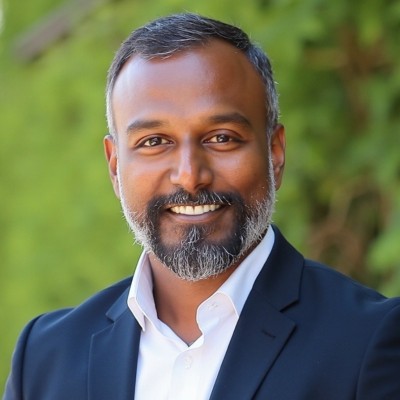 Philip SamuelrajFounder & CEO, Techjays
Philip Samuelraj, Founder and CEO of AI services company Techjays, works with companies making the same call about which work to automate. “Most operators buy the app and keep the same job description, so the rep ends up doing the old role plus a login,” he says. “Reimagining it means breaking the role into tasks, sending the repeatable ones to software, and building what’s left around judgment and the customer relationship. When a company gets that right, the freed-up hour comes back as revenue, not a smaller team.”
Taking the labor out
Handley's protein plant does a job a restaurant would otherwise pay someone to do. He spent millions on automatic laser cutters there, so the meat arrives already cut to size. "The butcher still has to trim the tenderloin. You've got to take the fat off," says Handley. "Regardless of what people will sell to you, there's no machine that can do that."
A trimmed cut enters the machine, a beam measures its length, and a blade inside cuts individual fillets. Anything boneless works the same way, including top rounds and tenderloins. "We're taking that labor that would normally cost the operator a ton of time and money, and it's really, really hard to hire for that skill set," adds Handley. "To be honest with you, trimming a tenderloin is not driving any value in a restaurant, even in a steakhouse."
Ideas reach Handley through hallway conversations, Teams messages, texts, and quarterly town halls that end with open questions for him and his senior leaders. His cell number is the only one on his business card. "An associate brought to us an idea on a VR headset from a local company that was working with the military and wanted to get into the commercial sector. It's a heads up display that sits in glasses that helps you navigate the warehouse," he explains. "Our warehouse is extremely complex with a lot of individual SKUs. The associates that brought it to us helped demo it, and we reduced our pick time by about 11% for each individual selector that used one."
The hero of the story
Referrals from one restaurant to another are the compliment Handley counts most, and better routing and load plans are what earn them. At the dock, that means an accurate order and a driver who had an easier day. "They just see that perfect order coming to their dock every time, followed up with the sales rep coming in and providing extra value," he notes.
Handley asks the same questions of every proposal, always in the same order. "If it's going to ultimately benefit the customer, that's the first threshold we have to get through. If it's a more efficient accounts payable system, that's probably going to go way down the list, as opposed to something that makes sure that order gets out on time and in full to the customer," he says. Cost comes second, and the private fleet is the biggest one he carries. "Transportation is our number one cost center by far," he adds.
Like Handley, Samuelraj ranks a project by what it does for the client’s own customers. “Rank the work by the number the customer actually feels, and you’re measuring something that survives scrutiny,” he says. “Order accuracy and time-to-fill move retention and referrals, and those hold up in any review. An internal efficiency gain is real, but it’s an estimate, and an estimate is the first number a CFO discounts.”
Accounts run from restaurants to K-12 institutions and universities, and many of the sales reps who call on them came out of those kitchens themselves. Handley promises the same level of service to each account, whatever its size. "A chef's reputation is only as good as the last meal he or she plated. We're here to make sure that they have the utmost confidence when they're plating that meal and it goes out," concludes Handley. "We don't need that guest that came into the restaurant to know our name or to see our trucks. We want the chef to be the hero of the story, and we're just there helping them succeed."
The views and opinions expressed are those of the individuals and do not represent the official policy or position of any organization.