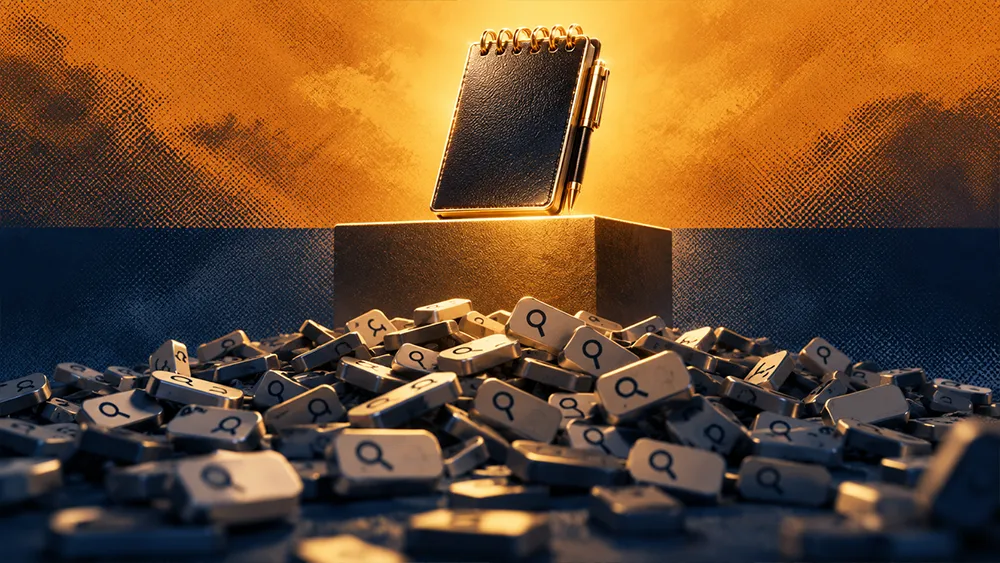
The first mistake brands will make with AI is assuming that the one that automates fastest wins. Every competitor has the same incentive to produce more while spending less, and CMOs surveyed by Gartner expect AI to handle 36% of marketing work by 2028, up from 16% this year. Then every competitor licenses the same models and starts using them for the same work. A thousand extra assets before lunch looks like progress until a competitor produces its own thousand by breakfast, and the most valuable person in the marketing department becomes whoever has the authority to kill nine hundred of them before anyone hits publish.
Emiliano Reisfeld is Chief Marketing Officer for Luxe Uruguay at L'Oréal, where the company has built a large in-house AI content operation. Over more than a decade inside large multinationals, he has led more than 40 teams and scaled e-commerce from zero to 20% of the business. He believes the reason someone picks one serum over another rarely shows up in a cost-per-asset report.
"If every competitor automates at the same speed, efficiency no longer differentiates anyone. It works like a tax on the market, because consumers don't buy a brand for its efficiency," Reisfeld says. A recent economics paper, The AI Layoff Trap, shows how companies racing to automate can thin out the customers they depend on. Reisfeld sees this on the brand side, where every company keeps its own efficiency gains and the whole category pays for it in brands no customer can tell apart. "The paradox is that AI-driven competition doesn't only kill the weaker players. Eventually, it can kill the demand."
Pouring the AI dividend into more output wastes it
Reisfeld would hand the machines everything that eats a marketer's calendar and never earns a slide in the strategy deck. "The value of automation is taking over the tasks marketers don't like to do. Administration, targeting, media campaigns. A lot of work that is boring and takes a lot of time," he says. "The good outcome is having more time to think about why consumers choose my brand, and how to improve that value for them."
Banking part of that gain as margin is a defensible business decision. The failure of imagination comes when a team gets a hundred hours back and pours all of them into producing more. The productivity numbers look great in that scenario, right up until every competitor reports the same numbers, and the category fills up with assets nobody asked for.
Past behavior is getting cheap
Personalization is becoming cheap for the same reason production did, and Reisfeld makes the point with an example. "Machines personalize with past data. Caroline lives in Miami. Caroline has a pet. That's all data from the past," he says. "The job of human marketers is to understand the future, to imagine what Caroline might do next in a different way, a cultural way."
AI is making brands better at knowing who consumers have been while making that knowledge worth less as a differentiator. Every brand running the same models against similar purchase histories gets similar answers about Caroline. The signal worth having hasn't reached the dashboard yet, and catching it means reading the culture around Caroline long before her purchase history moves. "The data of past behavior, we can delegate to the machines," Reisfeld says. "The center of the future of marketing is thinking about how the consumer will behave next."
The experience after the recommendation
Close to half of AI users now start purchase research on a stand-alone AI platform, where an agent can boil two competing brands down to nearly identical recommendations. Reisfeld argues that brands should invest in whatever a recommendation can't compress, like the consultation at a beauty counter or the moment a customer opens the box at home.
"Today, the consumer searches in Claude or ChatGPT for a recommendation. The filter between the consumer and the brand is an agent," he says. "But the lived experience of contact with the brand is what builds the relationship for the future." An agent can win a brand its first sale, and the second one still depends on what Caroline thinks of the experience once the order arrives.
Some friction can make a brand feel human
A decade of one-click checkouts and instant chatbot replies has trained marketers to treat every pause in the customer journey as a defect, but Reisfeld thinks some of those pauses were doing useful work. "We think of AI as a process that's fast and simple. But when a process isn't perfect, the consumer can recognize that a human is behind it, and they value that," he says. "I'd call it friction, not failure, because it's part of the process itself."
He places that human presence in service and sales, supported by what he calls relationship memory, recognizing a customer's history and context well beyond the point of sale. When every brand interaction can be made frictionless, signs of human judgment can become part of what customers remember.
He applies this to creative work as well. "I'm very tired of seeing so much advertising made with AI. People can spot it easily, and they tune it out. We want to see more human content," Reisfeld says.