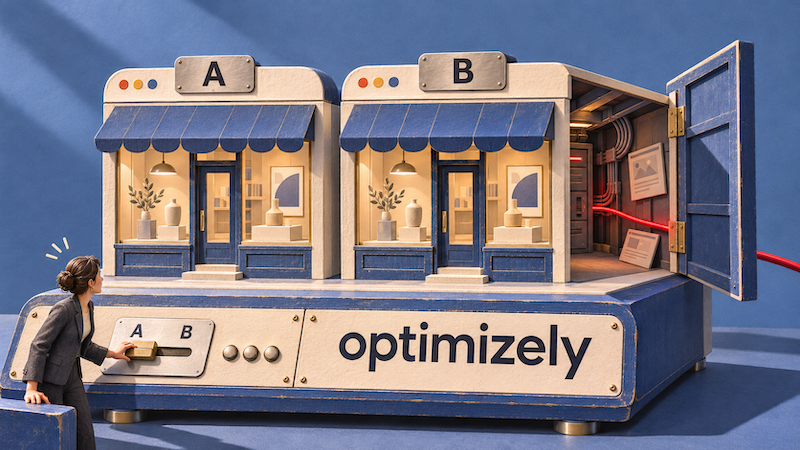
Optimizely sells marketers a way to change their websites without filing a ticket with engineering. On Monday, November 16, an attacker used it to change 178 of them.
The malicious code ran through Optimizely Web Experimentation, the testing platform many large brands load on every page. It reached visitors to Zoom, the BBC, CNN, Salesforce, GitLab, IKEA, HSBC, Equifax, Air France-KLM, Ledger and Peacock, according to Scott Helme of Report URI, who found the campaign. His team checked 1,611 Optimizely snippets and found the code in 188 of them. Optimizely's own websites were hit too.
What the code did
The script swapped crypto wallet addresses on the page and in the clipboard for ones the attacker controlled. Starting in the afternoon (UTC), it also captured card numbers, expiry dates and CVVs typed into forms, and sent screenshots and some cookies back to the attacker. On iPhones and iPads running older versions of iOS, it tried to load exploit kits that Report URI identifies as Coruna and DarkSword.
Helme estimates about $7,040 in crypto had reached the attacker's wallets by that evening. Crypto transfers are public, so that figure can be traced. Card numbers and cookies can't, and nobody has said how many were taken.
Most brands' snippets were cleaned up that night, about 17 hours after the first injection. By 21:52 UTC, Report URI found the code in just one.
Optimizely blames its signup flow
At 01:02 UTC on Tuesday, Optimizely posted an incident notice on its status page saying an unauthorized party had exploited a vulnerability in its Experimentation product and added malicious JavaScript to some customer projects. A spokesperson told Gizmodo the flaw was in the account signup flow, StepSecurity reports. The company says it has fixed the flaw, removed the code, secured the affected accounts and added protections against unauthorized code.
What it hasn't said is how a bug in a signup form gave one attacker edit access to projects at 178 unrelated companies. That's the part that matters, and a status-page note saying the flaw is fixed doesn't answer it.
The attacker never had to get into the BBC's or Zoom's own systems. According to Report URI, it wrote code into Project JavaScript, a field in the Optimizely dashboard where customers add their own code, which then runs on every page of their site. Nothing else in the snippets changed. They were still served from Optimizely's domain with a valid certificate, so browsers loaded them like any other day's Optimizely code.
Marketing owns this tool
At most companies, Optimizely belongs to the growth, CRO or digital team. Marketing usually signs the contract and decides who gets a login. The whole pitch is that those people can push changes to the live site without waiting on a code release. On Monday, the attacker got the same deal.
None of this should surprise anyone who has watched the martech stack this year. In June, OptinMonster disclosed that the scripts behind its OptinMonster and TrustPulse lead-capture tools had been tampered with. In September, attackers used the email marketing platform Brevo to inject malware into websites, potentially more than 100,000 of them, Security Affairs reported. In October, BleepingComputer reported that a skimming group had hijacked a shared Convertr analytics script to steal card data at checkout.
Customers won't blame Optimizely, either. Most have never heard of it. They were on HSBC's site, or Equifax's, or Ledger's, a company that sells crypto security for a living.
What CMOs should do now
Brands running Optimizely Web have cleanup to do first. Report URI and StepSecurity both tell site owners to read their Project JavaScript and experiment code by hand, check which users, API tokens and integrations can edit it, and rotate credentials. They also say to assume any card details typed into the brand's own forms on November 16 were exposed. Ask Optimizely to confirm in writing which of your projects were changed, and when.
Every other brand should audit the tags on its site, and soon. Most marketing teams couldn't produce a complete list today. Scripts get added for a campaign or by an agency and stay long after anyone remembers why. Once you have the list, find out who can change each script without going through engineering, and make sure those logins use single sign-on and two-factor authentication.
Checkout and login pages need the strictest rules. Report URI advises keeping third-party scripts off them where possible and using card fields hosted by the payment provider. On Monday, cards entered in those hosted fields were out of the skimmer's reach.
Some brands already had a defense in place. Report URI found that a strict Content Security Policy, a setting that limits which scripts a page will run, blocked the payload at 24 of the organizations it checked. If you don't know whether your site has one, ask your web team this week.
Finally, decide before the next incident who gets to pull a tag when a vendor is compromised. Marketing usually owns the contract and security usually owns the response. Those two teams should agree on the handoff now, while nothing is on fire.
What we still don't know
Optimizely hasn't explained how one signup flaw reached so many accounts, and no one has counted the cards or cookies that were taken. On the iPhone side, researchers note that their scans show the exploit kits were served, not that any device was compromised. It's also unclear whether the affected brands plan to notify customers.
Our take
Optimizely owes its customers a real postmortem, one that explains how a signup bug turned into write access across 178 companies. Brands shouldn't wait for it.
Testing tools were sold to marketers as a way around engineering, and marketers bought them for that reason. The risk came with the purchase. Any CMO who can't say who holds the login to their testing tool should find out before the next vendor posts an incident notice.