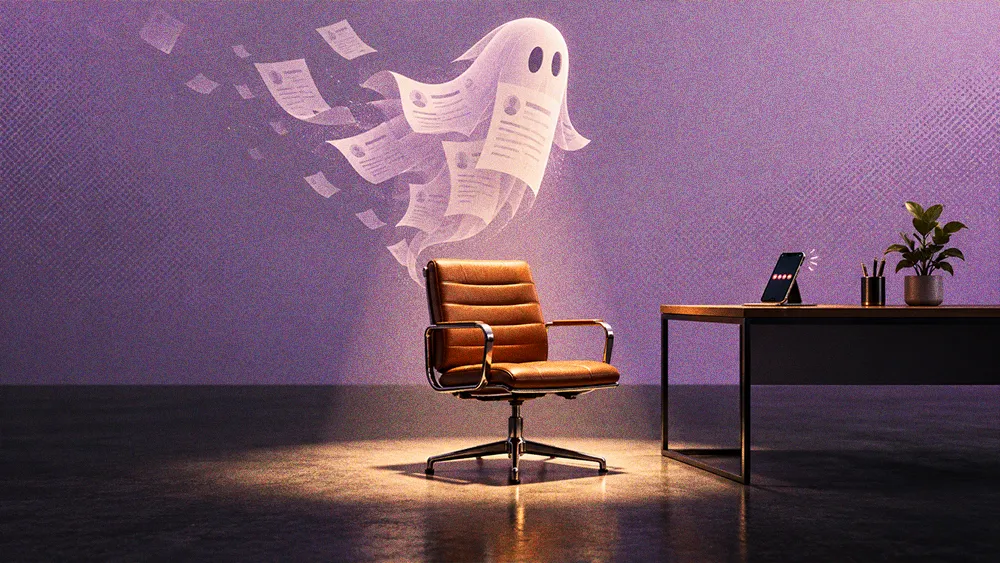
In early 2026, Aerie, Equinox, and Almond Breeze ran ad campaigns that called out AI slop and tech gimmicks by name. Apple TV's hit series Pluribus, from Vince Gilligan, added "This show was made by humans" to its end credits. iHeartMedia launched a "guaranteed human" campaign, promising no AI-generated personalities or AI-generated music. Their research found 90% of listeners, including people who personally use AI tools, want their media made by real people.
Across New York, subway ads for the AI wearable "Friend" have been repeatedly vandalized with messages like "AI is not your friend" and "talk to a neighbor." The Canadian newsroom The Tyee committed to rejecting AI-generated journalism. Pinterest's move toward AI has been pushing away its most dedicated users. Someone built a browser extension called Slop Evader that filters search results to pre-2022 content, drawing a line between the human past and the synthetic present.
This is not a prediction. It is already happening, and the consumer data says the sentiment is accelerating faster than most marketing teams realize.
The Audience Is Checking Out
Only 19% of users in 2026 say they feel excited about AI. Two years ago that number was 50%. 54% of Americans report AI fatigue. Nearly half of consumers now prefer brands that avoid using generative AI in anything customer-facing. 59.9% of consumers doubt the authenticity of online content. And 52% reduce their engagement the moment they suspect content was AI-generated.
More than half of your audience mentally checks out when they sense a machine wrote what they're reading.
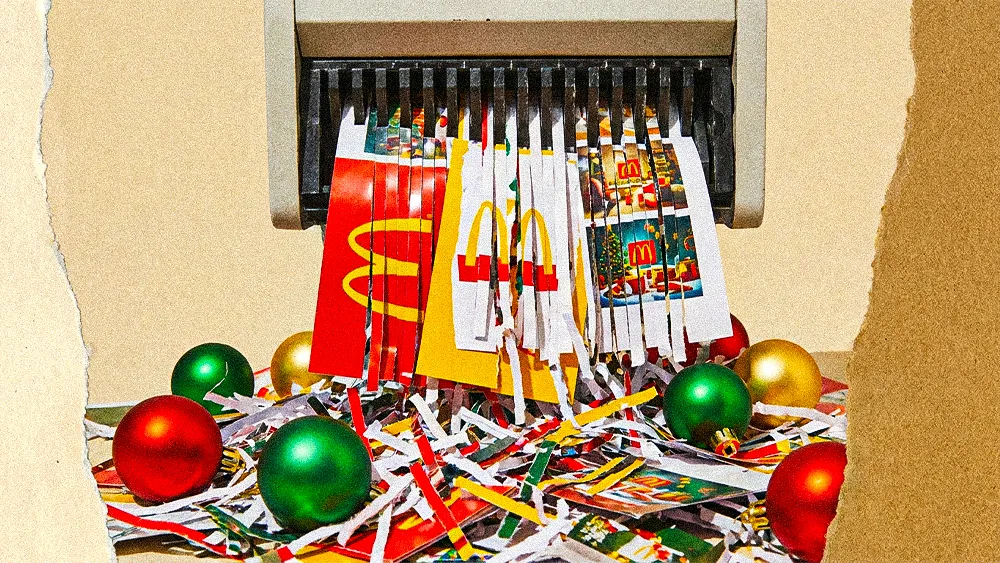
McDonald's Netherlands pulled its AI-generated Christmas ad after the backlash became impossible to ignore. Comments called it "AI slop" and said it "ruined my Christmas spirit." The production company defended the work by pointing out that ten people worked on it for five weeks. A critic from Bomper Studio fired back: what about the actors, the choir? Ten people on a project like this is tiny compared to shooting traditionally.
That exchange captures a contradiction the industry has been ignoring. The companies producing AI content tell the public it takes just as much effort as traditional work. They tell investors it eliminates the need for human labor. Audiences are paying attention to both pitches, and they're noticing that both can't be true.
We Were Writing About This Before It Had a Name
In Every Company Now Sounds Like ChatGPT, we documented what we called the Great Flattening. Barron's found 73 corporate documents using the identical sentence construction in a single quarter. AI didn't just speed up content production. It flattened the voice out of it. Every company started sounding identical because every company was running its communications through the same models.
The anti-AI brand movement is the market's response to that flattening. When everything sounds the same, the brand that sounds different wins. When every feed is full of smooth, frictionless, obviously algorithmic content, rough edges and real voices become trust signals. When "slop" was named word of the year, "made by humans" became a market position.
MindStudio calls this the "human-made premium": the extra value consumers assign to work when they know a person made it. Higher willingness to pay. Stronger trust. A competitive position in categories being flooded with AI-generated sameness. The parallel to organic food is exact. "Organic" never meant that every non-organic product was dangerous. It meant consumers would pay more for something they perceived as more authentic. "Human-made" is on the same path.
Moat or Moment?
This is the question every brand leader should be asking, and the honest answer is that it comes down to whether you actually commit or just perform the positioning.
If "anti-AI" is a tagline that runs for a quarter before the company goes back to generative tools for everything, it will be exposed. Consumers are not stupid. They will see the gap between the claim and the reality, and the credibility damage will be worse than never making the claim in the first place.
If "human-made" is built into how the company actually operates, woven fully into the creative process, reflected in the team, visible in the output, it becomes a differentiator that strengthens as AI content floods every channel. The brands that commit at an operational level will own a market segment that AI-first companies cannot access by definition.
The smart play is not to reject AI entirely. It is to use AI behind the scenes, for targeting, personalization, analysis, timing, optimization, while keeping everything customer-facing unmistakably human. The brands winning in 2026 are doing the operational piece aggressively while protecting the creative piece carefully. AI runs the decisions. Humans create the content. The consumer never sees the machinery. They only see the craft.
This Is the Owned Media Argument in a Different Frame
Everything we have written about owned media leads to the same conclusion. Owned media works when it carries a real point of view. When the voice is specific, earned, and human. When readers can tell that a person with real expertise and real conviction wrote it.
AI-generated content, by definition, has none of those things. It is trained on averages. It produces medians. It cannot hold a point of view because it hasn't lived one. This is exactly why companies that build editorial operations around human writers, editors, and subject matter experts, the model Outlever was built on, produce content that outperforms the AI-generated alternatives flooding every channel.
The anti-AI brand movement represents not a rejection of technology, but a market correction. The supply of AI content exploded. The value of human content went up. The brands that recognized this early and built their content programs around human expertise are going to own the premium positioning while the rest of the market figures out what just happened.
The question for every brand in 2026 is not whether to use AI, It is whether your audience can tell.