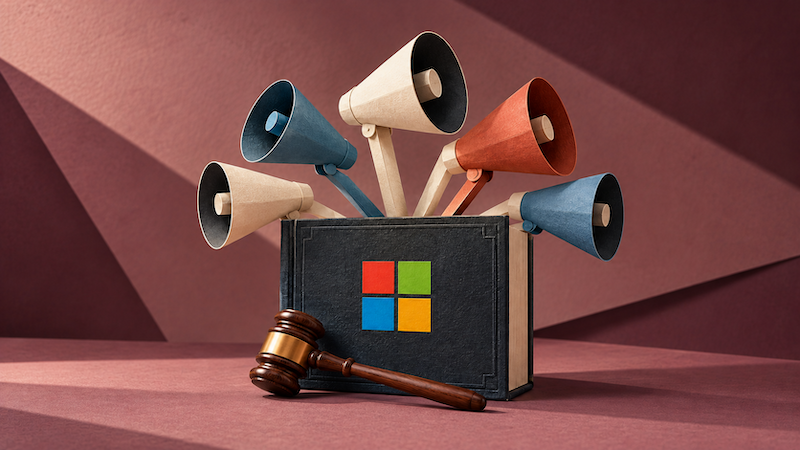
On September 25, Billy Porter will walk onto the stage of the Broadhurst Theatre on West 44th Street and sing about accounts payable.
Ramp, the corporate spend management company, announced this week that it will present Bill Pay The Musical, an original musical comedy, for a single performance. Porter, who won his Tony for Kinky Boots, leads a cast that includes Billy Zane and Jessica Vosk of Wicked, with Rema Webb playing a character named Rampa. Kevin Zak wrote the book and Jason Michael Snow wrote the music and lyrics. Keaton Wooden directs, and Antoinette DiPietropolo choreographs. Admission is free with an RSVP, and black tie is optional.
The show is built around one joke, and Ramp has committed to it completely. It is a show about bills, starring as many Bills as the company could find. Jessica Vosk is not technically a Billy, so the LinkedIn post announcing the show simply called her Jessica Billy Vosk. The show's website goes a step further and lists Billiam Shakespeare among the stars. Zane, as it happens, has played a Broadway Billy before. His only previous Broadway credit, according to IBDB, is a run as Billy Flynn in Chicago in 2002.
Eric Glyman, Ramp's co-founder and co-CEO, has described the project as a revival. In his statement, he pointed back to the postwar decades, when major American companies regularly staged big-budget musicals about their own products, and then added, "Somewhere along the way, we lost our nerve."
The history he's referring to is one of the stranger and more charming chapters in American business.
When companies put on Broadway shows
From the 1950s into the 1980s, companies including General Electric, Ford, Chevrolet, Oldsmobile, Xerox and American Standard staged Broadway-style musicals at their sales meetings and conventions. They hired serious talent to write and perform them. Sheldon Harnick and Jerry Bock wrote Ford-ify Your Future for Ford's tractor division in 1959, a few years before they wrote Fiddler on the Roof. John Kander and Fred Ebb wrote songs for GE. Bob Fosse choreographed industrials, and Chita Rivera and Martin Short both performed in them. Florence Henderson headlined an Oldsmobile show nearly every year in the 1950s, and some industrials were staged in Broadway theaters, which makes the Broadhurst a fitting home for Ramp's.
The budgets could be staggering. The composer Hank Beebe recalled that his first Chevrolet show, in 1956, had a $3 million budget, in the same year My Fair Lady opened on Broadway for $446,000. Dava Whisenant, who directed the 2018 documentary Bathtubs Over Broadway, has suggested that the Chevy money probably covered taking the show to sales meetings in several regions. Even spread across a tour, it was a remarkable amount to spend on a musical about cars.
These shows were almost always private. Companies staged them for their own sales forces, sometimes as a reward for a strong year and sometimes to build excitement for a new model, and the public was never supposed to see them. Most of what survives comes from souvenir records pressed for the people who attended. Steve Young, a longtime writer for David Letterman, spent about two decades hunting those records down, starting in bargain bins, and his search led to a 2013 book, Everything's Coming Up Profits, and to Whisenant's documentary. For Young, the holy grail of the genre is American Standard's 1969 production, The Bathrooms Are Coming! The genre keeps finding new fans. An industrial musical turned up in The Marvelous Mrs. Maisel, and Young's book is in development as a feature film.
A show for the finance team
Ramp has kept the spirit of those shows and changed who they are for. Its press notes say Bill Pay The Musical was "created for the finance leaders" who keep a company's invoices paid on time, and anyone can request a seat.
That choice fits neatly with something we wrote about earlier this week. In G2's 2026 buyer research, nearly half of B2B software buyers said they had seen a CFO reverse a purchase their company had already approved. Finance now has the final say on a lot of software, and most vendors try to win that approval with spreadsheets and ROI models. Ramp sells to finance teams directly, so the CFO is the person it most wants to impress, and it has chosen to do that the way GE once impressed its salesmen, with a musical. Finance leaders get sent plenty of ROI calculators by software vendors, and it's safe to say none of those came with Billy Porter.
We also argued in that piece that when every vendor on a shortlist can do the job, buyers tend to go with the company they already know and trust. Ramp is making sure a theater full of finance leaders will remember it.
Why Bill Pay
Ramp's earlier campaigns turned the misery of expense reports into entertainment. In October 2025, the company put Brian Baumgartner, who played Kevin the accountant on The Office, in a glass box in Manhattan to do expense reports by hand for six hours, and the campaign drew more than 112 million views across platforms by Ramp's count. This year's Super Bowl spot buried Baumgartner in receipts until an army of Baumgartner clones showed up to help. When we looked at Ramp's brand strategy earlier this year, what stood out was how consistently those campaigns found the comedy in problems every office worker recognizes.
The new show puts a specific product in its title. Bill Pay is Ramp's accounts payable software, and last October the company added AI agents that take on much of the work, from coding invoices to recommending approvals. Ramp started out as a corporate card, and accounts payable is a newer front for it, so naming a Broadway musical after the product is a confident way to tell finance teams that Ramp would like to handle their bills as well. People who work in the category will also appreciate that one of its best-known companies is called BILL.
The timing is good, too. Ramp raised money at a $44 billion valuation in June, and on Tuesday Bloomberg reported that the company is in early talks to raise about $1 billion at a valuation near $60 billion. It has been a big year for Ramp, and a night on Broadway suits the mood.
Built to be seen
The original industrial musicals faded for practical reasons. They took a lot of work to stage every year, and over time companies turned to celebrity appearances and cheaper video instead. The culture around them changed as well. The shows were designed to reward people who planned to spend their whole careers at one company, and by the 1980s far fewer people expected to, as one history of the genre explains. Because the shows were private, nearly everything they produced stayed inside the room.
Ramp's version is designed to travel. The Broadhurst seats about 1,200 people, and the show already has its own Instagram, TikTok, Facebook and YouTube accounts, so the performance can reach far more people than the ones in the audience. The website plays up the one-night scarcity with a warning that "when this curtain falls it shall never rise again."
The theater press has already noticed. Within a day of the announcement, Playbill, BroadwayWorld, TheaterMania and Broadway.com had all covered the show. Most finance software marketers would never think to pitch those outlets.
A company that says yes
A musical this devoted to one pun would have a hard time getting through most corporate approval processes, and Ramp's structure helps. Brand decisions there sit close to the founders. When Glyman announced in June that his co-founder Karim Atiyeh would join him as co-CEO, he noted that Atiyeh had run marketing, along with risk and operations, for years. Kendall Hope Tucker, who leads creative experimentation at Ramp, said last fall that the team would keep making things that are "physical and real," and a live Broadway show is the fullest version of that promise so far. Somebody at Ramp looked at a list of stars that included Billiam Shakespeare and approved it, and the rest of the industry gets to enjoy the result.
It has been a good stretch for B2B brands willing to take creative risks. Last month, Air fake-hired a CMO for six hours and turned the stunt into a mockumentary, and now Ramp has booked a Broadway theater. Ramp's idea also fits the company unusually well. It makes software for paying bills, so it cast a stage full of Billys and invited the people who approve those bills to come and watch.
Doors open at 7 p.m. on September 25, and the curtain goes up at 8. The original industrial musicals mostly survive on souvenir records that collectors spent years digging out of bargain bins, and anyone who can't get a seat at the Broadhurst should have a much easier time finding this one.