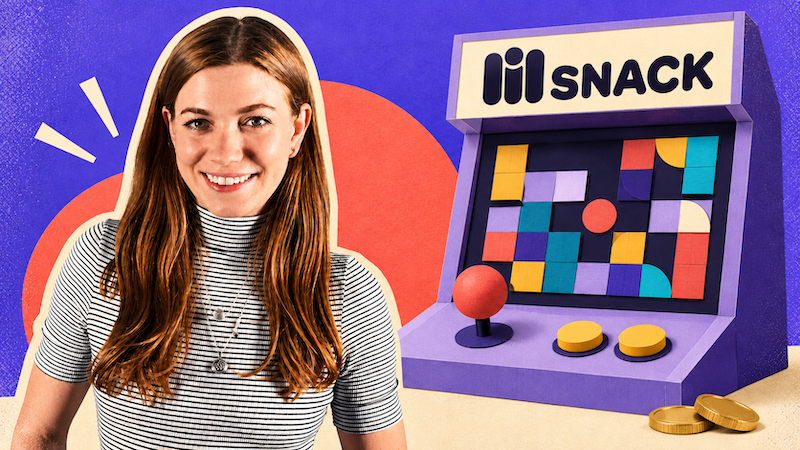
I believe there's a real appetite for something more rewarding than another endless scroll. Companies have an opportunity to give people that moment of respite. Bringing play into their daily routines is one way to do it.
 Nicole SanderHead of Commercial Strategy & Business Development, Lil Snack
Chipotle fans completed more than 1.8 million trivia quizzes last year on their website, and the fast-food chain added daily streak rewards this August. Professional networking site LinkedIn now offers daily games. McDonald’s brought back Monopoly this month, with gameplay and prize redemption now moved entirely into its app. None of these are entertainment companies, yet they’re using play to give customers another reason to return.
The results are showing up in engagement. LinkedIn says 86% of people who play return the next day, and 82% are still playing a week later.
And the audience is there. The Entertainment Software Association's 2026 study with YouGov found that two-thirds of Americans play video games every week, including 71% of millennials and 56% of Gen X. Most American adults say games provide mental stimulation and stress relief.
Entertainment companies have spent the past few years paving the way, using games to extend engagement and retention. Since Netflix began scaling cloud games on its TV app last October, co-CEO Greg Peters said monthly active users have risen elevenfold in eight months. Peacock says one in ten of its mobile users have played a game in its app. And in July, Amazon added its Luna game service to its main Prime Video app, with a Games tab sitting next to its top TV shows and movies.
These major entertainment platforms invested to build in-house game teams and operate games on their platforms at a scale that most non-entertainment businesses can’t match. As apps beyond entertainment compete for engagement and consumers’ time, Lil Snack is enabling more brands to integrate daily play without a game studio of their own.
Lil Snack's footprint
Lil Snack, founded in 2023 by CEO Eric Berman and Chief Product Officer Travis Chen, is betting that the next frontier of play on the internet is non-entertainment platforms. The company, backed by a16z, Lerer Hippeau, Waverley Capital, among others, operates more than 20 bite-sized daily games across platforms including Netflix, Peacock and Reddit. It says engagement is up 500% year over year. State of Brand has not independently verified that figure.
Lil Snack’s games live inside apps people already use, so players don’t have to download anything new. "People have their own cozy corners of the web—the apps, communities, and routines they return to every day," says Nicole Sander, Lil Snack’s Head of Commercial Strategy and Business Development. "I believe there's a real appetite for something more rewarding than another endless scroll. Companies have an opportunity to give people that moment of respite. Bringing play into their daily routines is one way to do it."
Lil Snack recently hired Nicole Sander, who helped launch BuzzFeed's business team in London in 2014 and later led strategic growth and partnerships at CAMP.
"I've always been drawn to emerging platforms that change how people connect with content," she says. "Across digital media, live experiences, and now games, I've helped build businesses around experiences people want to spend time with. At Lil Snack, that means bringing moments of play into the apps people already use."
Giving people a reason to return
Most brand touchpoints ask customers to do something, whether that's clicking, signing up or buying. Sander thinks brands should spend more time on what customers get in return.
"Brands spend so much trying to earn another moment of someone's attention. I think we should spend more time asking what we're giving people in that moment," she says. "A little challenge, a sense of accomplishment, something fun to share—that's a reason to come back."
A daily game in a retailer's or bank's app won't have a new episode pulling people back to it. LinkedIn's numbers show it can still work in some cases.