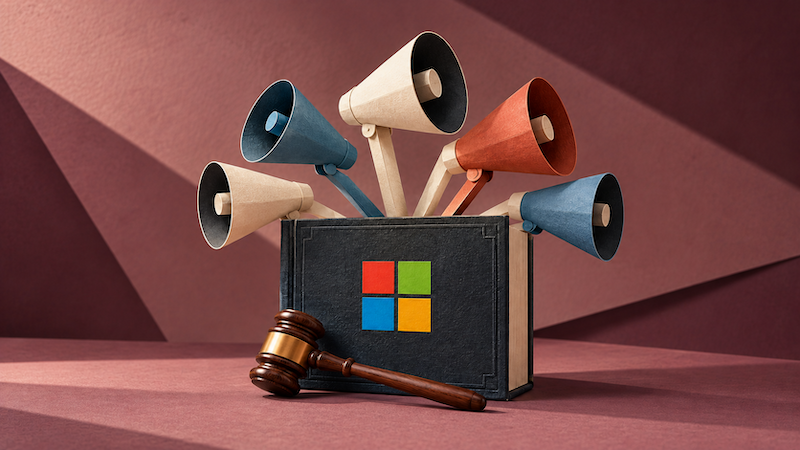
The trade press that covers B2B categories keeps getting cut, and it isn't coming back. The companies in those categories are going to have to do some of that reporting themselves.
Android Central is still putting up new posts, even though it no longer has a single employee. Earlier this month Future plc let go of the site's six remaining employees, and posts kept going up on the 18-year-old site anyway. Nobody has said how long that lasts.
That was one entry in a long month. Press Gazette's running tracker of journalism job cuts logged Metro planning around 60 cuts, The Guardian ending its use of casual staff and another round of redundancies at Future's tech titles, which the company blamed on falling search traffic. A few weeks earlier, McClatchy laid off more than 90 people, and some of its newsrooms lost upwards of 40% of their staff.
Nothing about the business model suggests this turns around. Future told investors this spring that its audience had fallen roughly 20% in each of its last two financial halves, and that it now expects the decline to continue. When traffic drops like that, the beats that never pulled big numbers are the easiest ones to cut. That's where most B2B coverage lives.
At State of Brand, we think B2B marketers have been slow to see what this means for them. If you sell into a specialized B2B market, the reporters who used to explain your category to buyers are disappearing, and your company is going to become one of the main sources of information about that market whether you plan for it or not. You can do that badly, with press releases and a blog nobody reads, or you can do it the way a good trade publication would.
Earned media got harder to win and more important to have
PR people feel this first. One industry analysis now puts the ratio at about six PR people for every working journalist. In Cision's latest survey, 49% of journalists said resource constraints were their biggest problem, and Muck Rack found 86% still take at least some story ideas from pitches, according to a summary of both surveys. That adds up to fewer reporters, each buried in more pitches, with less time for any of them.
Meanwhile, each placement matters more than it used to. Muck Rack's May study of 25 million links cited by ChatGPT, Claude and Gemini found 84% came from earned media. Ask an AI assistant about your category and most of the answer comes from journalists and independent sites. Very little of it comes from your website.
Not every study agrees. Meltwater's April analysis put owned and other content at about half of AI citations, as we reported in August. The same reporting also found that an identical piece of content was cited 8% of the time on a brand's own site and 34% of the time when it ran on a third-party outlet. Where something is published still affects whether anyone trusts it, and there are fewer independent places left to publish.
The smaller your category, the faster this hits
Consumer brands have it easier. There's always another reviewer, creator or lifestyle site. A company selling freight software, clinical trial tools or commercial insurance might depend on two or three trade reporters who actually understand what it does. When one of them is laid off, the beat usually goes dark. Buyers have less to read, and AI assistants have less independent reporting to draw on when someone asks about the category.
Some companies saw this coming and started hiring journalists. Ford brought on a former AP bureau chief as editor-in-chief and has since widened her remit to external communications, partly because of how AI is changing search. Autodesk and recruiter LHH both advertised for editors-in-chief this year, according to the same Quill report. Robinhood went further in 2023, hiring former Verge editor Josh Topolsky to build Sherwood, a media brand that stands on its own. In venture, Andreessen Horowitz spent the past year building a New Media team with in-house writers, video producers and its own channels.
We'd go further. For most B2B companies, the version that works looks more like a trade publication than a corporate blog. It covers the whole category instead of one product, it's built on interviews with people who do the work, and it would hold up if a skeptical editor read it.
We should be upfront that this is the business our publisher is in. State of Brand is published by Outlever, which builds brand newsrooms like this for companies, and State of Brand is one of its own. Most of what you read here starts as a conversation with an operator or executive, and we try to cover the industry rather than sell anything in it. We think the model works. We're also obviously not neutral, so weigh the argument with that in mind.
Our take
Keep pitching reporters. A byline at an outlet your buyers trust carries an independence your own site never will, and those placements are worth more now than they were a few years ago.
But stop using owned media as a place to archive press releases. If the trade press covering your market is thinning out, run your own channel more like a small publication. That usually means hiring at least one person who has worked as a reporter, interviewing customers and practitioners on the record (critics too, if they'll talk), publishing data nobody else has, and fixing mistakes where readers can see the correction.
And help the reporters who are left. A company that publishes useful, sourced material about its category is the one journalists call when they need someone who knows the space.
The reporters who covered your industry may not come back. Buyers are still asking questions about it, and someone is going to answer them.
Disclosure: State of Brand is published by Outlever, which builds owned media programs and brand newsrooms for companies.