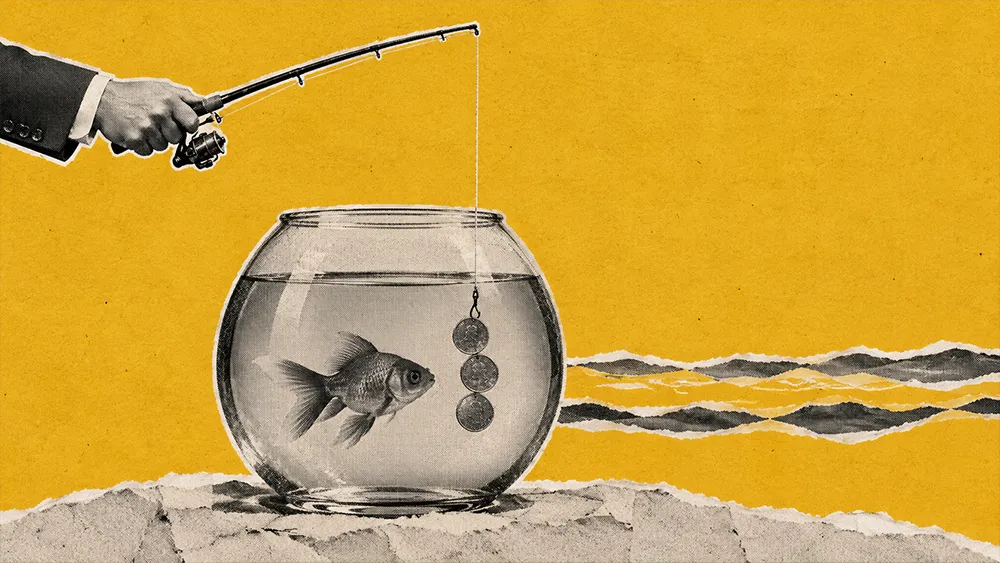
CEOs now say they're the main decision makers on AI. Agencies, consultancies and sales leaders are following the money, and B2B marketing is at risk of being routed around.
A lot of B2B CMOs spent this year building an AI plan for marketing. At many companies, the bigger AI decisions were being made a floor up.
In BCG's AI Radar survey of 2,360 executives earlier this year, 72% of CEOs said they are now the main decision makers on AI in their organizations, twice the share of a year earlier. Half said their job depends on getting it right. Companies plan to roughly double AI spending this year, to about 1.7% of revenue.
The people selling AI services have noticed. Last Tuesday, one of the world's largest advertising groups told Wall Street that more of its business now starts with the CEO rather than the marketing department.
Publicis told analysts who its new buyer is
On Publicis Groupe's third-quarter call last week, CEO Arthur Sadoun told analysts, "We are increasingly seeing CEOs involved in what we do." His reasoning was that chief executives now believe they have to understand AI personally to keep leading their companies. Digiday's read was blunter: Publicis is skipping the CMO in more of its new-business pitches.
The results back him up. Publicis grew organic net revenue 5% in the quarter and called its run of new business a record, Adweek reports. Sadoun credited Sapient, the group's technology consulting arm, with landing three AI-led transformation assignments this year outside any traditional pitch process.
The pattern isn't limited to consumer brands. Publicis has won at least four major media accounts in the past year without a competitive review, including Microsoft in April. The most visible was PepsiCo, whose CEO, Ramon Laguarta, went on his own earnings call to describe the agency as "an important capability for us." Digiday noted that defending an agency choice to investors is a job that normally falls to the CMO.
You don't have to buy from a holding company for this to matter. Any AI vendor, consultancy or platform that sees where the signature now sits will make the same move, and B2B marketing leaders should assume their CEO is already taking those meetings.
In B2B, the CRO is the one getting more
Most B2B marketers don't hire a holding company, so the more relevant comparison is with sales.
A new BCG survey of 398 CROs and sales leaders describes a "do more with more" plan for 2027. 72% expect sales and revenue budgets to rise, and 65% expect headcount to grow. Marketing is heading into the same planning season with budgets stuck at 7.8% of revenue and an AI line that has to be funded out of everything else, according to Gartner's 2026 CMO Spend Survey.
The CEO is in the middle of that decision too. In BCG's data, the CEO owns AI investment decisions at 44% of the companies surveyed outside Australia and New Zealand. Inside those two markets it's 64%, and companies there report reaching measurable AI returns about twice as often within six months.
Sales hasn't proven its AI spend either. 90% of the sales leaders BCG surveyed report meaningful AI use, but only 13% cite better win rates, and only 36% have formal AI targets and tracking in place. So nobody on the revenue team can yet show the CEO what AI is returning. Whichever leader does it first will have more say over next year's budget.
The CEO already had doubts about marketing
At State of Brand, we think this lands hardest on B2B marketing leaders, because they started with less standing than their consumer peers. They already share credit for pipeline with sales, and the attribution argument with the CRO never quite ends.
The C-suite's view of marketing was shaky before AI arrived. In a Gartner survey published in February, only 32% of executives said their CMO makes compelling strategy recommendations based on market or customer data. Only 34% said the CMO effectively identifies which initiatives will drive growth.
CEOs are also under real pressure to show results. In a Dataiku and Harris Poll survey of 900 CEOs, 72% of US chief executives said their boards are pushing them to prove AI returns, and 80% of all CEOs surveyed said their job is at risk if AI fails this year. That CEO wants an AI plan with numbers attached, and will take it from whoever brings one.
Other functions are already drifting out of marketing. Microsoft just moved communications out of marketing and under its top lawyer. Marketing isn't helping its own case: as we reported today, nearly half of marketing teams have replaced human tasks with AI, but only 6.5% measure whether it pays off.
Where marketing can still lead
The most useful finding for B2B marketers in the BCG survey is in the section about buyers.
Nearly 60% of sales leaders say customers now arrive at the first conversation knowing far more than they did two years ago. 54% report rising demand for proposals and business cases tailored to the buyer's company or industry, and 51% say buyers want customized proof of value, including ROI evidence, before they purchase. Yet only 32% say AI is helping them deliver that proof earlier.
That's marketing's work. The research a buyer does before talking to sales, the content that shows up when they ask an AI assistant about your category, the business case a champion forwards to their CFO: B2B marketing already builds all of it. It's also where the earliest AI-driven buying happens, since 94% of business buyers now use generative AI in their purchase process, according to Forrester. We've written about how B2B brands earn citations in AI search; this is the commercial case for doing it.
Sales has pointed most of its AI at seller productivity and lead qualification. Marketing can own the part of the deal buyers now say matters most.
Our take
Publicis didn't do anything wrong. It found where AI decisions are being made and went there. B2B marketing leaders should do the same, before someone else does it for them.
Get to the CEO first. Bring an AI plan with a baseline, targets and an owner for every deployment, and show what current AI spend is returning. A CEO who already has numbers from marketing has less reason to shop for an answer elsewhere.
Build the scorecard together with the CRO. BCG's data says sales hasn't proven its AI returns either. A shared measure tied to pipeline, win rates and deal velocity makes marketing a partner in the revenue story instead of a line item competing with it.
And claim proof of value. Buyers are asking for tailored business cases and ROI evidence earlier in the deal, and sales says AI isn't helping it deliver them. That's the most valuable work in the funnel right now, and it's work marketing already knows how to do.
The AI budget is already moving to the CEO's office. CMOs who want a say in how it gets spent should show up there with a plan before the vendors do.