


powered by




Sam Altman offered $2 million in OpenAI tokens to every startup in Y Combinator's current batch. It looks like generosity. It's a distribution play disguised as an investment.
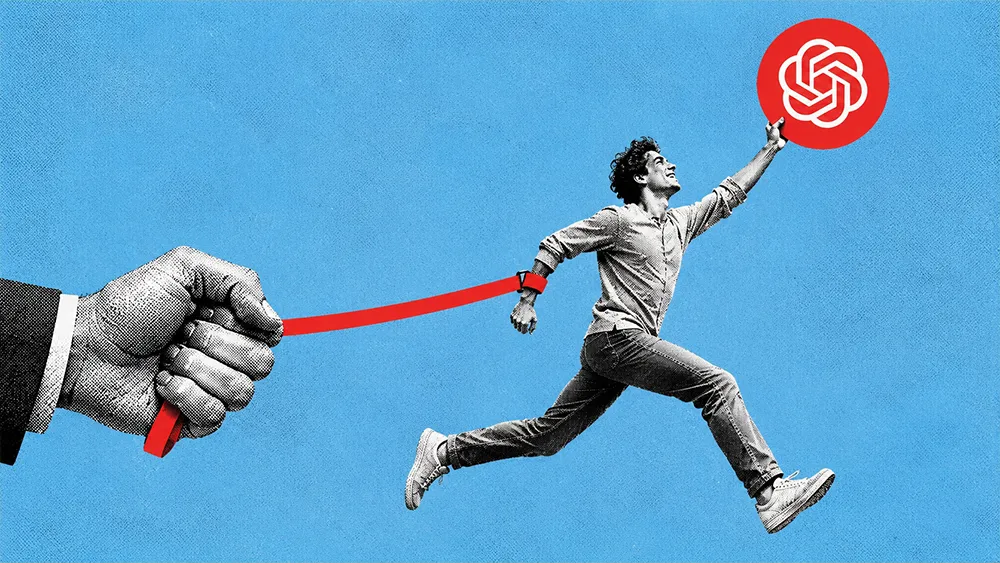
Sam Altman walked into a Y Combinator event on Tuesday night and offered $2 million worth of OpenAI API tokens to every startup in the current class. Not cash. Tokens. In exchange for equity. YC partner Tyler Bosmeny called it a "mic drop moment" on X. Altman's own post leaned into the bit. "I am excited to see what will happen with tokenmaxxing startups," he wrote.
There are roughly 169 startups in this YC cohort. The deal is structured as an uncapped SAFE, meaning the equity OpenAI receives won't be determined until each startup raises its first priced round. YC managing director Jared Friedman told TechCrunch the conversion would typically happen at the Series A. YC partner Tom Blomfield framed the math more bluntly on X: $800 million in compute for roughly 2% equity across 400 YC startups.
While it may sound like philanthropy, it's actually a customer acquisition strategy wrapped in the language of founder empowerment.
Earlier today, we published our breakdown of tokenmaxxing, the phenomenon where companies gamify AI token consumption until nobody can afford the bill. Meta built an internal leaderboard. Uber burned its entire 2026 AI budget in four months. ServiceNow hit the same wall. The pattern is consistent: companies flood their teams with AI access, celebrate the heaviest users, and then scramble when the invoices arrive.
Altman just took that pattern and pointed it at the most impressionable companies in the ecosystem. YC startups are pre-revenue. They are building their technical foundations right now. The products they ship, the architectures they choose, the vendor relationships they form in these early months will define their infrastructure for years. Handing them $2 million in OpenAI tokens at this stage is not an investment in their success, it's an investment in their dependency.
Diana Hu, a YC partner, recently advised founders on the accelerator's "Startup School" series to embrace tokenmaxxing over headcountmaxxing. Spend your budget on AI tokens, not new employees. That advice now comes bundled with $2 million in tokens from the provider who stands to benefit most when the startup can't switch.
Here is what happens when a startup builds its core product on $2 million in free OpenAI tokens. Every prompt template, every fine-tuned workflow, every API integration, every testing pipeline is calibrated to OpenAI's models, OpenAI's rate limits, OpenAI's pricing tiers. By the time the tokens run out, switching to a competitor means rewriting the stack. Not tweaking it. Rewriting it.
This matters because the AI model market is in the middle of an aggressive fight for enterprise share. As we wrote in May, Anthropic and OpenAI are both launching billion-dollar enterprise AI ventures, embedding engineers directly inside companies to build systems on proprietary data. Anthropic has gone upmarket with a trust-first strategy that we have covered extensively. They overtook OpenAI in revenue without running a single ad. They won Ad Age's Best B2B Campaign for "Keep Thinking." They are pulling enterprise buyers with a $30 billion run rate built on the promise that Claude serves the user, not an advertiser.
OpenAI's response to that upmarket pressure is not to compete on trust. It is to compete on distribution. Lock in the next generation of companies before they ever evaluate the alternatives. If the 169 startups in this YC batch build on OpenAI for the next 18 months, Anthropic's Claude Code, Google's Gemini, and every open-source alternative become afterthoughts. Not because they are worse products. Because the switching cost makes them irrelevant.
TechCrunch noted it plainly: the deal means startups "won't default to OpenAI's competitors, like Anthropic's Claude Code."
No other AI CEO could make this offer and have it land the way it did.
Sam Altman was in YC's very first batch in 2005. Paul Graham called him one of the five most interesting founders of all time. He became YC's president in 2014 at 28 years old, ran it for five years, and led investments into companies like Stripe, Airbnb, DoorDash, and Reddit. He stepped away in 2019 to run OpenAI full-time, but the YC lineage never left him.
That history matters here. Bosmeny compared the move to Yuri Milner's famous offer to invest in every YC startup back when Altman was still a YC partner. The comparison is flattering and deliberate. Milner offered cash. Altman is offering tokens. The difference is that cash is vendor-neutral. Tokens are not.
But because it is Altman, the offer carries the weight of someone who shaped YC into what it is. He is not an outsider buying access to the batch. He is the former head of the program returning with a gift that also happens to be a customer acquisition funnel for his current company. As TechCrunch pointed out, Altman already has as much access to every YC cohort and its ideas as he wants, deal or not. The equity is a bonus. The distribution is the prize.
There is a very important detail buried in the economics that most of the commentary is missing.
AI inference costs are falling fast. What $2 million buys in OpenAI tokens today could cost OpenAI a fraction of that to serve six months from now. The tokens being offered are valued at today's prices, but the actual compute expense OpenAI bears will shrink as its infrastructure scales and its models get more efficient.
That means the equity OpenAI receives in return gets cheaper over time. The startup gives up a fixed percentage of ownership. OpenAI's cost to deliver the tokens drops quarter over quarter. It is a trade where one side of the ledger stays constant and the other side deflates. TechCrunch flagged this dynamic: "what OpenAI is giving away today could cost it very little to produce tomorrow, making the equity it receives in return look increasingly cheap."
For a startup burning through its token budget to ship an MVP, that math is invisible. For OpenAI, it is the entire business case.
Investor Jason Calacanis, who runs a competing accelerator and fund, posted the warning directly: "If you take these tokens, there's a non-zero chance that OpenAI will study exactly what your startup is doing, copy your idea and put your app into their free offering."
He is not wrong about the risk. But TechCrunch's counterpoint is worth sitting with: OpenAI can see what startups are building regardless of whether they take the equity deal. Every API call already generates usage data. The deal does not give OpenAI new visibility. It gives OpenAI a financial incentive to want the startup to succeed. Whether that incentive outweighs the platform risk is the bet each founder has to make.
The real issue is not whether OpenAI will copy your product. The real issue is whether you can build a company on someone else's infrastructure, priced at someone else's discretion, with your core differentiation sitting inside someone else's API.
Anthropic is going upmarket. It is embedding engineers inside Goldman Sachs and Blackstone portfolio companies. It is winning enterprise deals by promising that its product will never serve an advertiser's interest over the user's. It restricted its most capable model while OpenAI shipped freely. We have written about this divergence repeatedly.
OpenAI is going downstream. It put ads in ChatGPT. It acquired a media company. And now it is seeding the next generation of startups with tokens that double as customer contracts.
Both strategies make sense on their own terms. But the YC deal reveals something specific about where OpenAI sees its vulnerability. If the enterprise market is tilting toward Anthropic, the startup market is the next beachhead. Get them while they are small. Get them while they are building. Get them before they have the budget to evaluate alternatives.
Y Combinator already takes 7% equity for $500,000 in cash. Adding another uncapped SAFE on top of that, for tokens instead of money, means founders in this batch are starting with less of their own company before they have hired a single employee.
The bigger danger is not that a startup takes the deal and gets copied. The bigger danger is that a startup takes the deal, blows through $2 million in tokens building something that does not work, and walks away with less equity and nothing to show for it. But as TechCrunch noted, that might still be better than paying for the tokens with cash, an even scarcer resource at this stage.
Sam Altman did not offer YC startups a gift. He offered them a funnel. The tokens are real. The dependency is realer. And the startup that builds its entire product on OpenAI's infrastructure in exchange for equity is making a bet that the platform it depends on will never become the competitor it fears.
Tokenmaxxing started as a cultural phenomenon inside Big Tech. As of Tuesday night, it is a venture strategy. The companies that will define the next era of AI are being shaped right now, in a three-month accelerator, building on a single provider's tokens. Whether that is a launchpad or a trap depends entirely on what happens when the tokens run out.


The best editorial systems don’t happen by accident. Outlever builds them.

The best editorial systems don’t happen by accident. Outlever builds them.
Subscribe for the kind of thinking that makes people stop, read and come back.