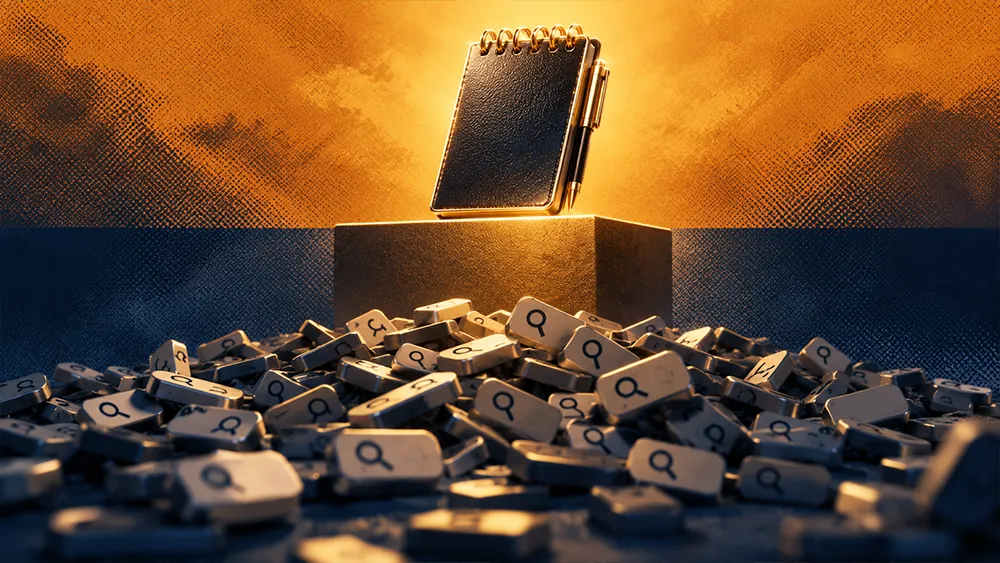
Anthropic's annualized revenue run rate has surpassed $30 billion, a 30x increase from $1 billion at the start of 2025. More than 1,000 enterprise customers are now spending over $1 million annually. The part that should matter to every marketer paying attention is how they got there. Anthropic did this without a single ad inside its product. Not one sponsored link, not one third-party placement, not one response shaped by an advertiser's interests. Two months ago, this company stood on the Super Bowl stage in front of 120 million people and made a public promise that ads were coming to AI, but not to Claude. That wasn't a marketing stunt. It was a brand bet. The $30 billion is the scoreboard.
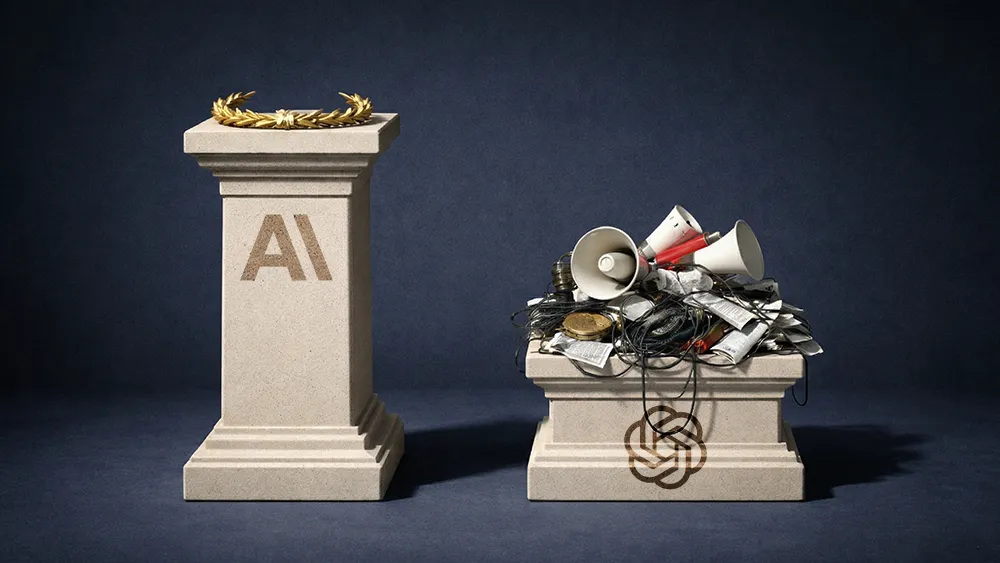
Roll the tape: In January, OpenAI announced ad testing inside ChatGPT with WPP, Omnicom, and Dentsu joining the pilot. In February, Anthropic responded with a blog post titled "Claude will remain ad-free" and four Super Bowl spots created with agency Mother. Sam Altman called the campaign "clearly dishonest" and "deceptive" on X, arguing that Anthropic serves an expensive product to rich people while OpenAI works to bring AI to billions who can't pay for subscriptions. By late March, OpenAI's ad business had crossed $100 million in annualized revenue with over 600 advertisers. On April 6, Anthropic announced the $30 billion run rate. The next day, reporting confirmed Anthropic had overtaken OpenAI in revenue.
I've sat in countless rooms where someone argues that taking the principled path means leaving money on the table. That protecting the user experience comes at a commercial cost. Anthropic just blew that argument apart. The ad-free pledge was a strategy rooted in a brand insight that most companies miss. In a high-trust relationship, the absence of commercial interference is itself a feature. Enterprise buyers proved it with their wallets.
Doubt kills deals: When a law firm integrates Claude into research workflows, it needs to know responses aren't influenced by a paying vendor. Sasha de Marigny, Anthropic's Chief Communications Officer, framed it at the Super Bowl launch: "Technology can be a bicycle for the mind, something that extends what humans are capable of. Or it can be another surface competing for your attention. We want Claude to be the former." Anthropic's blog post went further, calling an advertising-based business model fundamentally misaligned with being genuinely helpful. Enterprise buyers read that as a guarantee, and they responded. A thousand customers spending over $1 million each, the number doubling in two months. API market share expanding from 12% to 32%, overtaking OpenAI as the enterprise LLM leader. The business model became the brand. The brand became the revenue.
The other side of the bet: OpenAI is not failing. A $24 to $25 billion run rate is extraordinary. But the strategic divergence is worth studying. OpenAI's growth has been driven by ChatGPT and mass-market scale. Introducing ads is the natural next step for that model. More users subsidized by advertising, generating more data, attracting more advertisers. Google and Meta proved it works. But it's a fundamentally different bet than the one Anthropic is making, and for brand leaders watching both companies, the difference is the entire lesson.
OpenAI's recent moves, buying TBPN, introducing ads, and expanding into media, are logical extensions of a consumer-first growth model. They're building reach. Anthropic's moves, the ad-free pledge, the $100 million partner network, the Anthropic Institute, and the government safety partnerships, are building something different. Every investment reinforces the position that this is the AI company that works for the user. Both strategies have merit. But the enterprise market, where individual customers spend millions of dollars, is responding to the trust-first approach at a pace that nobody predicted.
Brand leaders, take notes: Anthropic made a public commitment to protect its user relationship, spent millions advertising that commitment during the most-watched broadcast of the year, endured public criticism from its primary competitor, and then tripled its revenue in four months, powered entirely by enterprise customers who valued the trust enough to pay for it. For anyone who has argued that brand is pipeline, that trust compounds, and that hard commitments outperform short-term optimization, this is the strongest case the market has ever produced.
How Anthropic navigates that pressure will tell us whether the ad-free pledge is a genuine brand principle or a pre-IPO marketing strategy. The difference between those two things is the difference between a brand that compounds for decades and one that erodes the moment the incentives change. But today, the scoreboard is clear. The company that bet on trust just posted the fastest revenue growth in enterprise technology history. Trust isn't the soft side of business strategy. It's the side that generates $30 billion without a single ad. Build accordingly.