The question is no longer where your screens are located. It’s about placing your ads smartly, because now you have the data to amplify them.
 Erica CollantesOperations Manager, Elevision
Advertisers buying ads on digital screens through programmatic platforms are asking tougher questions. A few years ago, most wanted to know what programmatic digital out-of-home was and how it worked. Now they want proof that their ads reached the right people and drove results. Companies that own these screens and can show who walked past them are in the best position to win those budgets.
Erica Collantes is the Operations Manager at Elevision, a Dubai-based digital out-of-home media company with screen networks in residential, commercial, and lifestyle districts across the UAE and UK. She works on the data side of the business, managing the systems and reporting behind Elevision’s elevator and large-format screens. That work supports the company’s programmatic sales, which expanded after a 2025 partnership with the supply-side platform VIOOH opened its UAE and UK networks to programmatic buyers. Before Elevision, Collantes worked at the online trading broker INFINOX, where she oversaw technology and operational systems spanning traditional finance and the digital asset industry.
“The question is no longer where your screens are located. It’s about placing your ads smartly, because now you have the data to amplify them,” says Collantes. For years, advertisers chose out-of-home sites by location alone. Programmatic buying and better audience information now give them far more to work with.
Smarter ways to buy
Programmatic tools give advertisers more control than many of them use. “People thought programmatic was just an automated way of buying digital out-of-home screens. You can do a lot more because of triggers, and because you now know the audience you have,” notes Collantes.
Triggers let buyers decide when an ad plays based on what’s happening outside. An ice cream brand, for example, can wait until the temperature hits 40 degrees Celsius and let the heat launch its campaign. That way, the creative appears when people are most likely to respond to it.
Audience data is the second tool, and it’s most useful before a single site is booked. Advertisers often pick locations by reputation, assuming a well-known luxury development is the best place to reach wealthy residents. Information on who walks past each screen, such as age and gender, can confirm that choice or point to a neighborhood that reaches more of the right people. Buyers get the most value when they request those figures during planning and use them to test their own assumptions.
Counting every second
Agencies want exactly that kind of evidence. In IAB Australia’s Programmatic Digital Out-of-Home State of the Nation 2026 report, three in four agencies expect to spend more on pDOOH over the next year. Respondents also name ROI and audience measurement as the biggest barriers to the channel winning a larger share of budgets.
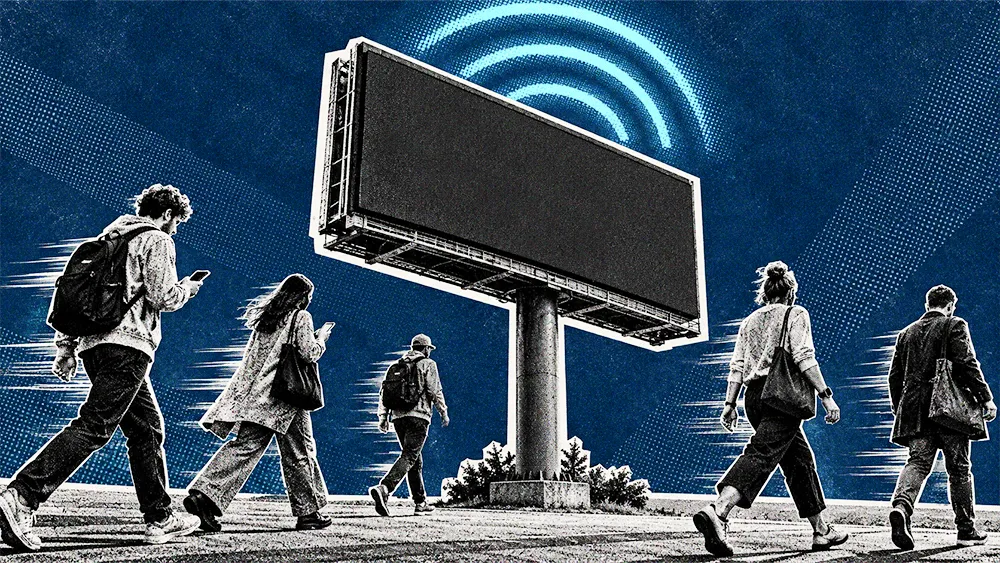
Measurement in the channel is getting more precise. Beacons attached to screens can detect nearby phones and smartwatches, count passersby, and record how long each person stays in front of a screen. Those signals feed reach and impression figures, and some networks now report them while campaigns are still running. Buyers should ask whether that reporting is available mid-campaign or only after it ends, and whether programmatic deals get the same visibility as direct ones.
Closer tracking also raises privacy questions, and media sellers should be ready to answer them plainly, starting with what they collect. “We only get scrambled IDs from devices like mobile phones or smartwatches, and those IDs change every now and then. We don’t take anything else from people,” says Collantes.
Plays well with others
Out-of-home advertising can work well as part of a wider strategy, reaching people on the street while other channels reach them on their phones and TVs. IAB Australia’s report finds agencies most often plan pDOOH alongside digital video, social media, and connected TV. “A brand shouldn’t rely on just one channel. It’s a mix and match. You can do social media, YouTube ads, and digital out-of-home, and it really depends on what the brand wants out of the advertising,” notes Collantes.
Brand lift studies help tie that mix together. They show how a campaign performed in digital out-of-home and where it fell short, so advertisers can retarget those audiences through other channels. The studies are also catching on quickly, with 60 percent of agencies now using digital brand lift to measure pDOOH, up from 52 percent a year earlier.
Screen owners that share those results openly, including where another channel might do the job better, give advertisers a clearer picture of where each channel earns its spend. That openness builds the trust programmatic buyers say they want.
Prompting the buy
AI is already changing how buyers look at campaign data, and a bigger shift could arrive within five years. Soon, an advertiser may be able to type a prompt into an AI system that finds the right publishers and gets the ad on screen. “It’s going to be simplified for people. It will be easier to buy ad space, whether that’s digital out-of-home or a YouTube ad,” says Collantes.
Buyers who use AI tools are also asking sharper questions about who their campaigns reached. Sellers can use the same tools to answer them, turning dense campaign data into simple explanations for buyers who are new to programmatic DOOH.
As automation handles more of the buying and reporting keeps improving, more advertisers will discover how flexible the channel can be. “What’s interesting about digital out-of-home is that you can almost do anything with it,” adds Collantes.