Meta's Muse Rollout Made Its Mascot a Thirst Trap on X and a Plush Toy on Instagram. That's the Brand Campaign Working.
Meta launched Muse with one character across every partner and platform, then let that character get suggestive in the one place Meta doesn't sell ads.
Make State of Brand one of your go-to sources on Google

Two weeks into the biggest consumer AI launch of the year, Meta's chief AI officer posted a picture of his product's backside. Alexandr Wang, who runs Meta's Superintelligence Labs, shared an image of Jolly, the fuzzy mascot for the new Muse agent, with the caption "some of y'all way too thirsty for muse." Meta didn't walk it back.
One character for every partner
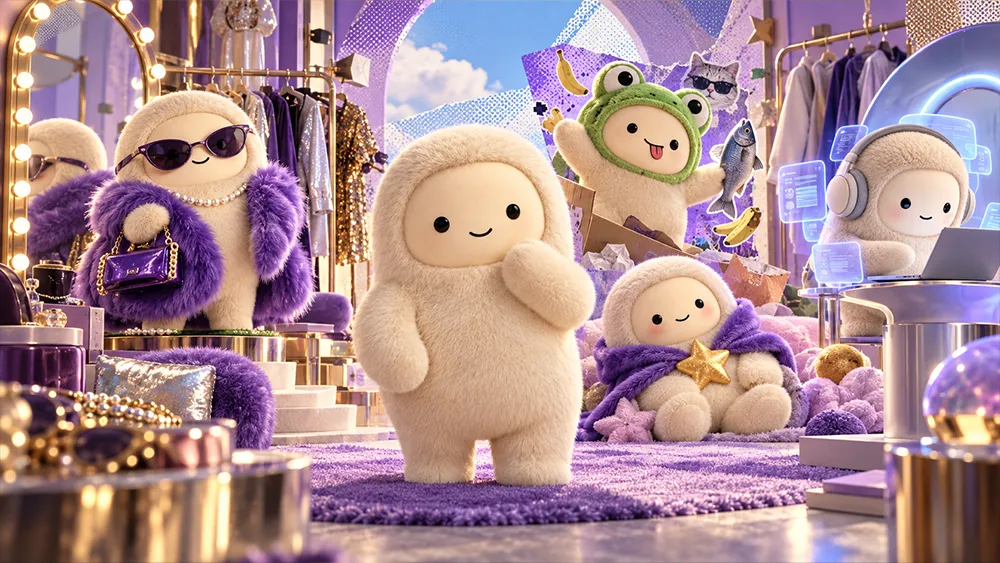
Muse launched on September 8 as a personal AI agent that books dinners, cancels forgotten subscriptions and fills in forms. Zuckerberg says the avatar is named Jolly, and Futurism describes it as something between a Labubu and a Fall Guys bean.
OpenAI and Anthropic haven't built mascots for their assistants, and Microsoft's Copilot companion, Mico, never got anything like this level of marketing. Meta built a character, made it customizable, and gave it to everyone it does business with. Users can change Jolly's appearance, outfits and voice, a feature Meta promoted from the official Muse account.
How the partners announced it
Each partner got to tell its own product story, and some of them used Meta's mascot to do it. GitHub and Spotify both posted their own Jolly riffs to announce their Muse integrations.
Spotify's announcement had the most consumer appeal. Once you connect your account, Muse can play music, podcasts or audiobooks, save tracks, find new things to listen to and build or edit playlists in conversation. It can also pull context from the rest of your life. Spotify's own example is a road trip on your calendar: Muse builds a playlist around the destination and starts it when you leave. Spotify also appears to be the only major music streamer on Muse so far.
Ticketmaster signed on as Muse's first music partner, with a connector fans add to their own agent. Muse can then suggest concerts, games and other events that fit a fan's interests, with live seating and prices. For now it doesn't buy the tickets and sends fans to Ticketmaster's site instead. The music tie-in comes with some baggage. Meta claimed the @muse Instagram handle from the British band Muse, and Meta executives then accidentally tagged @museband while promoting the launch.
Shopify's deal carried the most money. CEO Tobi Lütke announced on X that Shopify would bring agentic checkout with Shop Pay to every Shopify store through Muse. Muse agents will be able to search Shopify, find products and even negotiate prices for users. Zuckerberg backed it up in his own post about easier discovery and checkout.
The retailers arrived at Connect. Wang named Walmart, Best Buy, Gap, Sephora, Wayfair, and others as Muse partners. Meta's recap and a partnership thread from Hugo Barra added American Eagle, DICK'S Sporting Goods, Fanatics, Michael Kors, Ulta, GitHub, Box, Fever, Turo and Viator. OpenTable announced its integration on LinkedIn on launch day.
Two versions of the same mascot
On X, Jolly turned into something else. Wang has posted more than 300 times there since launch, sometimes topping 100 posts in five days, mixing memes, shots at rivals and user success stories. He used Jolly to go after competitors too, claiming Muse "absolutely crushes Insect" in a jab at Instinct, an invite-only agent that's popular with Silicon Valley VCs.
Some of the memes went further. In one, Jolly winks over its shoulder with its rear pointed at the viewer, apparently to promote the Muse integration with Box. Box didn't write that one, but it counts as a partner announcement anyway. Another puts Jolly in bed with two men in a recreation of a scene from "Challengers." The "thirsty" post at the top of this piece shows Adam Levine going wild over a picture of Jolly's backside in an Instagram DM. Fans followed Wang's lead with memes a trade publication can't print.
Wang has been much quieter on Meta's own apps. According to Business Insider, he hasn't posted on Threads since Muse officially launched. On Instagram and Facebook, Jolly is the plush companion that fits comfortably next to a Walmart or Sephora ad.
That split tracks who owns the platform. On X, which Meta doesn't own, a suggestive meme costs Meta nothing with its advertisers and gets attention from the early adopters who decide which AI products are worth trying. On Instagram and Facebook, where Meta's ad revenue comes from, Jolly stays soft and safe. Meta seems to have given each platform its own rules for the character, which takes more discipline than the X posts suggest. Spotify announced its integration with a friendly version of the mascot, while Box got its integration promoted by a Meta executive posting a cartoon backside.
Did it work?
For downloads, yes. Muse became the most popular free iPhone app and passed 2.5 million downloads, according to Sensor Tower data reported by CNN. Some analysts have called it possibly the biggest US app launch since ChatGPT.
The mascot had help, though. Neo Ads found that Muse hit No. 1 with fewer daily downloads than ChatGPT had at launch, roughly 41,000 compared with 83,000. A waitlist, referral tokens, a ratings engine, the mascot and a lot of Apple Ads pushed it to the top. Jolly got people talking about Muse, but the installs came from the paid machinery around it. A brand that copies the mascot without that setup will probably get the memes and miss the chart.
The polarization helps, up to a point
People are split on Muse, and the memes are only part of it. Futurism called it possibly the creepiest AI agent ever released. Muse lets you name your assistant, but to be useful it needs access to things like your bank accounts, and Meta has a long record of privacy problems.
A product that wants your bank login starts out with a trust deficit. A character people joke about wanting to date, and might soon carry on a keychain, helps close it. Skeptics see a cute face making a data-hungry product feel harmless, and plenty of marketers would point out that mascots have always done that job. Every round of that argument keeps Muse in the conversation, and Meta doesn't pay for any of it.
The partners carry more of the risk. Sephora's checkout story now shares a mascot with a "Challengers" meme, and Box's integration got its biggest promotion from a butt joke it didn't write. Partners can use the character, but Meta decides how it behaves and where. So far that decision has mostly rested with one executive and his X account. Not every retailer wants in, either. Amazon has blocked Muse from its site.
What brand teams should take from the rollout
Meta has shown that one mascot can run across dozens of partners and act very differently from one platform to the next without the brand falling apart, as long as someone decides which version goes where. Partners signing on to a shared character should ask who makes that decision on each platform and how far that person is allowed to go.
That question gets harder in December, when Meta plans to ship Muse Charm, a keychain device built around the character. Once Jolly is something people hold in their hands, the plush version and the X version will be the same object, and Meta will have a harder time keeping them apart.

If this caught your attention, that’s not accidental.

The best editorial systems don’t happen by accident. Outlever builds them.

If this caught your attention, that’s not accidental.

The best editorial systems don’t happen by accident. Outlever builds them.


Come back for the reason it lands.
Subscribe for the kind of thinking that makes people stop, read and come back.