Companies Are Hiring Editors to Run Thought Leadership and Measuring Them on Pipeline
A handful of new job postings tie thought leadership to revenue instead of article counts. It is a small trend with a clear signal: owned media is turning into an operating function.
Make State of Brand one of your go-to sources on Google

Read a certain kind of job posting closely and you can watch a category change shape.
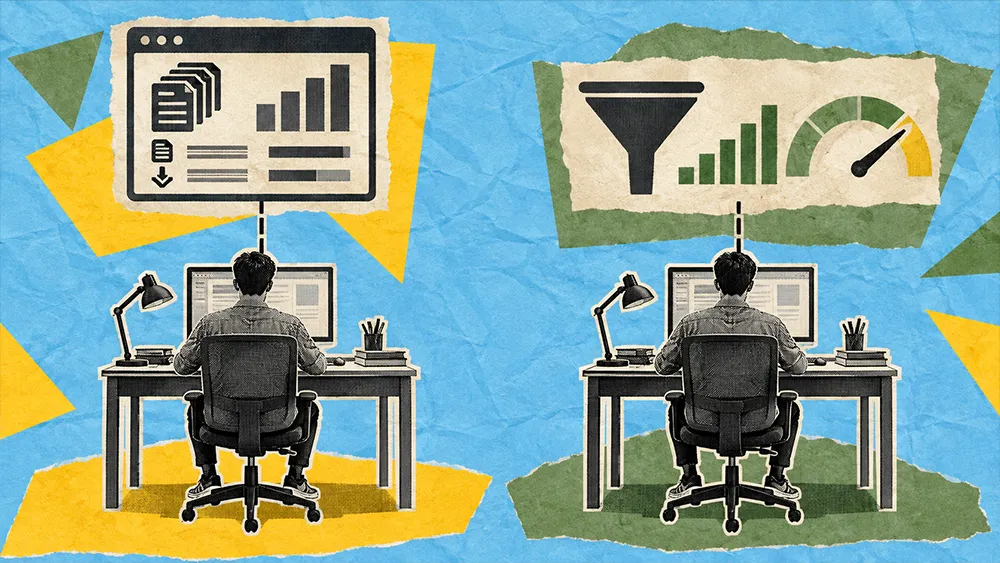
When Workato made its first dedicated thought leadership hire, the telling detail was not the title but where the role sat. Alex Lamascus, now Senior Director of Thought Leadership, moved the function closer to the sales floor than the comms team and started measuring it on win rates, deal velocity, and average sales price rather than reach and downloads. "The primary value of content is not only gaining attention," he told State of Brand. "It's building business infrastructure." That is a different job than the one most content teams are hired to do, and a growing number of companies are now hiring for it: newsroom-style editorial leaders held accountable to revenue.
For most of the last decade, content lived in an odd spot inside B2B marketing. Everyone agreed it was necessary and nobody could price it, so it got measured in outputs (posts shipped, words filed, downloads captured) mostly because the line to actual money was too hard to draw. These new hires bet that the line can be drawn now, and that whoever owns it should be senior, editorial, and carrying a number like anyone else with a budget.
The reporting line is the story
What matters in the Workato example is not that a company hired for thought leadership. Companies have done that for years. It is that the job answers to pipeline rather than to article counts, and that one change lifts owned media out of the cost-center framing that has always held it back and drops it into the same accountability as demand gen and sales.
That framing has been a documented trap for a while. The B2B CMO leadership research makes the point that the metrics marketers reach for to prove their worth, the MQLs and the cost-per-lead figures, are the same metrics that get them treated as a tactical function and a cost center. Report in the language of marketing outputs and you get read as marketing overhead. A thought leadership hire tied to pipeline refuses that framing from the first day. The scorecard is not how much shipped. It is what the point of view moved.
There is solid evidence that it moves a lot. The 2025 Edelman-LinkedIn B2B Thought Leadership Impact Report, the most authoritative recurring study in the space, found that 75% of decision-makers say a piece of thought leadership prompted them to look into a product or service they had not previously considered. For anyone thinking about competitive displacement, the sharper number is this: 70% of C-suite executives say thought leadership has led them to reconsider a current vendor. It is one of the few content types that pulls customers toward you and loosens a competitor's hold at the same time.
You are publishing for the buyer you never meet
Part of why this function is professionalizing now is that the buying group got more crowded, and the people who tip a decision are the hardest to reach any other way.
The 2025 Edelman and LinkedIn work centers on what it calls hidden buyers, the internal influencers who shape a decision without ever surfacing in a sales conversation. 71% of them say they have little or no interaction with sales teams. A rep cannot get to them, because they never take the meeting. But 63% spend more than an hour a week reading thought leadership, and 81% say strong thought leadership helps them see challenges or opportunities they had not recognized. The one channel that reaches the decision-shaper you can't book is exactly what a good editorial operation produces, which is a specific reason to fund it as a capability rather than an occasional campaign.
It also explains why the new roles sit so high. Reaching a skeptical, senior, hidden audience that reads an hour a week in your category is not junior work. It takes editorial judgment about which position is worth staking, a quality bar high enough to clear one that most thought leadership fails (in the Edelman-LinkedIn data, decision-makers rate the overall quality of what they read as middling, with only a sliver calling it very good), and the standing to kill the safe, on-message copy that gets ignored. That is an editor's job, which is presumably why the postings are starting to read like one.
From projects to a standing operation
Underneath the hires is a move from thought leadership as a run of projects to thought leadership as a permanent operation with an owner, a standard, and a number.
Ascend2 and TopRank's research draws the line plainly: a one-time report buys attention, while a recurring research program builds ownership of a topic. Publish on a real cadence and you become the default authority in your space, the name the market, and increasingly the AI systems, reach for by habit. Default status like that is not something a team sprints to at quarter's end. It compounds, which means it needs an owner whose job is to keep it compounding rather than a rotating set of contributors squeezing it between other work.
Hiring an editorial leader and pointing them at pipeline is how a company turns that into an operation. It treats the point of view as an asset the business intends to build and hold, not a campaign it runs and shelves. The signal in these first roles is that a few companies have decided owning their narrative is a function with a seat and a scorecard, not something marketing does when it finds the time.
Expect the rest of the market to follow, because the alternative is to keep producing content no senior buyer remembers while a competitor becomes the name the category reaches for. The companies writing these job descriptions now are betting the revenue-tied newsroom is about to become standard equipment. Given where buyer attention has gone, that is not a reckless bet.

If this caught your attention, that’s not accidental.

The best editorial systems don’t happen by accident. Outlever builds them.

If this caught your attention, that’s not accidental.

The best editorial systems don’t happen by accident. Outlever builds them.


Come back for the reason it lands.
Subscribe for the kind of thinking that makes people stop, read and come back.