Everpure CMO On Why Customer Voice Is The Last Real Differentiator In the Era of AI
Lynn Lucas, CMO at Everpure, on why customer authenticity outlasts AI-generated sameness, and the data governance question most marketing leaders are not asking their vendors.

Make State of Brand one of your go-to sources on Google


Brand and customer experience is the last moat between authenticity and AI sameness.

B2B marketing developed a uniform tone this year, and nobody chose it. AI did. Every vendor claims the same readiness, the same transformation, the same inevitability. Companies with real technical differentiation now face a specific problem: their message gets absorbed into a category of noise. Some marketing leaders have stopped trying to fix the messaging and started changing who does the talking.
Lynn Lucas is Chief Marketing Officer at Everpure, the enterprise data company that spent sixteen years as Pure Storage before changing its name this year. She arrived with an EECS degree and a first job as a technical marketing engineer, and has since built marketing organizations at Cisco, Veritas, and Cohesity across more than twenty-five years in B2B. She rebuilt Everpure's campaign architecture around data management and AI readiness one and a half years before the category became unavoidable. That timing was not luck.
"Brand and customer experience are the last moat between authenticity and AI sameness," Lucas said. Everpure holds a net promoter score of 84, roughly 40 points above that of some of the world's most admired consumer brands, a number Lucas treats as a shared asset rather than a marketing metric.
Customer voice does the persuading
Everpure's approach to AI messaging routes through customers first. "I believe 100% that the best thing I can do is lead with the customer stories as amazing proof points," Lucas said. The company's brand refresh set a tone she describes as bold without arrogance, and the boldness shows up in style rather than in claims. That tone also runs through The Data Wire, Everpure's editorial newsroom, which builds thought leadership around practitioners' perspectives rather than product announcements.
Lucas created the company's first enterprise customer advisory board, staffed with Fortune 500 VPs, paired with an executive sponsorship program that connects internal leaders with top accounts. "The number one way that those customers buy is by talking to each other," Lucas said. Putting executives through advisor training initially drew skepticism, particularly from leaders who had spent years believing the relationship came with the title. The training treats trusted advisor status as a discipline to be built, and the feedback loop it produces feeds directly into campaign design. "You cannot imitate customer authenticity," Lucas said. The company posted its first billion-dollar quarter in the fourth quarter of fiscal 2026.
The data question most CMOs skip
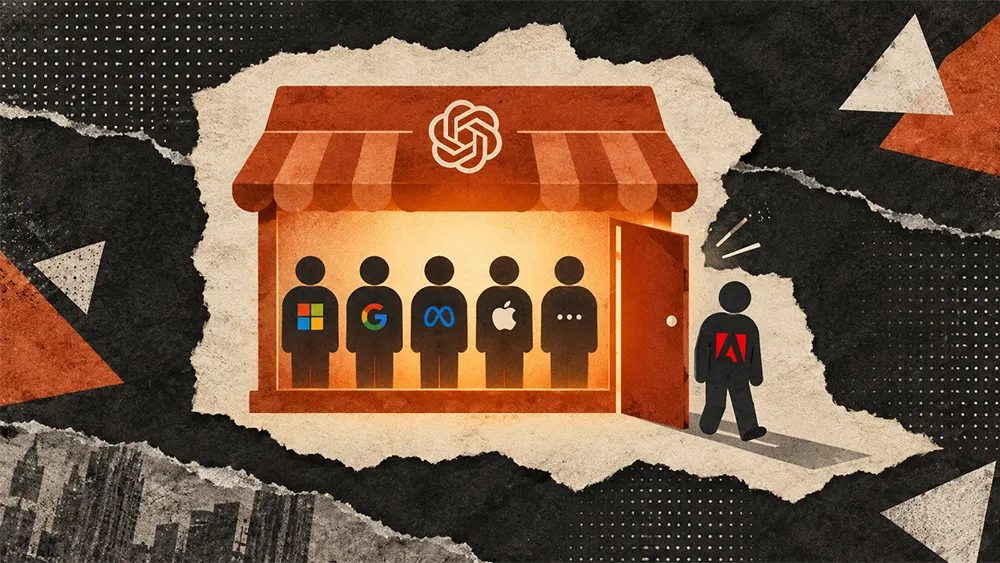
Lucas has been surprised by what she hears from peers. Marketing organizations now hold customer telemetry, usage patterns, and behavioral data that constitute a real competitive advantage, and much of it flows into AI tools with minimal scrutiny. " CMOs need to ask how their data will be secured and governed with some of these new amazing AI tools," she said.
The pressure to do more with less accelerates adoption faster than governance can keep pace, which puts the CIO, the chief AI officer, and the CISO in the room early. That gap is measurable. Only about a third of organizations reach meaningful governance maturity while their technical capabilities race ahead, and enterprise buyers already apply that scrutiny to their own vendors.
Enterprise buyers want problems solved, not products explained
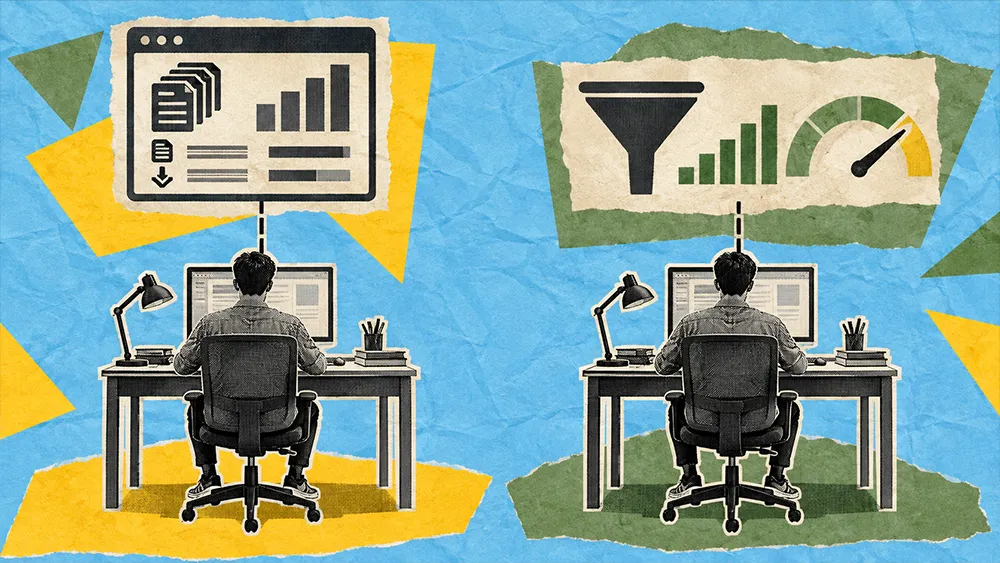
Two and a half years ago, Lucas inherited campaigns built around product capability and rebuilt them around business problems: AI readiness, virtualization modernization, cyber resilience. Typically the product is the star. "Enterprise leaders want solutions to their problems," she said.
Saying yes to that meant saying no elsewhere, which is why Lucas builds a stop-doing question into her quarterly business review template. Her filter is aligned with the CEO's and CFO's stated objectives, where anything outside that requires more consideration, usually around whether the requesting team can fund the resource. In twenty years, by her count, the only marketing channel to fully disappear is the fax machine.
The reorg reflex is wrong
Having watched enough tech cycles to recognize the pattern, Lucas resists the instinct to reorganize marketing around AI. Deep differentiation and persona-rooted messaging do not stem from AI tools, and the output is easy to spot when it is handed over. Everpure invests in product marketers with technical expertise, and has added forward-deployed engineer roles, a customer data platform, and journey management functions to accelerate marketing reach and personalization using AI. And with these new capabilities, Lucas expects that field marketers can increasingly operate as something closer to mini-CMOs . "We are not replacing jobs with AI. We are augmenting the skills of the people that we have with AI," she said.
Tool fluency expires. Judgment and curation are what Lucas tells people building toward the seat to invest in. She names no vendors but doubts many AI-forward marketing products will outlast the general-purpose models. What she looks for is a growth mindset and range, the kind that comes from moving across industries rather than climbing within one.
"I want you to be on the journey because you don't want to look back, and in this era, it might be only in a couple of years, and you're suddenly the Luddite that doesn't know how to use email," Lucas said.

If this caught your attention, that’s not accidental.

The best editorial systems don’t happen by accident. Outlever builds them.

If this caught your attention, that’s not accidental.

The best editorial systems don’t happen by accident. Outlever builds them.


Come back for the reason it lands.
Subscribe for the kind of thinking that makes people stop, read and come back.