The Next Generation of CMOs Will Be Hired After the First Brand Disaster
Companies are pushing CMOs toward efficiency and commercial strategy. The first public mistake nobody had the authority to stop will push them back toward owning the brand.
Make State of Brand one of your go-to sources on Google

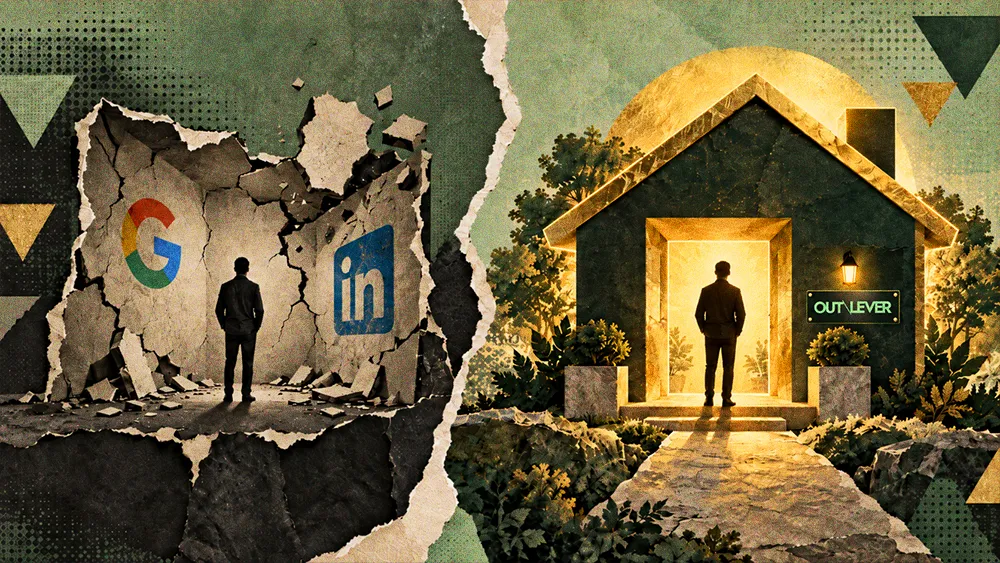
A post circulating on LinkedIn this week argues that AI is killing the CMO. Software can now write the content, build the campaign, run the targeting and produce the reporting, the author writes, so the version of the job built around production is ending. The CMO who survives "looks a lot more like a commercial strategist who happens to own marketing," and according to the post, boards are already hiring that way.
The post is right that production is no longer a reason to have a CMO. A small team with current tools can make in an afternoon what used to take an agency several weeks.
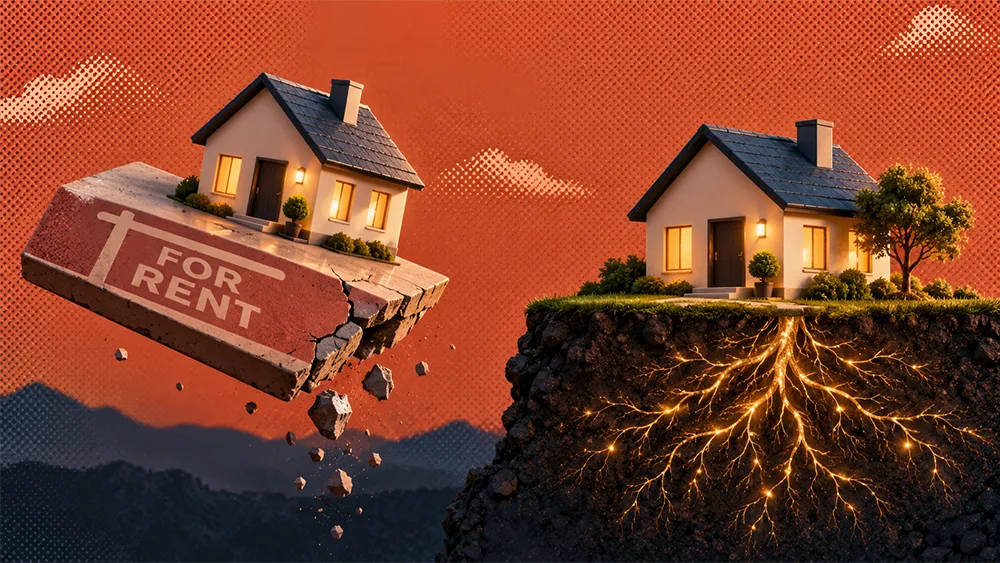
We think it draws the wrong conclusion from that. When anyone in a company can produce polished marketing, the brand is under more pressure than it has ever been, and someone has to own it. That means having final say over what the company says, what it puts its name on, and what it declines to publish. The CMO is the natural owner of that job. Moving the CMO toward pricing and go-to-market planning hands brand ownership to nobody at the moment it matters most.
Our prediction is that many companies will make that move anyway, because the savings are easy to see and the risk isn't. Then something will go wrong in public that nobody had the authority to stop, and the CMO role that comes back afterward will look much more like an owner of the brand than a commercial strategist.
The companies closest to the tools are hiring brand owners
The B2B companies that build or sell on these tools are the best evidence. They can produce marketing at close to zero cost, and their response has been to put senior people in charge of limiting what goes out.
Clay sells software that helps sales teams personalize outreach at scale. In August, co-founder Varun Anand made the company's internal writing policy company-wide. Engineer Sophie Alpert wrote it for her own team, and other departments adopted it before Anand extended it to everyone. It asks employees to stand behind every sentence and to treat length as a cost to the reader. Heidi Health, Leapsome and Polarsteps have published their own versions since. A writing policy is a brand decision. It sets a standard for how the company sounds, and it gives someone grounds to reject work that doesn't meet it.
Webflow CMO Dave Steer spent the first phase of his team's rebuild on speed and has moved the second phase to trust. Asked which marketing strategy is most overrated, he named content for the sake of content, and he tells his team that anything shipped under their name is theirs to defend. That is a CMO treating the brand as something he is personally accountable for.
The hiring points the same way. Autodesk advertised an editor in chief role that paid up to $279,000, and Mercury offered $335,000 for a role whose requirements read like an editor's. Anthropic posted a standards editor job at around $300,000. Workato judges its first dedicated thought leadership hire on win rates, deal velocity and average sales price, not on how much gets published. Ford hired former Associated Press bureau chief Nancy Trott as its editor in chief, a title nobody at the company could remember anyone holding before.
These companies decided that cheap production made judgment about the brand more valuable, and they are paying accordingly. A CMO who walks away from that work to chase commercial strategy is leaving the most valuable part of the job to whoever the company hires next.
Consumer companies already tried taking brand away from the CMO
Turning the CMO into a growth executive was a popular idea in consumer goods a decade ago, and the results argue for keeping brand with a marketer.
In March 2017, Coca-Cola dropped its global CMO title for the first time since 1993 and folded marketing, customer and commercial leadership into a new chief growth officer role held by Francisco Crespo. Mondelez, Coty, Colgate-Palmolive and Kellogg's had growth officers as well, and Mars and Johnson & Johnson added them afterward.
Coke reinstated the CMO in December 2019 with a narrower remit. Corporate strategy moved to CFO John Murphy, and customer and commercial operations moved to COO Brian Smith. Coke kept the commercial work with the executives who already owned revenue and cost, and it gave the brands back to a marketer.
McDonald's eliminated its CMO role and brought it back within a year. General Motors hired Norm de Greve as CMO in 2023, moved him into a new chief growth officer role in late 2025, and he left in May. GM's marketing function now sits under a VP who reports to the head of communications.
The lesson we take from these reversals is that commercial strategy already has owners in most large companies. The CFO, the CRO and the business unit heads are not going to give up pricing because content got cheaper. Brand is different. If the CMO doesn't own it, it tends to end up owned by no one in particular.
Cheap production makes brand ownership harder
Colin Fleming, OpenAI's CMO for business, wrote this summer that AI has removed the waiting line of specialists, budgets and timelines between an idea and a finished piece. He also warned that the same tools make it easy to produce "perfectly competent garbage."
For decades, cost did some brand management by accident. Many ideas never got made because they were expensive, and brands kept the same visual system for years partly because replacing it meant a budget fight. That protected consistency without anyone having to defend it. With production nearly free, consistency depends on a person who is willing to reject good work because it doesn't fit, and who has the standing to make that stick.
Coca-Cola's holiday advertising shows what happens when speed gets more attention than the brand. In 2025, CMO Manolo Arroyo told the Wall Street Journal that the AI-assisted "Holidays Are Coming" campaign took about a month to produce, compared with a process that used to start a year ahead. It was the second year in a row the campaign drew public criticism. Coke has defended the work. Our view is that a Christmas association going back to Haddon Sundblom's Santa illustrations is one of the most valuable brand assets in the world, and it deserved more protection than a second year as a production test.
Owning the brand usually means cutting
When we look at the brand decisions people still cite years later, many of them removed something.
In 2013, two weeks before Slack's preview launch, Stewart Butterfield sent his team a memo titled We Don't Sell Saddles Here. He told them to stop leading with features and sell what the product changed for a team, such as less information overload. That decision shaped how Slack was understood for years, and it required leaving a lot of accurate product messaging unwritten.
In 1997, months after he returned to Apple, Steve Jobs cut 70% of the product roadmap, including the Newton, and told that year's developer conference that focus is about saying no. A smaller product line gave Apple a brand people could explain in a sentence.
In 2014, A.G. Lafley said Procter & Gamble would shed up to 100 brands and keep the 70 to 80 that produced about 90% of sales and 95% of profit. In 2017, P&G chief brand officer Marc Pritchard found that the average mobile feed ad was viewed for 1.7 seconds, cut $100 million in digital spending, saw little effect on the business, and cut another $100 million. Reach rose 10%.
In 2020, Brian Chesky shut off Airbnb's performance marketing. Spend dropped from $1.14 billion to $482 million, and traffic recovered to 95% of 2019 levels. Chesky said the result showed how strong the brand already was, and he described marketing's role as education rather than buying customers.
In each case, a senior person decided what the company would stop doing and accepted the risk of that call. We think that is the core of owning a brand, and it gets more important as the volume of possible work goes up.
The brand gets damaged where marketing can't reach
In July, HubSpot announced changes to its terms of service and, days later, published a post titled "We Got This Wrong. And We Are Fixing It." In August 2025, Cracker Barrel introduced a text-only logo without its "Old Timer" figure and reverted a week later; a proxy filing from an activist shareholder put the cost at a 10.6% drop in share price and $143 million in market value. In April 2025, Duolingo's CEO published a memo calling the company "AI-first," drew heavy criticism, and later told the New York Times it "did not give enough context."
None of those started as a marketing campaign. They came from a legal update, a corporate redesign and a CEO memo. Each one changed how customers saw the company, which makes each one a brand decision, whatever department it came from.
Apple's 2024 "Crush" ad did come from marketing. After days of criticism, Apple marketing VP Tor Myhren said the company had missed the mark, and the spot never aired on TV. Even inside one of the best marketing organizations in the world, the decision to stop it came after launch.
Brand ownership has to reach past the marketing budget. If the CMO can only approve ads, the CMO doesn't own the brand. Whoever writes the terms of service, approves the logo or sends the CEO's memo owns it in practice.
Most CMOs don't have that authority yet
Lippincott and Bloomberg Media surveyed 541 marketing leaders this spring. Fifteen percent said they are not the most senior marketing decision-maker at their own company, 28% rated their influence as very high, and 84% said they had trouble getting leadership aligned on a marketing vision. Forrester found that 36% of Fortune 500 companies use the CMO title, down from 49% a year earlier.
That is the real risk to the role. A CMO who is accountable for brand without the power to stop anything is in a weak position, and companies are quietly deciding they don't need the title. In our reporting on editorial hires, one question separated real editor roles from the rest: can this person kill a piece? We would ask CMOs the same question about the terms-of-service change, the launch video, the logo redesign and the CEO memo. The ones who can answer yes own the brand. The ones who can't should be negotiating for that authority before they negotiate for a seat in pricing.
What a CMO who owns the brand is judged on
If the CMO owns the brand, the job should be judged on whether buyers remember the company and choose it. Most buyers aren't in the market at any given time, and when they start looking they build shortlists from companies they already remember. Airbnb could shut off paid channels because only about 23% of its 2019 traffic came through them. Workato judges its editorial hire on win rates for the same reason.
Boards should hold CMOs to category recall, unpaid demand and win rates. They should also ask, at each review, what the CMO stopped that quarter and whether anyone overruled the decision. That answer shows whether the CMO actually owns the brand.
What brings the brand back to the CMO
Efficiency gains show up right away. A leaner team, faster production and a lower agency bill all appear in the next quarter's numbers. Damage to the brand builds quietly and then shows up all at once, which is why companies keep underinvesting in brand ownership until something forces the issue. We see two kinds of events doing the forcing.
The first is a public mistake. Cracker Barrel lost $143 million in market value in a week. HubSpot went from announcing new terms to apologizing for them in a matter of days. In both cases, leadership suddenly had to answer a question it had never settled: whose job was it to stop this? After a moment like that, a board is willing to give someone real authority over the brand, including over departments outside marketing. Coke's own path fits the pattern in a slower form. It spent two years without a CMO before deciding the brands needed one again.
The second is sameness, and it takes longer. When every company in a category uses the same tools, optimizes the same funnel and takes advice from the same firms, the companies start to look and sound alike. The cost appears later, in lower win rates, more pressure on price and weaker valuations. When Bending Spoons bought Airtable, the asset that held its value was the name. That kind of result gets a CFO's attention in a way a brand tracking study rarely does.
We expect the fast trigger to reach most companies first, because AI has multiplied the number of people and systems that can publish in a company's name. The slow trigger is the one that will decide how much authority the rebuilt CMO role carries.
Our view
The post is right that the production-heavy version of the CMO job is going away. We think what replaces it, in most companies, will be decided by the first expensive brand mistake. Before that happens, the pressure runs toward efficiency and commercial strategy. After it, boards will look for someone with clear ownership of the brand across every department that speaks for the company, and the authority to stop work from shipping.
The CMOs who do best over the next few years will be the ones who set up that authority before the mistake instead of being hired to clean up after it. The rest of the industry will get there the expensive way.
Disclosure: State of Brand is owned by Outlever, which builds editorial teams and owned newsrooms for B2B companies. An argument that companies need a final editor with real authority is close to an argument for what we sell. Read it with that in mind.

If this caught your attention, that’s not accidental.

The best editorial systems don’t happen by accident. Outlever builds them.

If this caught your attention, that’s not accidental.

The best editorial systems don’t happen by accident. Outlever builds them.


Come back for the reason it lands.
Subscribe for the kind of thinking that makes people stop, read and come back.