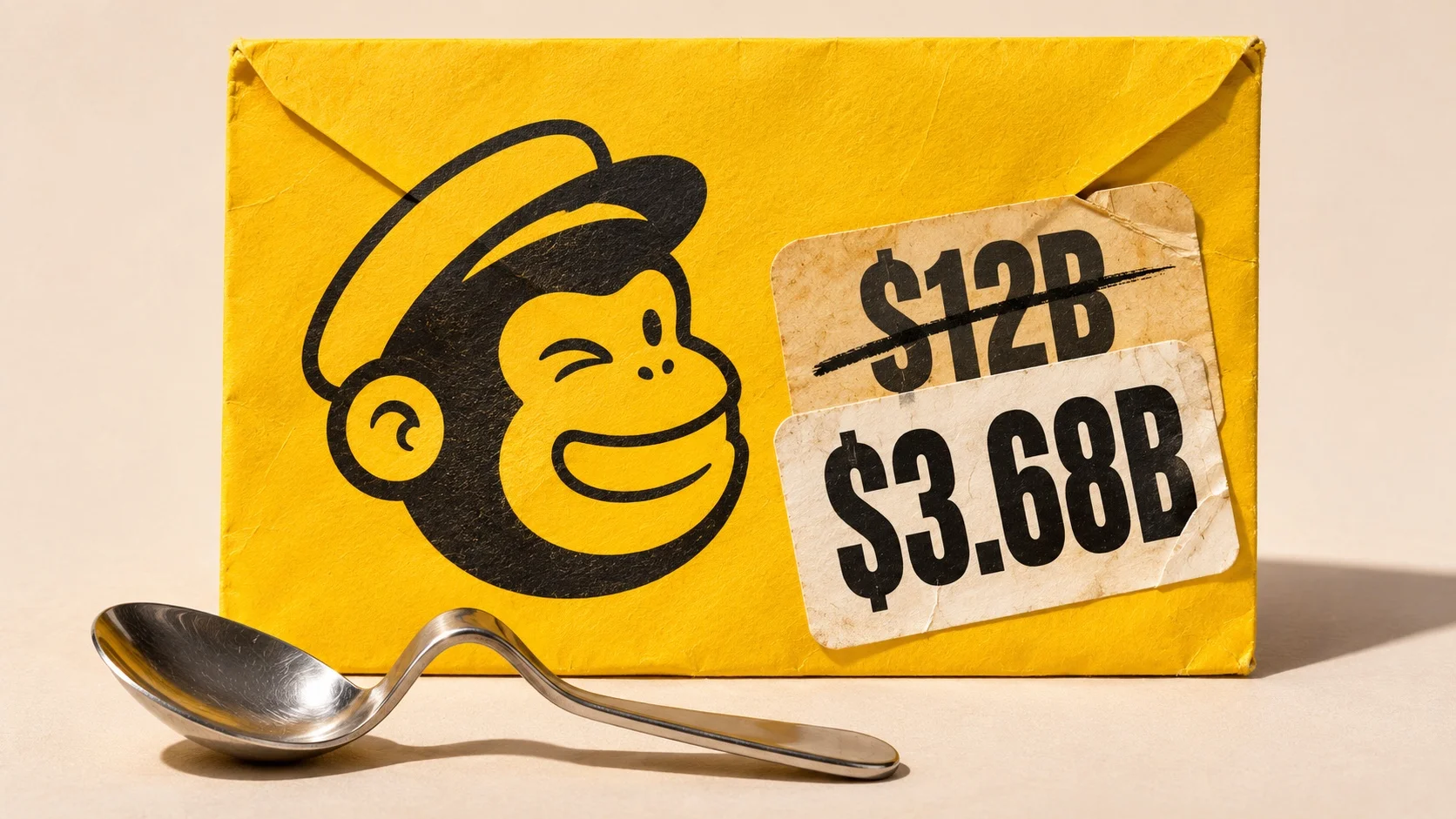
Bending Spoons has agreed to buy Mailchimp for $3.68 billion, about $8.3 billion below the price Intuit announced five years ago. Airtable and Miro also sold to Bending Spoons at steep discounts, but their peak valuations came from funding rounds. Mailchimp’s came from a sale.
In 2021, Intuit made a fairly precise case for the $12 billion. Mailchimp had 800,000 paying customers. QuickBooks had purchase records that could help those customers decide, for instance, which shoppers to include in their next email promotion. Owning both products would give Intuit a larger share of what a small business spent finding and keeping customers.
On Thursday, Intuit reported that quarterly revenue had risen 12% across the company while Mailchimp’s fell 1% to $313 million. Intuit still lists customer acquisition among its priorities. In the very release announcing the sale, it described the tools it has built to help businesses find prospects and manage sales. It can keep selling those tools and take $3.68 billion for the email business.
Three deals, all under three times revenue
When we covered the Airtable deal in August, Bending Spoons had agreed to pay $1.285 billion for the operating business, less than the $1.4 billion Airtable had raised. More than 500,000 organizations used the software, and plenty had built workflows in it that would be a chore to reproduce elsewhere. The price came to about 2.7 times annual recurring revenue.
In September, Miro tested what category leadership was worth to the same buyer. Four million people paid to use its online whiteboards. If recognition alone commanded much of a premium, Miro had a decent claim to one. It fetched 2.3 times recurring revenue.
Intuit expects Mailchimp to bring in about $1.26 billion this fiscal year. At $3.68 billion, that works out to 2.9 times forecast sales. There’s some imprecision in comparing a full year’s forecast with recurring revenue at the time of a deal. Even so, a buyer that has priced three familiar software brands in four months has kept them in a narrow range. Mailchimp sits at the top of it despite a quarter of declining sales.
What stays with Mailchimp
A marketing director weighing a move off Mailchimp can get a quote from a rival in an afternoon. The more expensive part is figuring out what the move would involve. A team has to carry over unsubscribe records, rebuild automated campaigns and test whether a purchase still takes a shopper out of the sequence promoting the item they just bought. That work gives an incumbent an advantage at renewal, even when the customer has little interest in buying anything more.
How Bending Spoons treats those customers matters more in light of what happened at Evernote. In 2023, Evernote disclosed that it had laid off most of its U.S. and Chilean employees as it moved operations to Europe. Bending Spoons CEO Luca Ferrari says the company will “invest substantially in the business” once the Mailchimp deal closes, expected in early 2027 pending regulatory approvals and other customary conditions. Neither company has detailed its plans for Mailchimp’s staff or said who will maintain the QuickBooks integration.
Mailchimp still commands nearly three times forecast sales in a year when revenue is slipping. For a CMO, that’s a price worth remembering. Customers have years of campaigns tied up in Mailchimp, and Bending Spoons can earn a return every time they renew. To justify $12 billion, Intuit needed those same customers to buy something more.