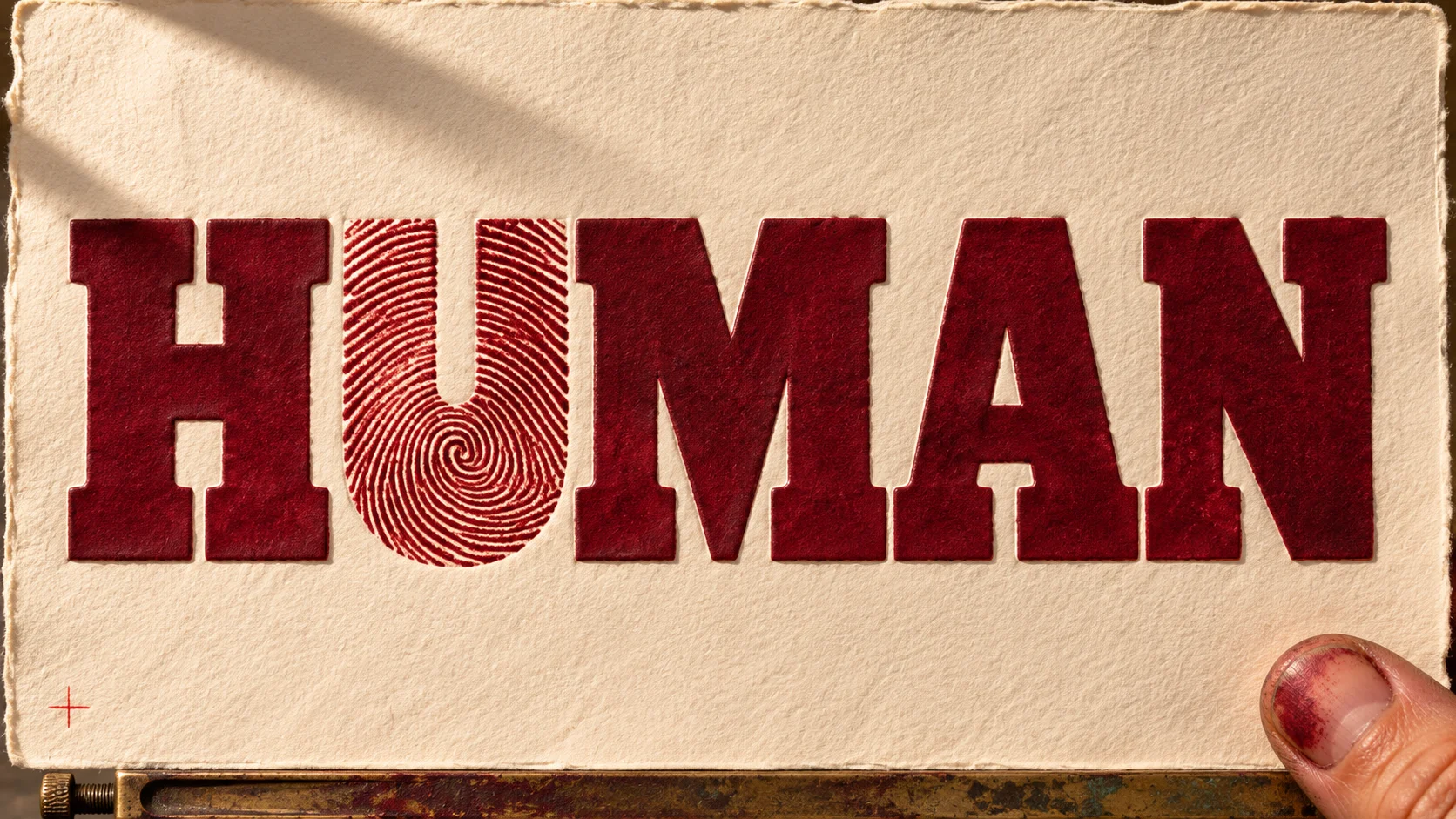
Our favorite part of the Associated Press story about Cambridge Dictionary naming “human” its word of the year comes after the last paragraph. An editor has added a note. “This story was produced by a human.”
It’s a good newspaper joke. It also says something about what readers have learned to wonder about a byline. In Cambridge’s announcement, lexicographer Colin McIntosh describes a worry about what people give up when they let AI do some of their thinking. The marketing version of that worry tends to surface late, usually when the work is finished and somebody has to decide what to say about how it was made.
The trouble with remaking a Coke commercial
Coca-Cola’s red Christmas trucks have been around since 1995. By the time the company used generative AI to bring them back in 2024, people had nearly thirty years of Christmases tied up in that ad. Coke could count on them to recognize the trucks. It could hardly expect them to have no opinion about the remake.
Among the artists who objected was Gravity Falls creator Alex Hirsch, whose complaint was about artists losing work. Coke went ahead with another AI holiday campaign in 2025. About 100 people worked on it across the company, its agency and the AI studios, Coke told The Wall Street Journal, roughly as many as on earlier campaigns.
Both details matter. A hundred people can put considerable skill into making a commercial and an illustrator can still look at the finished spot and wonder what happened to a commission she might once have pitched for. A head count tells her very little about that. The credits would tell her more.
Producer Nan has a story
The Famileigh, the British family behind the podcast Like Father Like Sons, gives its grandmother a billing I love: Producer Nan. In one episode, she talks about a postcard her son sent home from a school trip when he was nine. It made her cry. Years later he can give his account of writing it, and she can tell him what it was like to get it in the mail.
If I ran a brand that wanted to tell a story about what a handwritten letter means to somebody, I’d happily pay for that conversation. I’d be a little nervous about what would happen to it on the way through approvals. Somebody would want the product mentioned earlier. Somebody else would have a line they’d love Nan to try. By the third round you’d have paid for a woman who remembers opening the envelope and given her somebody else’s words to read.
The customer interview I’d keep in the B2B budget
Anyone who has shepherded a B2B case study through approvals knows what can happen to Nan. The customer agrees to an interview. By the time sales, product marketing and the customer’s own comms team have signed off, the VP of Finance sounds remarkably like the company that sold her the software.
Say the software helped her close the books two days earlier. That result earns a spot in the headline. But the controller reading the story may have a question about the old spreadsheet her own team still uses to reconcile exceptions. Did the customer actually retire hers? If she kept it through the first three closes because she didn’t quite trust the new system yet, that detail is worth a paragraph. It gives another finance team a way to plan the switch.
When the 2027 budget comes around, I’d happily use AI to transcribe that interview or pull together a first pass at the timeline. I’d keep the fee for the writer who hears “we kept the spreadsheet for a while” and asks why. And when the draft comes back with that paragraph crossed out, that’s the edit I’d push back on. It’s probably the part a buyer would send to a colleague.