Air Just Made the Strongest Case for Brand in the AI Era. And They Did It with Maury Povich.
Air put Maury Povich in a SoHo studio to determine the paternity of an AI girlfriend. Underneath the absurdity is a brand insurance policy built for the moment AI subsidies end.
Make State of Brand one of your go-to sources on Google

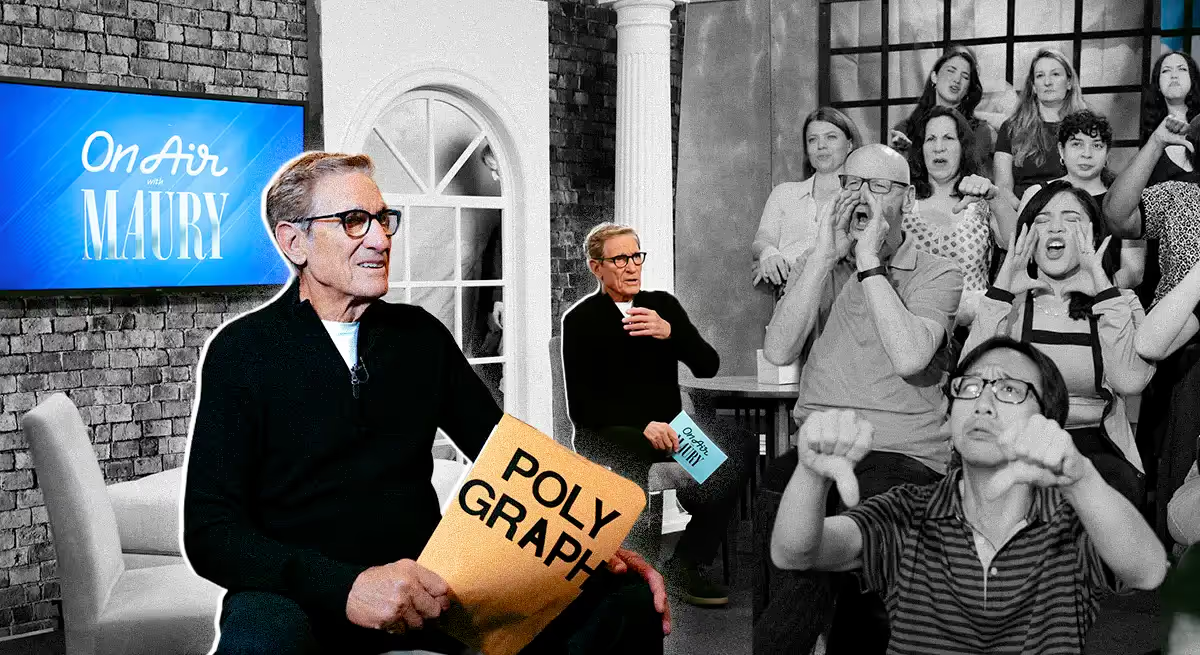
On May 5, 2026, an 87-year-old man in a knit half-zip sweater walked into a SoHo office full of twenty-somethings with stick-and-poke tattoos and proceeded to determine the paternity of a synthetic AI girlfriend.
The man was Maury Povich. The office belonged to Air, a creative operations platform that competes with Dropbox and Google Drive. The 12-minute video, On Air with Maury Povich, racked up over 1.5 million views on Instagram and 82,000 interactions in its first week. Fast Company covered it as a creative marketing story, and it is one. But the more interesting read on what Air is doing has nothing to do with Maury, or the Rizzler, or the time they hired elderly actors to protest outside an Adweek conference holding signs that said "Dropbox needs botox."
The interesting read is that Air might be running the most sophisticated brand insurance policy in B2B, at exactly the moment the entire industry needs one.
The Subsidy Cliff
Last week's piece laid out the economics of AI subscription pricing. The short version: every major AI lab is losing money on every seat they sell. Microsoft was reportedly burning $20 per user per month on GitHub Copilot. GitHub is moving to usage-based billing on June 1 because the flat-fee model buckled under agentic workloads. OpenAI's own VP of Product compared unlimited AI plans to 'unlimited electricity,' a metaphor no company reaches for when it plans to hold prices.
The repricing has already started, showing up in contract renewals, consumption caps, and the quiet death of unlimited tiers. Invoices no longer match the budgets. Across thousands of companies that wove cheap AI into their operations, the exposure looks identical. Those same tools and same workflows that produced the same generic output sped everyone up without setting anyone apart. And when the cost of fast goes up 5x or 10x, companies without a reason for customers to stay will watch them leave.
The Company Betting Against Its Own Industry
When we interviewed Ariel Rubin, Air's Head of Content, for the inaugural feature on State of Brand, he laid out a philosophy that sounds simple until you realize almost nobody in B2B actually practices it.
"I only make stuff that I like. I only make stuff that I would watch normally," Rubin told us. "As long as I'm the ICP of this business, I know."
Rubin is describing taste as infrastructure. CEO Shane Hegde made the same argument in a handwritten letter in the New York Times headlined "AI would never smoke a cigarette with you": zero-to-one creative work will never be automated. The rough, irrational, human-flavored work of making something people actually feel something about stays human. The multiplication, versioning, resizing, and distribution get automated. Air builds the tools for the second while staking its entire brand identity on the first.
The Maury campaign is the most ambitious proof point yet. But what makes it worth studying is the operating model underneath the creative.
The Moonshot Is the Model
Fast Company's coverage focused on the celebrity, the set recreation, and the internet response. All true, and all beside the point.
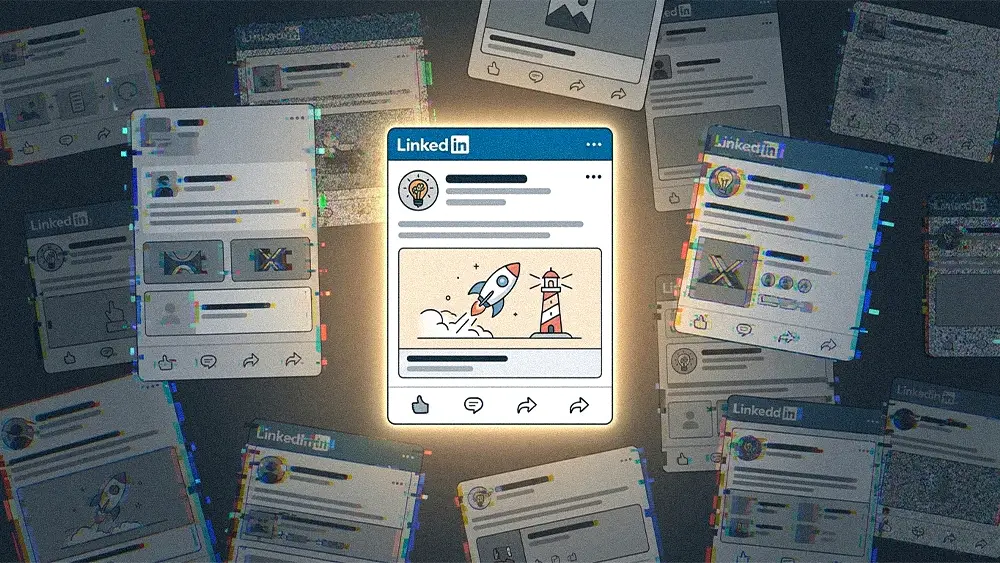
Air cut 90% of its marketing budget and tripled revenue in 18 months. Those cuts were a deliberate consolidation around one thesis, away from paid acquisition and performance channels, toward creative as the primary engine. As Hegde told Lerer Hippeau, "Content is the tentpole by which we surround our entire marketing strategy. These campaigns are the lighthouse. Everything we do, paid, lifecycle, SEO, waterfalls from that."
A typical B2B content strategy is a blog nobody reads, feeding a nurture sequence nobody opens. Air inverted the model. The brand generates the gravity while everything else orbits it.
The Maury campaign scaled that model further: a 12-minute produced video, a recreated television set, a live audience, and a launch party at Air's SoHo headquarters. It earned back its cost in ways performance spend rarely does. Press coverage and word-of-mouth that outlive the campaign.
March set the pace, and it has only sped up. The NYT letter drove four times as many product sign-ups in April as the prior month, resulting in the company's best revenue month in history. The Maury campaign landed 1.5 million views and a Fast Company feature within a week. The moonshots keep landing.
When the Subsidy Dies, Brand Is All That's Left
None of that is coincidental timing. The environment these campaigns are landing in is getting significantly harder for everyone else, and Air knows it.
U.S. organizations are projecting average AI spending of $207 million over the next 12 months, nearly double the year prior. Consumption costs at major enterprises are already running pace with engineers' salaries. When the largest AI labs hit public markets, the subsidies disappear. Every tool selling flat-rate access to compute-heavy features will have to charge what those features actually cost.
For two years, the dominant assumption across B2B has been that cheap API access would hold. Companies built products on it. They generated campaigns at negligible marginal cost. They assumed a $20 subscription would cover infinite usage. When that assumption breaks, the exposure is going to be ugly. Products are indistinguishable from twelve other tools built on the same models. Output that looks like everyone else's because it came from the same prompts. No brand equity to fall back on because no one ever invested in building any.
Air built a real product underneath the brand. Canvas is a capable tool for multiplying approved creative assets across formats and channels, the kind of operational leverage that justifies a procurement conversation. The brand is what the product cannot be: specific and hard to forget in a category designed to be forgettable.
As Rubin told us in our original interview: "We're up against Figma and Apple. And we're a creative ops startup." Winning that comparison requires earning the attention and trust of creative professionals who evaluate work for a living, an audience that cannot be bought or automated into loyalty. They have to choose to watch, share, and talk about what Air makes, and that requires human judgment at every step.
Rubin's line about the Rizzler campaign, that Air was "time-capsuling the moment when AI is still bad enough to be funny," might be the most strategically self-aware thing anyone in B2B marketing has said this year. He knows the window is open. He knows it will not stay that way. And rather than hedge, he is sprinting.
Clay is running a similar playbook in outbound sales, building its moat through media and community rather than performance spend. A few others are treating brand as a core strategic function rather than a cost center. But they remain a small minority. Most B2B operators still default to the same playbook, where performance gets the budget and brand gets the cuts when belts tighten. The companies running that model are about to discover what happens when the cheap AI that made it work stops being cheap.
The Cigarette Test
Hegde's NYT headline is doing more work than it appears to. On the surface, it is a humanistic statement about the irreplaceability of creative intuition, the rough edges, the happy accidents, the ideas that emerge from a late-night conversation or a bad mood, the things that make creative work feel alive rather than optimized. Co-founder Tyler Strand told Fast Company that the Maury campaign and the NYT ad are "cut from the same cloth," calling them "allergic reactions to the fully AI-generated future."
The philosophy doubles as positioning. Every competitor in the category is selling AI as a replacement for human work. Air is selling AI as protection for it. The pitch holds up because it is one of the few in the category that does not require the customer to believe something obviously untrue. And every repricing in the category is free marketing for Air.
Povich captured it better than any brief could have. He said he would not have come out of retirement for something "strictly AI." An 87-year-old retired television host, a man who spent 31 seasons reading live studio audiences, could feel the difference between something generated and something made.
That instinct is the whole thesis. When the subsidies disappear and every B2B product runs on the same models at the same price, the only durable asset left is what the model cannot generate. The companies that built brands these years will be the ones cashing the receipts.

If this caught your attention, that’s not accidental.

The best editorial systems don’t happen by accident. Outlever builds them.

If this caught your attention, that’s not accidental.

The best editorial systems don’t happen by accident. Outlever builds them.


Come back for the reason it lands.
Subscribe for the kind of thinking that makes people stop, read and come back.