OpenAI Put Ads in ChatGPT. The Trust Contract With AI Search Is Already Over.
On February 9, 2026, OpenAI started testing ads in ChatGPT. Sponsored recommendations now show up at the bottom of AI-generated responses for users on the Free and Go tiers.
Make State of Brand one of your go-to sources on Google

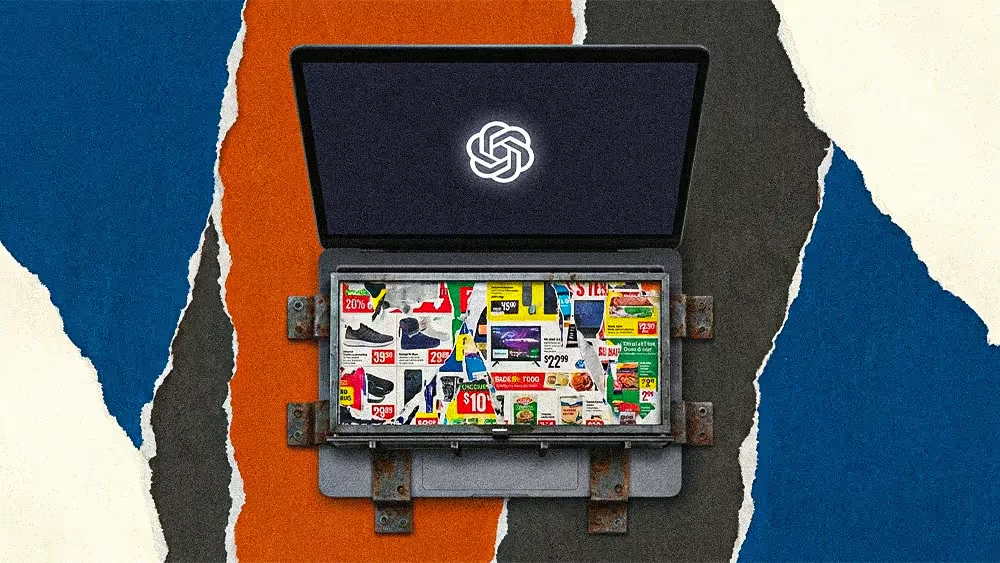
On February 9, 2026, OpenAI started testing ads in ChatGPT. Sponsored recommendations now show up at the bottom of AI-generated responses for users on the Free and Go tiers. Launch partners included Target, Adobe, Williams-Sonoma, and Albertsons. Beta advertisers committed between $200,000 and $1,000,000 to get in. By late March, the pilot had hit $100 million in annualized ad revenue in just six weeks. Self-serve access rolled out in April. OpenAI is now expanding to Canada, Australia, and New Zealand.
This moved fast, and most brand teams have not caught up to what it actually means.
We have spent months writing about AI search as the new discovery layer. Brands that act like publishers win AI search. LinkedIn has become AI's favorite source material. Our position has been clear: brands need to produce the kind of authoritative, educational content that AI systems cite, because that is how buyers are forming their first impressions now. That position is still right. But the introduction of paid placement inside AI responses adds something new that every brand needs to reckon with.
Trust Is the Only Thing That Mattered, and OpenAI Just Monetized It
OpenAI says ads will not influence ChatGPT's organic responses. Their published Answer Independence principle states that answers are optimized for helpfulness and ads are always separate and clearly labeled. Their March update reported no impact on trust metrics and low dismissal rates.
That framing misses the point. It does not matter whether ads technically influence responses. What matters is whether users believe they do. And once that question gets introduced, it doesn't go away.
For years, the core advantage of AI search over Google was the absence of commercial incentives in the response. When someone asked ChatGPT for a product recommendation, there was an implicit trust that the answer reflected the model's reasoning, not someone's ad spend. That trust was the product's most valuable asset. More valuable than any feature. More valuable than any model improvement. OpenAI just put a price tag on it.
The early data shows users tolerating the ads. But tolerance is not trust. 75% of consumers already believe AI agents could find them better deals than they find on their own, according to Moloco and BCG's AI Disruption Index. That belief depends on the assumption that the AI is working for the user, not for the advertiser. Once that assumption gets muddied, the value proposition of AI-assisted discovery weakens for everyone.
What Brands Should Take From This
If you have been investing in owned media and organic AI visibility, this changes the game in two ways.
First, there is now a paid channel inside AI search. Brands with big budgets can buy their way into ChatGPT responses. If your competitor is spending $250,000 on sponsored recommendations and you are relying on organic citation alone, they will show up in conversations where you won't. The same dynamic that played out in Google over the past 15 years, paid placement slowly consuming the real estate that organic content used to own, is now beginning in AI search.
Second, and this is the part we care about more, it makes organic AI citation more valuable than it was last month. Users can see a "Sponsored" label. They know the difference between the answer and the ad beneath it. The brands that appear in the organic portion of the response, the actual answer, carry more credibility than the ones that paid to sit below it. Earning that organic citation requires exactly what we have been writing about for months: a publishing operation, an editorial voice, authoritative content, and consistent output that AI systems learn to reference as source material.
The companies that built owned media programs over the past two years just got a competitive advantage they didn't plan for. Their content earns the organic citation. Their competitor's ad spend buys the sponsored slot. In the buyer's mind, the citation carries more weight. The ad is an ad. The citation is the AI making a judgment call. That distinction is everything.
This Is the Beginning of a Pattern
This is not only an OpenAI story. It is the beginning of something that will play out across every AI platform. When 80% of Google AI Overviews produce zero clicks and 60% of all searches end without a click, the AI-generated response is where the brand impression gets made. If that space is now for sale, every brand needs to answer a simple question: are you the answer, or are you the ad?
The brands that invested in becoming the answer, by building the publishing operation and editorial authority that AI systems cite on their own, are in the strongest position they could be in. The ones that didn't are looking at a future where they pay to appear in conversations they could have owned for free if they'd started six months earlier.
OpenAI's trust numbers may hold for now. But the precedent is locked in. AI search has been commercialized. The brands that built owned media, original research, and expert-driven content are the ones whose presence in AI responses won't come with a "Sponsored" label attached.

If this caught your attention, that’s not accidental.

The best editorial systems don’t happen by accident. Outlever builds them.
If this caught your attention, that’s not accidental.

The best editorial systems don’t happen by accident. Outlever builds them.
Come back for the reason it lands.
Subscribe for the kind of thinking that makes people stop, read and come back.