I have a master plan to create the world's best B2B media company. I think Clay can incubate what could be the next Morning Brew or the next Business Insider. That is the goal.
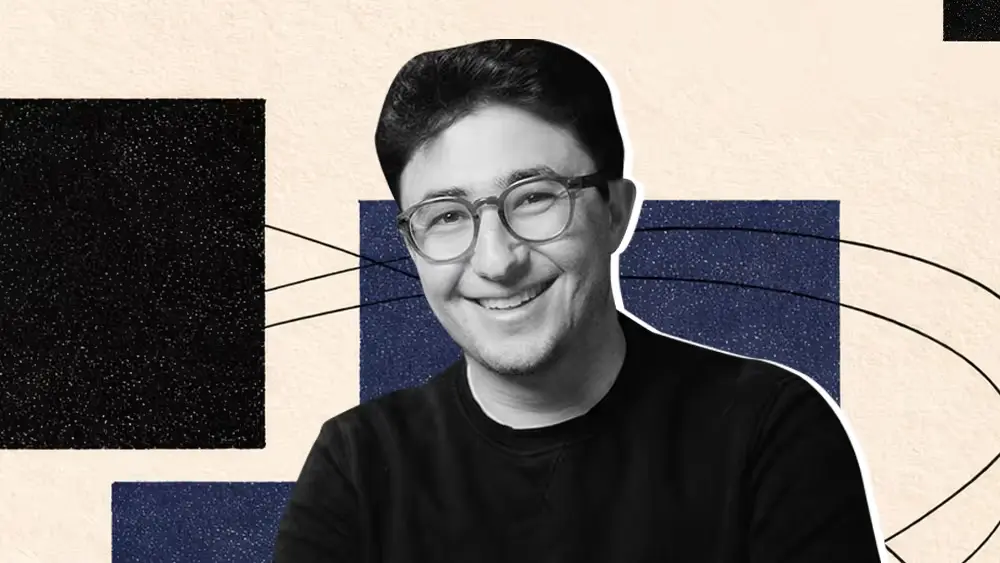
 Jake BlockHead of Studio @ Clay
More B2B content than ever is being produced as AI floods the market with technically competent, deeply forgettable material. The companies breaking through are the ones treating creative work as a core business function rather than a support layer. At this volume, taste is the real differentiator.
Jake Block is the Head of Studio at Clay, the AI-powered go-to-market platform that has grown from near-zero to over $100 million in ARR in roughly two years. Block came to the role from HubSpot, where he spent years building media properties and running production at scale. He has built his career on a single premise: that the best creative teams operate with maximum ownership and minimum interference, and that the brands worth paying attention to are the ones run by people who actually care about the craft. He believes the next era of B2B belongs to companies willing to operate less like marketing departments and more like media companies.
In my time at ClickUp, we made the same kind of bet by choosing video as the medium through which every piece of brand storytelling would flow. That consistency compounded into a brand people could actually feel, something rare in B2B. When I see Clay making a similar investment, I see a company that understands that at their scale, the entire market has to know who they are, and performance marketing alone won't get them there.
"When we swing, we swing," says Block, describing a creative philosophy built around intentionality over volume. 75% of content professionals say AI has already increased their organization's content volume, and the feed is only getting noisier. For Block, the content flood is what makes the studio worth building.
The buy-in story: Most studios never survive the buy-in process even if the vision is there. They don't get the real authority to execute, causing creative teams get absorbed into demand gen and lose their identity. Block's path to Clay was unconventional, and he thinks that's part of why it worked. After repeatedly pitching Varun Anand, one of Clay's co-founders, to appear on a show he was producing at HubSpot, the two finally met at a podcast recording and Varun asked if Block just wanted to work at Clay. A 35-page deck and two and a half weeks later, he had the job. "The buy-in process was my interview," he says. "I've worked in places where the best creatives in the world were being told what to do by someone that's like an answer-level marketer. That is not how you create beautiful work." The takeaway for anyone making a similar case inside their own organization is that vague creative ambition gets overridden, but a specific vision with a point of view does not.
Two organizations, one studio: The studio Block is building has two distinct parts. The first is a high-end marketing video arm, where the talent leads the creative and marketing sets the goal. "Marketing is never deciding what the content is. That puts us in a really great space to make more effective creative," he says. The second is an entire media division. "Nobody wants to talk to a brand or buy from a brand. They want to talk to people," Block says. "We are building personality-based YouTube channels fully aligned with newsletters, events, anything you can imagine. We want to make content you watch on Sunday morning." With LinkedIn video watch time growing 36% year-on-year in 2025, the audience is already there. The creator ecosystem at Clay handles word-of-mouth and the studio is where Clay starts owning its own narrative.
The pattern I've seen in every brand studio is commit to a medium completely and build the systems around it. Think about brand and performance in parallel from day one. For brand leaders managing small teams under pressure to produce more, the instinct is to hire faster and output more. Block's model runs the opposite direction, where he keeps the team lean, gives everyone full ownership, and never treats a creative person like a production service.
Hiring for taste: The question Block asks every candidate is deceptively simple: what do you watch? With 94% of marketers planning to use AI in content creation in 2026, the tools are table stakes but they can't replicate the judgment to know what is actually worth making. His ideal hire is a full-stack creative who can produce, direct, and insert their own voice into a story in a way that actually moves an audience. He points to a YouTube creator named Ian who documented his daily life working at a 7-Eleven and built hundreds of thousands of followers doing it. "I would love to hire him. That is the right type of storyteller, someone willing to turn mundane moments into something people want to watch." The best creative talent for a B2B studio often has nothing to do with B2B.
Speed without sacrifice: Clay moves fast, and Block's answer to matching that pace without flattening the work is autonomy. When the team set out to reimagine the case study format, Block hired crews locally in London and Stockholm, brought in an Amsterdam-based animation house called Yonk, and delivered a fully animated asset in three weeks. The only approvals required were for the likenesses of people on screen. "We only really tell stories that we want to tell," Block says. "There is a reason to have high velocity across other channels. But when we talk about video, when we swing, we swing." Brand and performance don't get built simultaneously here. Block makes creative strong enough on its own terms and lets other functions, growth, and PMM adapt it for their needs.
Block is direct about where all of this is headed. "I have a master plan to create the world's best B2B media company," he says. "I think Clay can incubate what could be the next Morning Brew or the next Business Insider. That is the goal." It is a bet that aligns with a broader industry shift as 32% of B2B marketers plan to increase investment in owned media in 2026, moving toward channels they control rather than renting attention from platforms.
Most brand teams won't build the next Morning Brew, but the underlying logic doesn't require a $5 billion valuation to apply. Pick a medium, commit to it, and hire people who care about the craft. AI has made it easier than ever to produce content and the only thing that separates one brand from another is whether someone made a real decision about it. "Taste is the only differentiator," Block says. "That's the worst Twitter post ever. But it's true."