I love when people hate it. As long as we're in the mix, we're staying on the right side of history by being true to ourselves. We're not pandering.
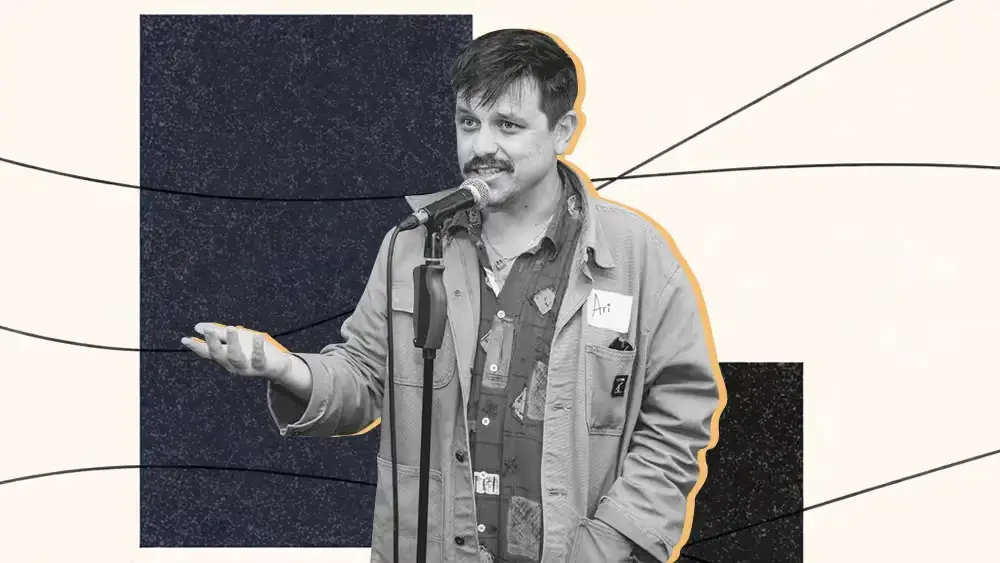
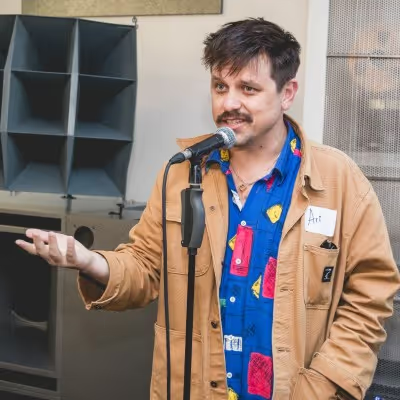 Ariel RubinHead of Content @ Air
Creative operations software should be one of the most forgettable categories in B2B. Air has made it one of the most talked about, and budget has almost nothing to do with it.
Air, the creative operations platform used by Google, JPMorgan, Mars, and Saatchi & Saatchi, takes out a full-page ad in the New York Times on March 24, 2026. It is a handwritten letter from CEO and Co-Founder Shane Hegde with a single headline: "AI would never smoke a cigarette with you." Then he puts his personal cell phone number at the bottom and invites the entire readership to call him. That same week, Air ships the largest product update in its history, a suite of AI tools for resizing, versioning, and distributing creative assets at scale. They go all-in on AI and announce it with a handwritten newspaper ad.
Ariel Rubin is Air's Head of Content and the architect behind most of these campaigns. A former communications professional at the United Nations and the Red Cross, Rubin spent a decade navigating large-scale institutions before joining Air four years ago as one of its earliest marketing hires. He has since built the team from two people to a twelve-person creative operation spanning design, social, events, and community. He reports directly to Hegde, with no layers in between. His philosophy is blunt and uncompromising. "I love when people hate it. As long as we're in the mix, we're staying on the right side of history by being true to ourselves. We're not pandering."
Out-rizzed Apple: In late 2024, Air hired the Rizzler, a third grader from New Jersey who went viral after a video of him dressed as Black Panther swept Instagram, to star in a B2B software ad. There was no script. Just the Rizzler playing basketball and goofing off with comedian Kareem Rahma, Air's self-described "Chief Imagination Officer," both dressed as Steve Jobs. New York Nico, the street photographer and cultural documentarian with over a million Instagram followers, directed. Taylor Lorenz, the tech and internet culture journalist formerly of the Washington Post, was cast as an obnoxious journalist who wouldn't stop interrupting. The ad won a Webby Award, beating out Apple, Squarespace, and TBWA. Rahma's role itself became content, with a multi-month saga around his fake hiring, firing, and rehiring as Chief Imagination Officer that culminated in a 20-minute mockumentary where he went undercover at a creative operations conference in London. "We're up against Figma and Apple. And we're a creative ops startup," says Rubin.
Dropbox needs botox: Air hired elderly actors to stage a protest outside Adweek's Commerceweek conference, holding signs reading "Dropbox needs botox" and "I was 28 when I started downloading this file," complete with a fake news crew. The stunt went genuinely, organically viral. Rubin and the team followed it with Silicon Gables, a parody website styled as a retirement community for legacy software with a care team hotline. The Iceland campaign "Best Air Ever" featured canned air, Icelandic gin ice luges, and a product moment woven into the content. Air also produced "Out to Lunch," a two-season series sponsored by JP Morgan featuring candid conversations with brand builders and CMOs about the realities of building a brand. "We don't take ourselves too seriously. At the end of the day, the world is on fire. Who cares? It's B2B SaaS," says Rubin.
The results speak for themselves. Air cut 90% of its marketing spend, tripled its revenue, and hit an 83% gross margin. LinkedIn has driven more ARR than any other organic channel. What stands out is the operating model behind the numbers. Most of what gets pitched at Air ships, often within days. New concepts go from idea to production in a week. The arrival of Head of Marketing Jeffrey Tousignant, formerly of Figma, brought more product discipline to the creative process, ensuring campaigns carry clear product moments alongside the cultural swings. That velocity is only possible when creative teams have both the instinct to move fast and the executive trust to do it without layers of approval slowing everything down.
Culture attracts talent: Air's creative reputation has become its own recruiting engine. Candidates show up already bought in. "They come to our events, they've seen the work, and they're like, 'I love this, I want to be part of this,'" says Rubin. The hiring pipeline deliberately pulls from outside traditional B2B marketing, drawing from different creative backgrounds and disciplines. "A lot of them aren't necessarily traditional B2B marketers. Some of them come from different spaces. And I think that's what makes it really fun and engaging," he says. Air's brownstone office in Chinatown, which doubles as an event space hosting programming with Morning Brew and Perfectly Imperfect, gives prospective hires a feel for the culture before they ever apply.
Polarization is a feature: Bold creative attracts backlash, and Rubin and Hegde both welcome it. "This is why we work well together. We both welcome that. Because it means we touched something," says Rubin. The same philosophy extends to creator partnerships. Rubin's approach to creator partnerships reflects the same ethos: minimal feedback, no obligation to post. If a creator isn't proud enough of the work to share it on their own, that's a signal the work isn't good enough. The filter for what gets made internally is equally simple. "I only make stuff that I like. I only make stuff that I would watch normally. As long as I'm the ICP of this business, I know," he says. Hegde keeps that filter honest. "Shane will say to me, 'Don't do the thing you do when you try to make it for the VC audience or the founder audience. You're not good at that. Make the stuff for the ICP.'"
Air's approach isn't replicable in a copy-paste sense. You can't hire the Rizzler or stage a geriatric protest and expect the same results. What is replicable is the operating model. Creative has to be treated as a moat. Cultural engagement has to happen at a cadence that keeps the brand in conversation between product launches. And when every company has access to the same AI tools, the only durable advantage is taste, point of view, and creative conviction. Rubin's advice for anyone trying to build something similar is characteristically direct. "If you're at an organization where leadership doesn't see it, I would quit. I spent a long time pushing a boulder up a hill in places where they didn't get it. I ship something here every two weeks because I have the space and the trust to do it. There are a lot of founders who see this now. AI made that clear really fast. There's a million companies that sell cloud storage, but there's only one Air."