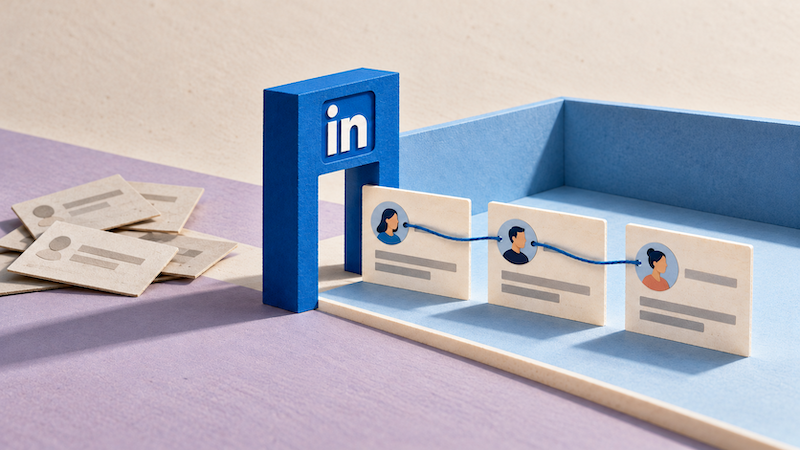
LinkedIn's new Network tab shows members posts only from their connections and the accounts they follow. It's a small test with a poor track record behind it, but it shows how much of a Company Page's reach the algorithm has been lending it.
For most of its life, a LinkedIn Company Page hasn't needed many followers to get seen. The algorithm decides who sees a post, and it has been happy to show brand content to plenty of people who never clicked follow.
LinkedIn is now testing a feed where that doesn't happen. On September 18, Chief Product Officer Hari Srinivasan announced a "Network" tab that shows only posts from people a member has connected with or followed. It sits next to the main feed, which stays the default. Social Media Today reported the test two days later.
Srinivasan pitched the tab as a way to bring more real connection with real people back to the platform. For brands, it's also a preview of their reach once it's limited to the audience they actually own.
LinkedIn is trying to win back a feed people trust
The test lands after a year of LinkedIn fighting its own feed. It has gone after engagement pods, the groups that trade likes and comments to game distribution, and added a way to report AI-generated posts. A tab limited to accounts a member picked is the bluntest filter it has tried for both.
LinkedIn hasn't said how many members are in the test, where it's running or how long it will last. It also hasn't said whether posts from Company Pages a member follows will appear in the tab, or only posts from people. Srinivasan's description talks about people. That one detail decides how much this matters to brands.
LinkedIn has built this tab before
LinkedIn has a habit of testing a way out of its algorithm and then keeping the algorithm. It previously ran a five-week test of a "My Network" tab that looked a lot like this one, showing posts from connections and from people and pages members followed. In 2025 a small group of US members got "For You," "Following" and "News" tabs, and LinkedIn later posted that the test had ended. In June it tried topic-based suggested feeds. None became a standard feature.
Social Media Today's Andrew Hutchinson gave this one slim odds, and the history backs him up. Algorithmic feeds keep people scrolling, which is why LinkedIn is keeping its own as the default.
The more useful detail is where LinkedIn keeps landing. Every time the feed fills up with pods and slop, the company reaches for the member's own network as the fix. That tells brands which kind of reach the platform trusts, whether or not this particular tab ships.
The algorithm has been lending pages their reach
Metricool's 2026 LinkedIn study of 673,658 posts from 63,108 accounts found that Company Pages and personal profiles get about the same number of impressions per post. What happens after the impression is different. Personal profiles averaged a 2.60% engagement rate to pages' 1.60%, and they drew far more comments, while pages got far more shares.
The growth number is the one to sit with. Only about 7% of Company Pages grew their following over the period Metricool studied.
Put that next to a follow-only feed. In the main feed, the algorithm can carry a page's post to people who never followed it, which is how pages end up with people-sized impressions. In a Network tab, that loan goes away. A page reaches its followers at most, and if LinkedIn leaves pages out, it reaches nobody there. For most pages, the follower count that would set that limit hasn't moved in a year.
Executives and employees don't have that problem. Their connections are what the tab is built from, and their posts already earn the conversation.
The pages that should worry are the ones renting their audience
State of Brand has argued that the brands keeping their audiences now are the ones publishing their own rather than renting someone else's. A LinkedIn Company Page sits awkwardly between the two. The follower list feels owned, but most of the reach has been rented from the algorithm.
A Network tab would make the difference visible. A page with a real following of customers, candidates and peers would keep its place in front of them. A page that has been posting to whoever the algorithm sent would find out how small its audience is.
The people side shifts too. Professionals are already building audiences their employers can't take away, and a connections-only feed favors exactly those accounts. Brands that want to be in that feed will mostly get there through the people who work for them. That works when the posts are real. With LinkedIn cracking down on pods, a coordinated employee-amplification program is as likely to get flagged as rewarded.
What to do before LinkedIn decides
This is a test, and LinkedIn's history says it may not survive. Nothing about it requires a brand to change course this quarter. It does point to a few things worth doing anyway.
Report page follower growth with the same weight as impressions. If reach ever narrows to followers, the follower base is the number that matters, and most pages aren't growing it.
Let the page do what it does well. Metricool found page posts with links got 51% more impressions than average, while links cut reach on personal profiles by 27%. The page is a good home for announcements, research and anything people want to pass along.
Give the people with real networks something worth saying, and leave the posting to them.
Then watch for one answer from LinkedIn: whether followed Company Pages show up in the Network tab. If they do, a page's audience becomes its follower list. If they don't, a brand's presence in that feed runs entirely through its people. Either way, the reach the algorithm has been lending is the part brands can't count on.