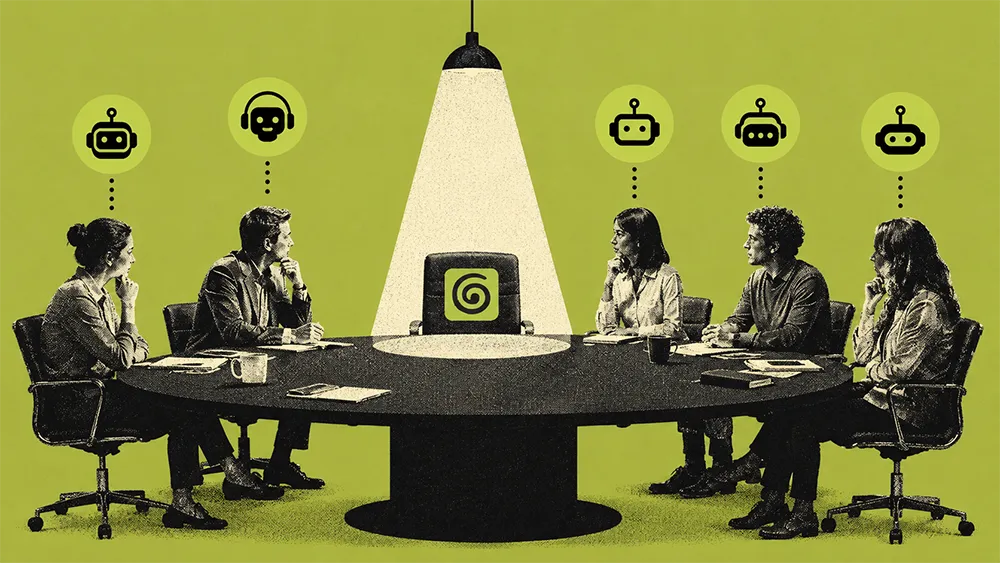
You know the moment. You are forty seconds into a Zoom call with a prospective client, rapport is building, and then the notification slides in: Otter.ai has joined the meeting. A stranger nobody invited just walked into the room and sat down with a recorder. The conversation shifts. Someone asks what that is. Someone else goes quiet. The intimacy of the exchange, the thing that makes meetings worth having in the first place, takes a hit it never fully recovers from.
Every major AI meeting tool built its entire product around that moment. Otter, Fireflies, Fathom. They all work the same way. A bot joins the video call as a visible participant, badge and all, and records everything. The architecture was obvious, it was functional, and it became the default for a category that exploded alongside the remote-work boom.
Granola looked at the default and said no.
Chris Pedregal and Ben Shanfelder started Granola in London in 2023. They made a decision that investors told them was crazy: no bot joins the call. No audio gets stored on a server. Granola runs locally on your laptop, transcribes in the background, and enhances whatever notes you jot down during the meeting. Nobody else on the call knows Granola exists unless you tell them.
That single UX conviction, the refusal to add another attendee, turned into one of the sharpest brand decisions in enterprise software this decade. In March 2026, Granola closed a $125 million Series C led by Index Ventures and Kleiner Perkins, pushing the company's valuation to $1.5 billion. Bloomberg reported that revenue had grown 250 percent in the quarter leading up to the round. Total funding now sits at $192 million.
Granola did not build a better meeting tool. Granola built the anti-meeting-tool, and the market rewarded the distinction.
The Bot Is a Brand Liability and Nobody Treated It Like One
The bot-first competitors missed this: the bot is not a neutral delivery mechanism. It is a brand statement. Every time Otter.ai or Fireflies.ai drops into a call as a named participant, the product is telling every person in that meeting one thing. This conversation is being surveilled by a third party you did not choose. Granola understood that from the beginning. The bot-first players still have not caught up.
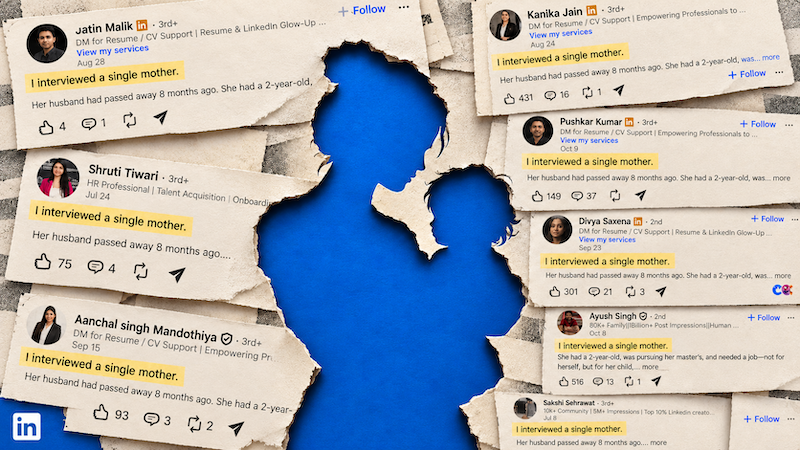
The backlash has been building for years. Organizations have started banning AI bots from meetings outright. Otter faced a class-action lawsuit filed in August 2025 over unauthorized recording and AI model training concerns. Reddit threads and product reviews are filled with people calling meeting bots "spyware with a subscription" and describing organizations that have explicitly banned them. Sales professionals report that prospects visibly change their behavior when they notice the bot sitting in the participant list. One sales reviewer who tested Fathom, Fireflies, and Otter across the same pipeline put it plainly: on internal standups, nobody cares. On a first discovery call with a skeptical mid-market VP, the bot changes the room.
Granola never had to manage any of that backlash because Granola was never in the room to begin with.
The bot-first companies can improve their transcription accuracy, expand their CRM integrations, drop their prices. None of that touches the real issue. The product's most visible touchpoint, the moment it introduces itself to new users, creates friction instead of trust. Granola's most visible touchpoint is nothing. Silence. And silence turns out to be a better brand introduction than a notification nobody asked for.
Granola Bet on Disappearing. Then Grew Almost Entirely by Word of Mouth.
Granola started from a conviction that the best AI meeting tool is the one nobody else knows is running.
Pedregal is a former Google PM who built the education app Socratic to over 10 million monthly users before it won Apple's App of the Year in 2017. He brought that same instinct to Granola: build something people want to tell other people about because of how it makes them feel, not because of a feature checklist. On the Invest Like the Best podcast, Pedregal described Granola's approach as augmentation rather than replacement, building AI tools that make people better rather than replacing them altogether. Granola helps you be better in meetings. It does not outsource the meeting to a machine.
The design follows that conviction at every turn. Pedregal has described Granola's interface as deliberately simple: "There's no bot joining your meeting or special UI to open, just an app on your computer that looks like a notepad, like Apple Notes. You can open it when you want and close it when you don't." Granola captures audio from your device directly, runs speech recognition on your machine, and when the meeting ends, it takes your rough notes and fills them out with context from the transcript. You stay in control. Granola does not take over. It fills in the gaps.
During Granola's year in stealth, the team cut roughly half of the features they had built. On the MAD Podcast with Matt Turck, Pedregal recounted how investors pushed back on the no-bot, no-stored-audio approach. Why not store audio for playback? Why not offer a bot option for people who want it? The Granola team gave the same answer every time: those features would compromise who Granola is.
And that identity, the tool that disappears, became the brand. Granola grew almost entirely through word of mouth, spreading first through VCs and founders in Silicon Valley who would not stop talking about it. The product hit 70 percent weekly user retention, a number that is almost unheard of in consumer AI. Granola did not need a go-to-market playbook. Granola was the go-to-market playbook.
The Bot-First Players Now Face a Problem They Cannot Engineer Around
The companies that built around the bot model are staring at a repositioning crisis. Their products work. Fathom has earned a 5.0 rating on G2 from over 6,000 reviews. Fireflies has strong CRM integration. Otter pioneered real-time transcription. The technology functions. But the architecture is the brand, and the brand is the problem.
You cannot un-bot a product whose entire infrastructure depends on joining calls as a participant. That is not a settings toggle. It is a rebuild. And while these companies figure out how to respond, Granola keeps compounding in the background, quarter after quarter, referral after referral.
There is a second problem, and it is just as uncomfortable. Zoom, Google Meet, and Microsoft Teams all now offer built-in transcription. The baseline functionality that justified installing a separate meeting tool, getting a transcript, is being absorbed by the platforms themselves. If the bot was your delivery mechanism and the transcript was your product, both moats are gone.
Granola avoided that trap because Granola never competed on transcription. Granola competed on the experience of being a person in a meeting who also happens to have AI running quietly on their laptop. Granola's value sits upstream of the transcript, in the relationship between the user and their own notes. Platform-native transcription does not threaten Granola because Granola is not selling transcription. Granola is selling augmentation. Good luck commoditizing that.
What Brand Leaders Should Take From This
The Granola story is not about meeting tools. It is about the fact that the strongest positioning decisions are usually the ones where you choose what your product will not do.
The bot-first tools tried to be present. Granola decided to be absent. The bot-first tools announced themselves. Granola stayed silent. The bot-first tools optimized for data capture. Granola optimized for how people actually behave in meetings.
Every one of those choices was a brand decision, even though none of them would have shown up in a brand strategy deck. There was no logo redesign. No manifesto. No brand campaign. Granola's product was the brand statement, and the statement was this: AI should make you better in a meeting, not replace you with a recording.
That conviction, held through a year of stealth, through investor skepticism, through a market that was sprinting in the opposite direction, is now worth $1.5 billion. Granola reached unicorn status in under three years, starting as two people in London, on the strength of a single product decision made before the company ever launched.
The companies that sent a bot to the call have better transcription, more integrations, and larger feature sets. Granola has a point of view. In a category where every product does roughly the same thing, the point of view won.
This article was produced in partnership with Granola. Editorial direction, reporting, and writing by State of Brand.