Circle's Biggest Launch Makes the Owned-Audience Case Better Than Anyone. The Open Question Is Who Owns the Demand.
Eclipse bets everything on one idea: own your audience, own your demand. The idea is correct. The question the launch buries is who actually owns the demand once Circle runs the matching.
Make State of Brand one of your go-to sources on Google

You have felt the moment, even if you have never made a dollar from content. You post the thing. It does numbers. For about a week you are somebody. Then the algorithm exhales, the reach evaporates, and you are back to refreshing analytics on a following you do not control. The audience was never yours. It was on loan, and the lender just called part of it back.
That moment is the whole business case for Circle, the community platform that shipped its most ambitious product suite to date today. It is called Eclipse, and it lands five products at once: an AI partner, a unified admin inbox, a rebuilt course experience, a consumer discovery marketplace, and a full-service studio arm. Forbes broke the launch and framed it around one line from CEO Sid Yadav: as content gets cheaper and more abundant, the only durable business left in the creator economy is the one built on community.
We have made some version of that argument in a dozen stories. Owned media is the only channel that compounds. Follower count stopped driving reach. The brands that behave like publishers win. Circle is selling the creator-economy edition of the case we keep putting to CMOs. So credit first, then the part the launch-day coverage will skip.
"Own Your Audience" Was Always a Brand Position, Not a Feature
Yadav's framing is some of the cleanest of the owned-audience argument anyone in the creator space has put on record. He divides the business into reach and lifetime value and says almost everyone optimizes the wrong one. Reach is what YouTube, TikTok, and Instagram are built to manufacture, and they are very good at it. But Yadav calls the result "rented land": profitable, useful, and someone else's. Build on it and the terms can change without asking you.
None of this is new. Kevin Kelly wrote "1,000 True Fans" in 2008, and the math has only gotten friendlier since: a thousand members paying a few hundred dollars a year beats a million passive subscribers monetized through pre-roll. What is new is that AI made the argument impossible to dodge. When anyone can generate endless competent content at near-zero cost, reach stops being scarce. Reach gets cheap. The only asset that holds its price is a relationship with people who are actively paying to be in the room.
That is a brand position, not a product spec. It is the same conviction that turned Granola and Ramp into companies people argue about: a point of view held long enough that the rest of the category, too busy chasing reach, never bothered to claim it. Circle has held it for six years. The creator economy it is selling into, worth about $200 billion in 2025 and compounding past 22 percent a year by the company's own count, is finally big enough to make the position worth fighting over.
So far, so aligned. Then you get to the fourth product.
Circle Discover Is the Real Story, and It Quietly Changes What Circle Is
Four of Eclipse's five products are operating leverage. Circle AI builds and runs the community business beside the creator, trained on anonymized patterns from 20,000 communities: what tiers convert, what pricing holds, what works for which kind of creator. The Inbox folds DMs, course comments, and moderation into one queue. The course overhaul turns curriculum-building into a back-and-forth with the AI. Circle Studios is a revenue-share partnership for established creators who want the upside without running the operation. Every one of these makes the creator faster. None of them changes what Circle is.
Circle Discover does.
Discover is a consumer marketplace. Someone shows up with a goal already in mind, get better at music production, find a peer group for brain health, and Circle matches them to the community best able to deliver it. Yadav frames this as intent-based matching rather than algorithm-based reach, and the distinction is real. But look at the mechanism instead of the framing. Circle is moving into the demand layer. For the first time the platform is not only where you keep your community. It is where your next member comes from.
Yadav's stated ambition is to build the Shopify of the digital economy, and the comparison is worth taking literally, mostly for where it breaks. Shopify won by solving infrastructure and then getting out of the way. It let merchants own the customer relationship and deliberately did not manufacture demand. That came from Meta, Google, and word of mouth, none of it Shopify's. Discover is Circle choosing to do the one thing Shopify refused to do.
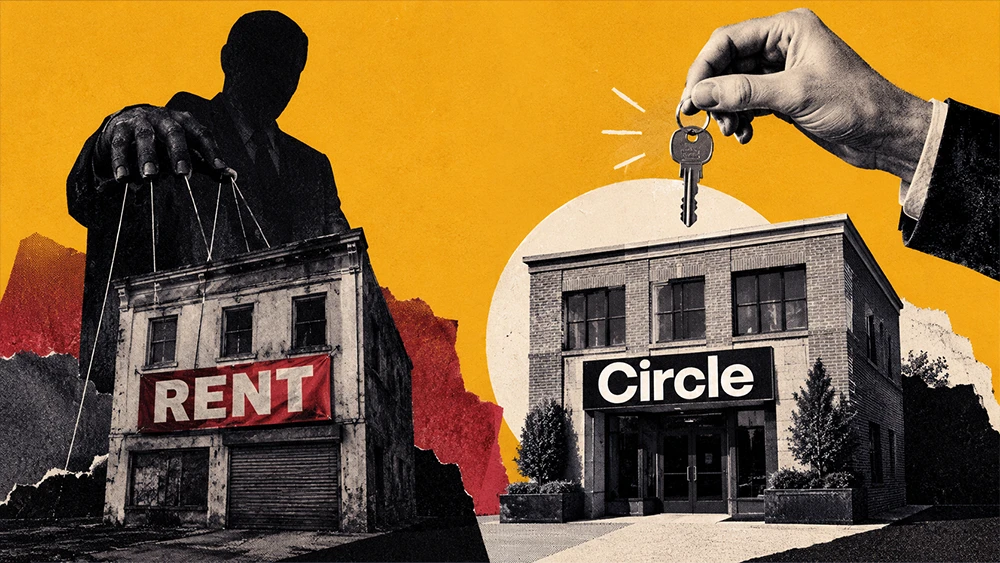
Which surfaces a contradiction nobody flagged on launch day. Circle built its brand warning creators that platform-owned distribution is rented land. Discover makes Circle the platform that owns the distribution. An intent-matching engine that decides which community a motivated buyer sees is, underneath the language, an algorithm allocating reach. Right now it allocates on stated goals. The gravitational pull on every marketplace ever built is to start allocating on whatever grows the marketplace's own take. And Circle Studios partners, the launch notes almost in passing, get top placement in Discover. The ranking is already a lever.
This is not a knock. Owning demand may be the smartest move Circle has made, because owning demand is the most defensible position in any platform business and it is the exact advantage Shopify left on the table. But read it plainly. The pitch is own your audience. The product is we find your audience for you. Those are different promises, and the gap between them is where the leverage lives.
Circle's AI Advantage Is 20,000 Communities of Data
The most revealing line in the launch is a competitive jab. Asked what makes Circle AI different, Yadav's answer comes down to the training data. Ask it how to grow a business like yours, he argues, and you get something specific that a general assistant like ChatGPT or Claude cannot give you.
Read it as a brand strategist, not a creator. Circle is not claiming a better model. It is claiming proprietary ground truth: twenty thousand real community businesses and a record of what actually worked inside them. In a year when every SaaS company is straining to look AI-native, most of them by bolting a general model onto an old product, Circle is making the one AI claim that holds up. We have the data you cannot buy. The model is a commodity. The patterns from 20,000 paying communities are not. That is the right flag to plant, and most of the category has not worked that out yet.
It is also a turn. A quarter ago Circle shipped a connector that let creators pipe their community into ChatGPT, Claude, and Gemini, and spent the spring positioning itself as friendly plumbing for whatever AI you already used. Eclipse positions Circle's own AI as the thing those assistants cannot replicate. Neither move cancels the other. But the brand is sliding from neutral layer to opinionated destination, and Discover and Circle AI are the two products doing the sliding.
What Brand Leaders Should Take From This
Underneath the creator-economy specifics, Eclipse is one move, the only one that builds a moat in an AI-flooded market: stop competing on the thing going free, and own the thing that compounds.
Content is going free. Reach is going cheap. Circle's whole bet is that the assets that survive are the owned relationship and the owned demand, and the bet is right. It is the same logic that should be moving every B2B brand's budget away from rented attention and toward an audience it owns. The creator who built a real community has recurring revenue, a relationship she controls, and a business that does not live or die on next week's algorithm. So does the company that built a real newsroom instead of renting one placement at a time.
The warning half matters just as much. The moment owning demand becomes valuable, everyone wants to be the one who owns it, including the platform that taught you to want it. Circle is now both the landlord's critic and a landlord. Creators building on Eclipse get a faster path to a real community business than has ever existed, and they should take it. They should also hold onto the lesson Circle spent six years teaching them. Whoever owns the distribution owns the leverage, and the terms stay generous only until they don't.
Eclipse is the creator economy finally agreeing with the argument. The next fight is over who owns the demand once everyone agrees.

If this caught your attention, that’s not accidental.

The best editorial systems don’t happen by accident. Outlever builds them.

If this caught your attention, that’s not accidental.

The best editorial systems don’t happen by accident. Outlever builds them.


Come back for the reason it lands.
Subscribe for the kind of thinking that makes people stop, read and come back.