






powered by




Over 150,000 tech workers have been laid off in 2026. Nearly half were attributed to AI. PayPal is cutting 20% of staff. Coinbase cut 14%. Meta dropped 8,000. Oracle shed up to 30,000. Dow, 4,500.
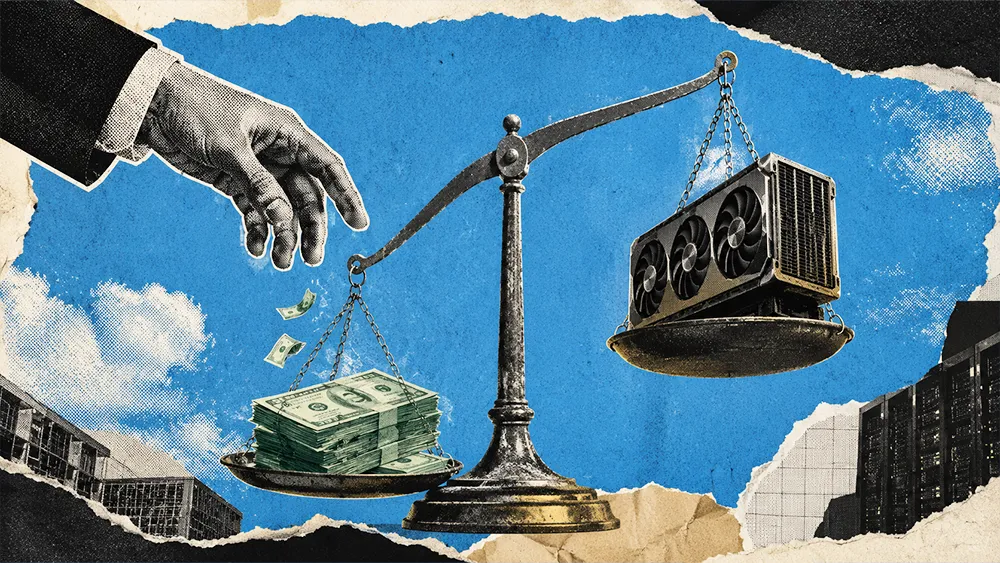
Over 150,000 tech workers have lost their jobs in 2026 so far. Close to half of those cuts were blamed on AI. PayPal is cutting 20% of its workforce. Coinbase cut 14%. Meta let go of 8,000 people. Oracle, somewhere around 30,000. Dow, 4,500.
Read the memos and they all blur together. AI-driven efficiency. Leaner teams. The future of work. But that framing is doing a lot of heavy lifting, and most of it is dishonest
$725 billion. That is what Amazon, Microsoft, Alphabet, and Meta plan to spend on capital projects in 2026. Up 77% from last year. Nearly all of it going into data centers, GPUs, custom chips, and AI infrastructure.
Meta is the cleanest case study. Zuckerberg told employees at a town hall that the 8,000 layoffs are a direct consequence of the AI infrastructure budget. Not a metaphor. The line item. "We basically have two major cost centers in the company: compute infrastructure and people-oriented things," he said.
Now do the math. Meta's total human compensation, every salary, every benefit, every stock grant, runs about $27 billion. Meta's 2026 capex guidance runs $125 billion to $145 billion. The AI infrastructure budget is four to five times the entire payroll. If Meta fired every single employee tomorrow, it would cover about 19% of the compute bill.
The layoffs are not the cost-cutting story. The layoffs are the financing.
Amazon cut roughly 30,000 roles in five months. AWS grew 28% in the same period, its fastest in 15 quarters. Oracle eliminated up to 30,000 positions, roughly 20% of its workforce. The freed capital is going to close a $20 billion AI data center shortfall. Microsoft shed approximately 125,000 through voluntary departures while planning to double its data center footprint.
Amazon shares are up 17% year to date. Alphabet is up 27%. These cuts are not happening because revenue fell. They are happening because capital is moving from one line to another. From people to compute. The layoff memo is the transfer mechanism.
Andy Challenger, chief revenue officer at Challenger, Gray & Christmas, said it plainly: "Regardless of whether individual jobs are being replaced by AI, the money for those roles is."
Read that again. The money for those roles is going to GPUs whether or not a GPU can do those roles.
Even Sam Altman has said it. "I don't know what the exact percentage is, but there's some AI washing where people are blaming AI for layoffs that they would otherwise do."
Ben May, director of global macro research at Oxford Economics, went further: "We suspect some firms are trying to dress up layoffs as a good news story rather than a bad one, for example, by pointing to technological change instead of past overhiring."
The distinction matters enormously. "AI replaced your role" is a technology story. "We need your salary to buy GPUs" is a capital allocation story. The first says your skills became obsolete. The second says your skills are fine but your budget line got reassigned.
Bloomberg data suggests roughly half of AI-attributed layoffs will result in the same roles being rehired offshore or at lower salaries. That is not labour reduction. It is labour repricing. Different thing entirely.
Some displacement is real. Customer support, QA, content moderation, and mid-level management are getting hit hardest. Atlassian cut 1,600 roles concentrated in those areas and posted 800 new positions in AI engineering and ML operations the same week.
That template is now standard. Invest in AI infrastructure for 12 to 18 months. Assess which roles can be automated. Announce layoffs with AI attribution. Hire for AI-adjacent roles. Net headcount drops. The skills profile of the workforce changes completely.
The problem for displaced workers is simple and brutal: the new roles require entirely different skills, and nobody is reskilling on a timeline that matches displacement.
275,000 AI-related job postings sat open in the U.S. during Q1, right alongside the record cuts. Companies report a 92% increase in AI hiring, with a 56% wage premium. The workers being laid off are not the workers being hired.
If the memos were written honestly they would say something like: We are in an arms race. The cost of staying competitive in AI exceeds anything we have ever spent on anything, including you. We need your salary to buy chips. We will hire different people, with different skills, at different price points, to work alongside the machines your budget paid for. We are sorry. We are also not going to slow down.
Zuckerberg basically said that. Most other CEOs are still hiding behind the polished version.
IBM is one of the few companies going the other direction. They reportedly tripled entry-level hiring in 2026, arguing that cutting those roles erases the pipeline you need to train future senior talent. It is a minority position. Most companies are choosing the GPU.
If you are planning AI-attributed layoffs, be precise about what you are actually doing. Framing a capital reallocation as a technology displacement story plays well on an earnings call. It creates legal, cultural, and reputational risk when the real reason surfaces. And it will.
If you are watching from the sidelines, the displaced talent pool is deep, experienced, and available. Senior engineers from Salesforce, Intel, and Workday are on the market at the highest rates since 2022. There is an arbitrage for organizations willing to hire the humans that everyone else just traded for silicon.
And if you are one of the 150,000: in most cases, a machine did not learn to do your job. A spreadsheet moved your budget to a different row.


The best editorial systems don’t happen by accident. Outlever builds them.


The best editorial systems don’t happen by accident. Outlever builds them.

Subscribe for the kind of thinking that makes people stop, read and come back.