We Power Our Own News Site. Here's Why That Changes Everything.
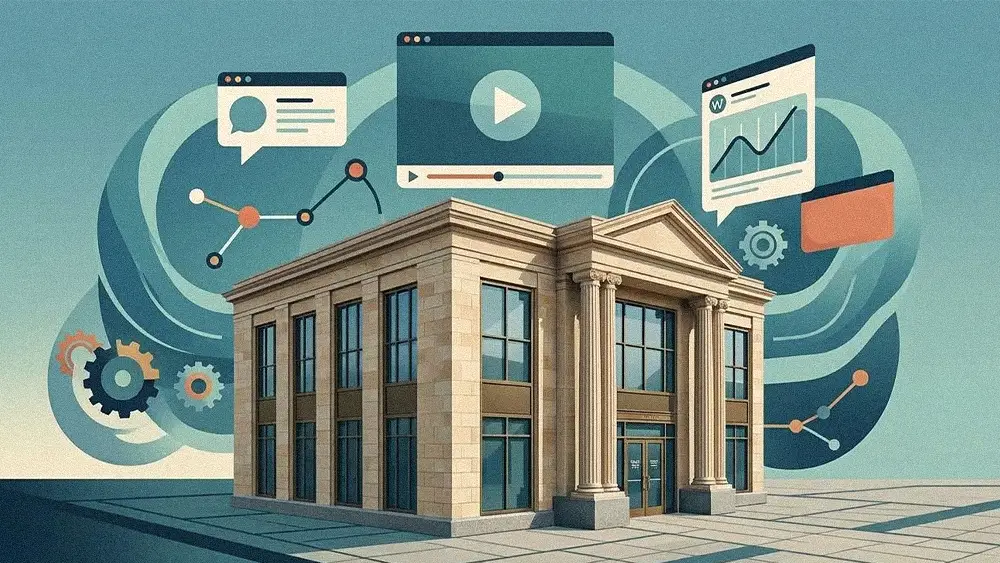
State of Brand runs on the same infrastructure we deploy for our customers. This was never a marketing decision.
Make State of Brand one of your go-to sources on Google

Most B2B companies sell a product they have never operated at scale for themselves. They build tools, write case studies about other people using those tools, and ask prospects to trust the pitch. I have sat across the table from enough vendors to know the gap between what gets sold and what gets used internally. It is one of the industry's most persistent blind spots.
When we launched State of Brand, we built this publication on top of our own platform. The same editorial engine, the same content technology stack, the same distribution infrastructure we deploy for our customers. Every piece you read here runs through the same system powering more than 50 brand newsrooms across our customer base.
We operate the product we sell. Every single day. At editorial speed. In public.
Why We Run Our Own Machine
The software industry calls this dogfooding. But I think what we do goes further than most companies are willing to take it.
State of Brand is not a company blog with a nicer header. It is a working newsroom. We publish daily coverage of shifts in AI, brand strategy, content distribution, and GTM. We staff journalists and editors. We hold ourselves to the same editorial standards we hold our customers to. The content has to perform in real distribution channels. It has to earn readership. It has to compete with trade media and win attention from CMOs, growth leaders, and founders who have plenty of other tabs open.
That means every weakness in the platform surfaces here first. If a publishing workflow creates friction when you are moving fast, our editorial team hits it before any customer does. If a distribution channel shifts in ways the system does not account for, we discover it before anyone else can file a support ticket.
I did not want to be the person who builds the machine and then asks someone else to drive it. If we are going to tell brands they can become the leading voice in their industry using our platform, we should be doing exactly that ourselves. And we should be doing it where everyone can see.
Testing and Learning at Editorial Speed
The operational benefit goes beyond catching bugs. State of Brand is a continuous testing environment for editorial and distribution strategy. It generates real data on what works, across real audiences, in real time.
Every editorial decision we make here produces signal. Which headline structures drive the highest engagement among senior marketing leaders? What publishing cadence sustains readership without burning out an audience? How do different content formats perform differently across LinkedIn, direct traffic, and AI citation surfaces?
Most content platforms answer these questions with surveys or customer interviews after the fact. We answer them in market. Continuously. Using the same infrastructure our customers run.
When we find something that works, we do not put it in a quarterly review deck. We deploy it. If a specific ratio of reactive coverage to long-form analysis produces measurably stronger sustained engagement, that finding goes directly into customer instances. Because the system is the same, the distance between insight and implementation is close to zero.
Every optimization that proves itself on State of Brand becomes available across our entire customer portfolio. Often before customers have even encountered the problem the optimization solves.
Using the Motion, Not Just Building It
There is something else here that I think matters more than product improvement. And that is credibility.
Our core offering is building owned media ecosystems. Editorial engines that turn B2B companies into the authoritative news source in their industry. We position this as a fundamental shift in how brands earn attention. Moving from renting reach through paid media and PR placements to owning it through sustained, high quality publishing.
That is a big promise. And it is very hard to make that promise if you have never done it yourself.
State of Brand is the proof. This publication covers the same categories of industry news, analysis, and perspective that our customers' newsrooms cover. It faces the same distribution challenges. It competes for the same type of reader attention. And it has to perform, publicly, in a market where attention is expensive and content is getting cheaper by the day.
When a prospective customer evaluates our platform, the conversation is different because of this. We are not walking them through a demo environment or pointing to a case study from last quarter. We are pointing to a live publication they can read right now, subscribe to, and benchmark against.
The Feedback Loop
Running State of Brand creates a loop that gets stronger the longer we do it.
Our content technology stack is built on AI and proprietary models trained on thousands of hours of executive interviews across industries. As we operate this publication, the system learns from the editorial decisions we make, the audience responses we see, and the distribution patterns that emerge from daily publishing. Those learnings refine the models, improve the workflows, and sharpen the distribution logic. And those improvements flow back into every customer newsroom at the same time.
The more we publish here, the better the system gets. The better the system gets, the more value every customer publication receives. And because we are operating under the same real world pressures our customers face (editorial deadlines, audience expectations, competitive coverage) the improvements are grounded in what actually happens, not what should theoretically work.
What This Means for Brands Building Owned Media
As more companies invest in owned media, the question of infrastructure becomes critical. The difference between a content marketing program and a functioning newsroom is not ambition. It is the system underneath.
Our decision to run State of Brand on our own platform is a statement about that difference. We believe the best way to build infrastructure for owned media is to operate owned media yourself. At pace, at scale, and where people can watch.
For the growing number of brands evaluating whether to build or buy their editorial engine, the question might be simpler than it looks: does the company selling you the system trust it enough to run their own brand on it?
We do. And you are reading the proof.
Melissa Rosenthal, Editor-in-Chief

If this caught your attention, that’s not accidental.

The best editorial systems don’t happen by accident. Outlever builds them.

If this caught your attention, that’s not accidental.

The best editorial systems don’t happen by accident. Outlever builds them.


Come back for the reason it lands.
Subscribe for the kind of thinking that makes people stop, read and come back.