Your LinkedIn Post Isn't Dead After 24 Hours Anymore. That Changes Everything About How You Show Up.
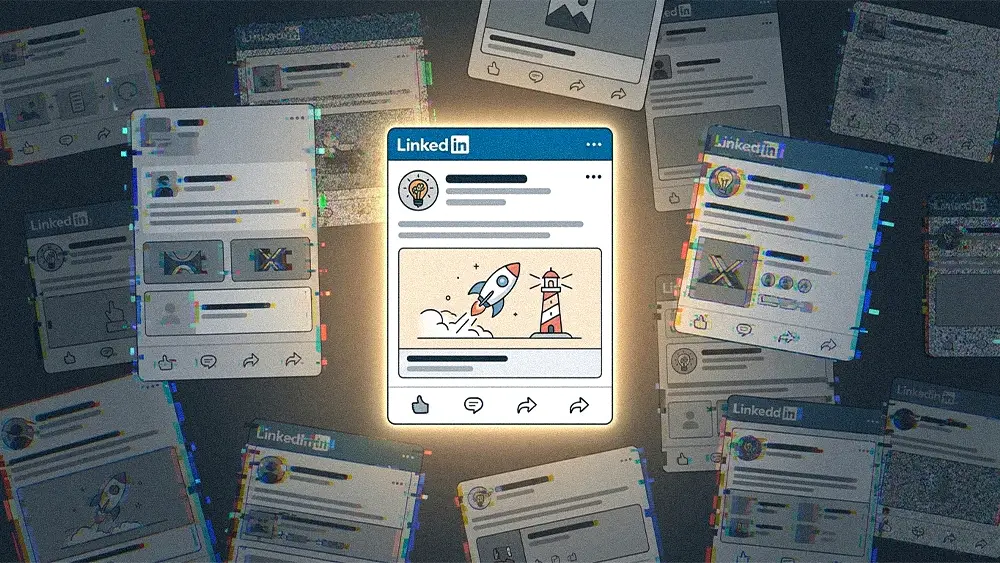
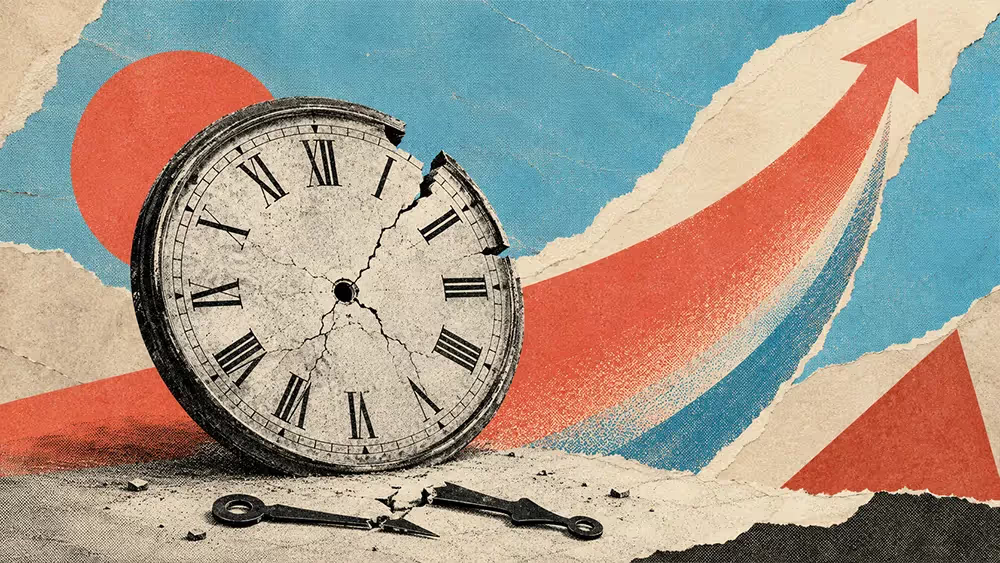
For years, the conventional wisdom around LinkedIn was pretty simple: you post, you get your little burst of engagement, and within a day your content is buried. That's not how LinkedIn works anymore.
Make State of Brand one of your go-to sources on Google

For years, the conventional wisdom around LinkedIn was pretty simple: you post, you get your little burst of engagement, and within a day your content is buried. Gone. Time to make the next one.
That's not how LinkedIn works anymore. And the people who realize this first are going to have a massive compounding advantage over everyone still stuck on the content treadmill.
The Numbers Tell a Different Story Now
Let's start with the hard data. Scott M. Graffius publishes what is arguably the most comprehensive study on social media post lifespans, analyzing over 5.6 million posts across platforms. His 2026 update puts the average half-life of a LinkedIn post at 1,393 minutes. That's roughly 23 hours before a post reaches 50% of its total lifetime engagement.
That number alone is significant. But it's only part of the picture.
According to AuthoredUp's analysis of over 621,000 posts, LinkedIn is now actively resurfacing content that sparks meaningful conversation for two to three weeks in the feed. Not two to three days. Weeks.
Read that again if you need to. A single LinkedIn post can now work for you across multiple weeks if the engagement signals are right.
For context, here's what the rest of the landscape looks like, per Graffius's research: a post on X has a half-life of about 43 minutes. Facebook sits around 81 minutes. Instagram gets roughly 18 hours. LinkedIn, at nearly 24 hours of half-life and a potential feed presence stretching into weeks, is operating on a completely different timeline than every other major social platform.
Why LinkedIn Extended the Shelf Life (and What It Tells Us)
This isn't accidental. LinkedIn made deliberate architectural choices to slow things down.
The platform has shifted from what researchers call a "relationship graph" to an "interest graph." In practical terms, that means LinkedIn used to show you content mostly from people you know. Now, only about 31% of the average feed comes from first-degree connections, with 25% coming from second and third-degree connections and another 10% from suggested posts by total strangers the algorithm thinks you'll find valuable.
LinkedIn also deployed large language models and transformer-based recommendation systems into the feed itself. The algorithm now reads the full text of your post to understand topic relevance, matches it against user interest patterns, and decides distribution based on professional value rather than social proximity.
The result, as Daniel Roth (LinkedIn's chief editor) has confirmed publicly: the platform is intentionally helping content reach more relevant audiences rather than larger audiences.
That tradeoff is real. Richard van der Blom's Algorithm Insights 2025 Report, built on analysis of 1.8 million posts, found that average views are down 50%, engagement has declined about 25%, and follower growth has slowed by 59%. Those numbers sound alarming in isolation. But they're a feature, not a bug. LinkedIn is deliberately narrowing distribution so that the people who do see your content are far more likely to be the right ones.
Fewer eyeballs. Better eyeballs. And those eyeballs stick around for weeks instead of hours.
This Is a Brand Compounding Story
Almost everyone is misreading what's happening.
They see the reach numbers declining and panic. They post more frequently, chasing the old volume game. They optimize for impressions when the platform has explicitly told them it no longer rewards impressions.
The people building durable brand on LinkedIn right now understand something different: when a single post can generate engagement over two to three weeks, you're no longer playing a content volume game. You're playing a content compounding game.
Think about what that means practically. You publish a carousel breaking down a framework in your industry. It picks up solid engagement in the first hour (the "golden hour" that LinkedIn's algorithm still uses as an initial quality signal). Comments start rolling in. People save it. The algorithm sees those save signals, which AuthoredUp's research identifies as one of the strongest reach drivers in the current system, and it keeps pushing that post into feeds for another week. Then another.
Meanwhile, your competitor posted four generic text updates that week. Each one got its little bump and disappeared within a day.
You published one piece. It worked for 14 days. And every person who engaged with it now has a stronger association between your name and the topic you wrote about.
That's compounding. That's brand.
The Save Signal Is the New Currency
One of the most underappreciated shifts in LinkedIn's algorithm is the weight it places on saves. When someone saves your post, they're telling the platform this content has long-term reference value. It's not a casual double-tap. It's an active decision to bookmark something worth returning to.
AuthoredUp's data shows saves and instant reposts are now the strongest drivers of extended reach on the platform. Van der Blom's research supports this: frameworks, checklists, and practical breakdowns consistently outperform opinion-based or storytelling content because people bookmark them for future use.
This is directly connected to the halflife extension. A saved post isn't just a vanity metric. It's a distribution mechanism. Every save tells the algorithm to keep serving that post to similar professionals. The more saves, the longer the tail. The longer the tail, the more people associate you with that topic.
Document posts (PDF carousels) are hitting 6.60% average engagement rates according to van der Blom's data, the highest of any LinkedIn format. Standard text posts struggle to break 2%. The reason is structural: carousels are built for saving. They're reference material. They're the kind of content people want to come back to.
What This Means for Brand Strategy
If you're building a personal or company brand on LinkedIn, the halflife extension changes the math on almost everything.
Posting frequency matters less. The old advice was to post daily. The new data suggests 3 to 5 times per week is the sweet spot, with quality dramatically outweighing quantity. One valuable post per week outperforms five forgettable ones. The 2026 algorithm actively penalizes low-quality filler content.
Topic consistency matters more. LinkedIn now assigns "topic authority" based on your posting history. If you consistently publish about a specific professional domain, the algorithm is more likely to recognize your expertise and boost distribution to people interested in that topic. Jumping between unrelated subjects dilutes that signal.
First-hour engagement is your launch pad, not your finish line. Responding to comments within the first 60 minutes still produces a roughly 35% visibility boost. But that's just the ignition. If the conversation stays active and the saves accumulate, your post has weeks of runway ahead of it.
The compounding effect is real and measurable. When each post works for two to three weeks instead of one to two days, a consistent weekly publishing cadence means you always have multiple posts actively circulating in your target audience's feed simultaneously. After a few months, you're not building awareness one post at a time. You've built an overlapping web of content that reinforces your positioning every time someone opens LinkedIn.
The Bigger Picture for Brand Builders
Social media has conditioned us to think of content as disposable. You create it, it gets its moment, you move on. That mental model worked when the halflife of a social post was measured in minutes.
LinkedIn has broken that model. Not for every post, and not equally. Low-effort content still dies fast. But substantive, reference-worthy content from someone the algorithm recognizes as a topical authority can now circulate for weeks, reaching exactly the professional audience most likely to care.
For brand builders, that's a fundamental shift. It means the gap between people who publish thoughtfully once or twice a week and people who post reactive filler content every day is going to widen dramatically. The thoughtful publishers will compound. The filler publishers will churn.
The halflife of your LinkedIn content is no longer 24 hours. The question is whether your content is good enough to take advantage of that.

If this caught your attention, that’s not accidental.

The best editorial systems don’t happen by accident. Outlever builds them.
If this caught your attention, that’s not accidental.

The best editorial systems don’t happen by accident. Outlever builds them.
Come back for the reason it lands.
Subscribe for the kind of thinking that makes people stop, read and come back.