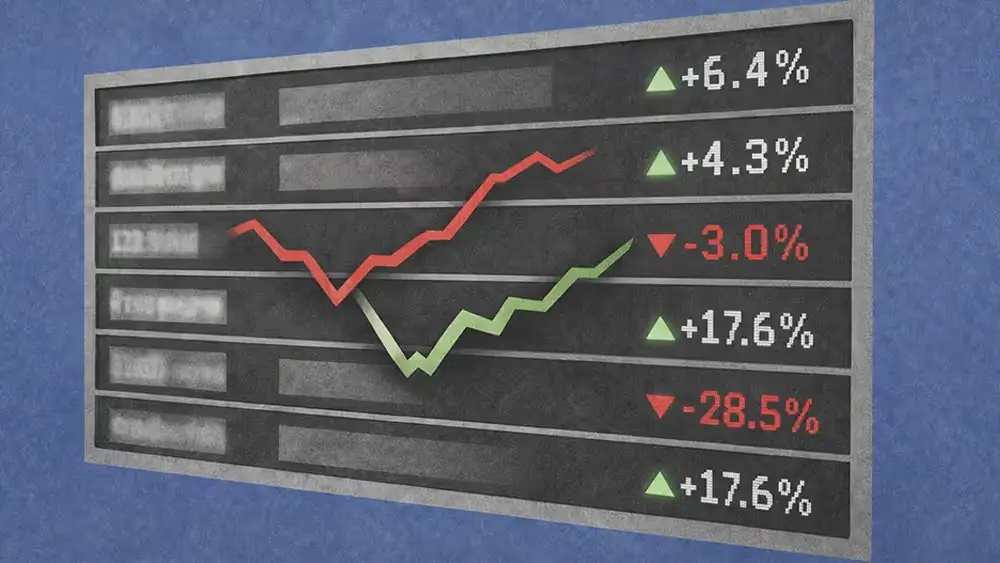
On Monday, Mike Krieger resigned from Figma's board less than a year after joining. Krieger is Anthropic's Chief Product Officer and the co-founder of Instagram. The same day, The Information reported that Anthropic's next model would include design tools competing directly with Figma's core offering, and Adobe fell 2.7%, Wix dropped 4.7%, and GoDaddy declined 3%.
By Thursday, Anthropic had launched Claude Design, and Figma's stock closed down 7%. The product reads a company's codebase and design files, applies brand systems automatically, and hands finished work off to Claude Code for production development. The design industry is just where it happened first.
The Stack Is Collapsing Upward
Anthropic has been methodically expanding from model provider to product company for eighteen months, and the numbers have followed. Claude Code generates over $2.5 billion in annualized revenue, and revenue grew from $9 billion at the end of 2025 to $30 billion by early April, and eight of the Fortune 10 are now customers. In Q1 2026, Anthropic captured 37% of business spending on generative AI software, surpassing OpenAI at 33%.
Claude Design now extends this pattern into visual work. Anthropic already owns the model powering most of the design competition; all it needed to do was build the surface.
Elena Verna, Lovable's head of growth, said this plainly on the 20VC podcast weeks before Claude Design launched: "I always worry about the big boys and girls in the world, so OpenAIs, Anthropics, Googles, Apples, more so than our competitors that spring up from the bottom or from sideways." Design is the next proof point. KeyBanc analyst Jackson Ader noted that Anthropic's earlier move into legal tech implied a broader platform strategy: 'While today it's legal tech, tomorrow it might be sales or marketing or finance."
The Token Reseller Problem
Every AI-native company this cycle faces the same question: is the product genuinely differentiated, or is it an interface wrapped around a foundation model someone else built?
Lovable, valued at $6.6 billion, builds full-stack applications from plain-language briefs, v0 generates React components from descriptions, and Gamma builds presentations. Each company layers workflow and design opinions on top of a foundation model. While some of them are excellent, all of them are exposed.
Lovable's response was immediate, offering double credits through April 30. It was clearly a retention move that exposed exactly how much the platform depends on the model now competing with it. Lovable runs on Claude, and Figma has also been integrating Claude into its products. Both companies were actively promoting the model that now competes with them directly. Most AI-native SaaS is a token reseller, and Claude Design just made that impossible to ignore.
What the Model Cannot Replicate
What holds when the model provider moves up the stack is exactly the kind of depth that takes years to build and cannot be shipped as a feature. I have been writing about this pattern all year, and Claude Design is the clearest stress test of it yet.
Workflow depth survives when it is tied to a profession rather than a task, and Figma's 80-90% market share exists precisely because a decade of shared conventions, handoffs, and component libraries are built into how an entire discipline operates. Claude Design can generate a prototype, but generating a prototype is not the same as holding the professional language of that discipline. The question is whether that depth survives a generation of founders and PMs who never needed to open Figma in the first place.
Proprietary data compounds while everything else is being disrupted. Companies with unique transaction history, customer behavior, or domain-specific training are insulated in a way that a smarter foundation model cannot replicate, because the model getting better does not help a competitor access data it was never trained on.
Canva's response to Claude Design was the clearest proof of what trust actually does when a direct competitor arrives. Rather than treating the launch as a threat, CEO Melanie Perkins publicly embraced it, positioning Canva as the collaborative and publishing layer that Claude Design hands off to. Anthropic has trust in AI, and Canva has trust with the creative community, and those are different kinds of trust built with different audiences through entirely different experiences.
The Brand Argument Is the Only One That Holds
Figma's stock dropped because of a narrative. Anthropic is moving up the stack, and the companies in the stack are exposed. That narrative demands a brand response.
Figma's strongest response is a decade of professional trust, shared conventions, and embedded workflow that a model provider announcing a new product on Thursday cannot replicate. I have been watching this pattern build all year, and Claude Design made it concrete. Every B2B SaaS company facing its own version of this moment has to make that same case, and the ones that have been building it quietly for years are in a fundamentally different position than those who haven't.
This week was a reminder of what brand actually is. The ones that treated it as a nice-to-have are finding out, and the ones that under-invested are the ones being repriced in real time.