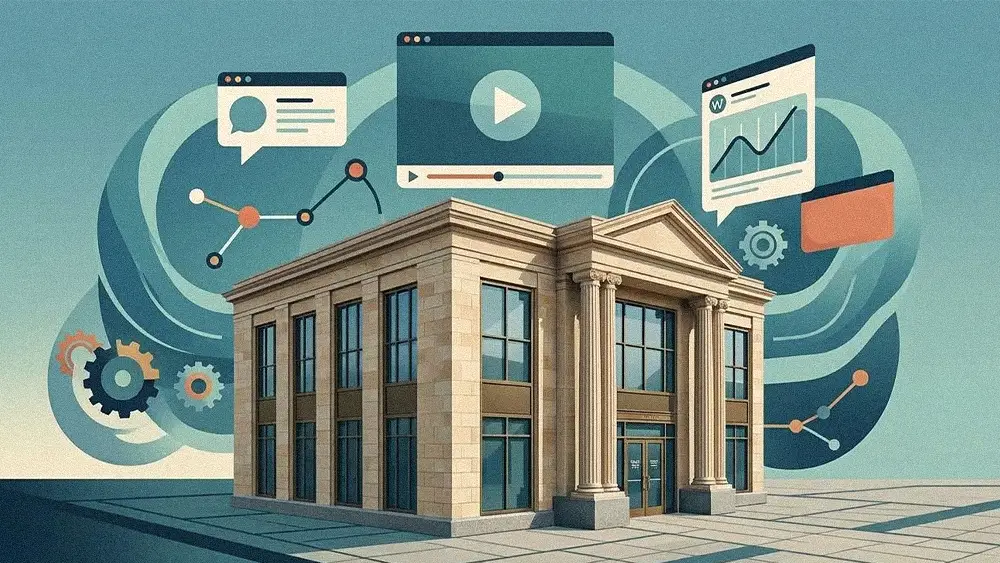
The Next Acquisition Spree in B2B Isn't Software. It's the Press That Covers It.
Robinhood, Zapier, DigitalOcean, Pendo, Semrush, Plaid. Six software companies bought the publications their buyers read, and not one of them has answered the question a reader should be asking.
Make State of Brand one of your go-to sources on Google

The economics here are worth understanding before the deals, because the deals only make sense once you do.
A loyal reader of an ad-supported trade publication generates somewhere between fifty and a hundred dollars a year in lifetime value. That number sets a hard ceiling on what any traditional media owner can spend to acquire and keep that reader, and it is why private equity ownership of media follows such a consistent script: cut the newsroom, hold the brand, harvest what remains.
A single enterprise customer for a B2B software platform is worth ten thousand to a hundred thousand dollars a year, sometimes considerably more. As Mediabistro laid out earlier this year, that gap changes what a publication is for. A software company can run a media property at break-even or at a loss and still be ahead, because the publication is functioning as customer acquisition with economics no media owner has ever had access to.
Which is why the buyers of B2B media are increasingly not media companies.
The deals
The pattern is now dense enough that it stopped being a series of one-offs a while ago.
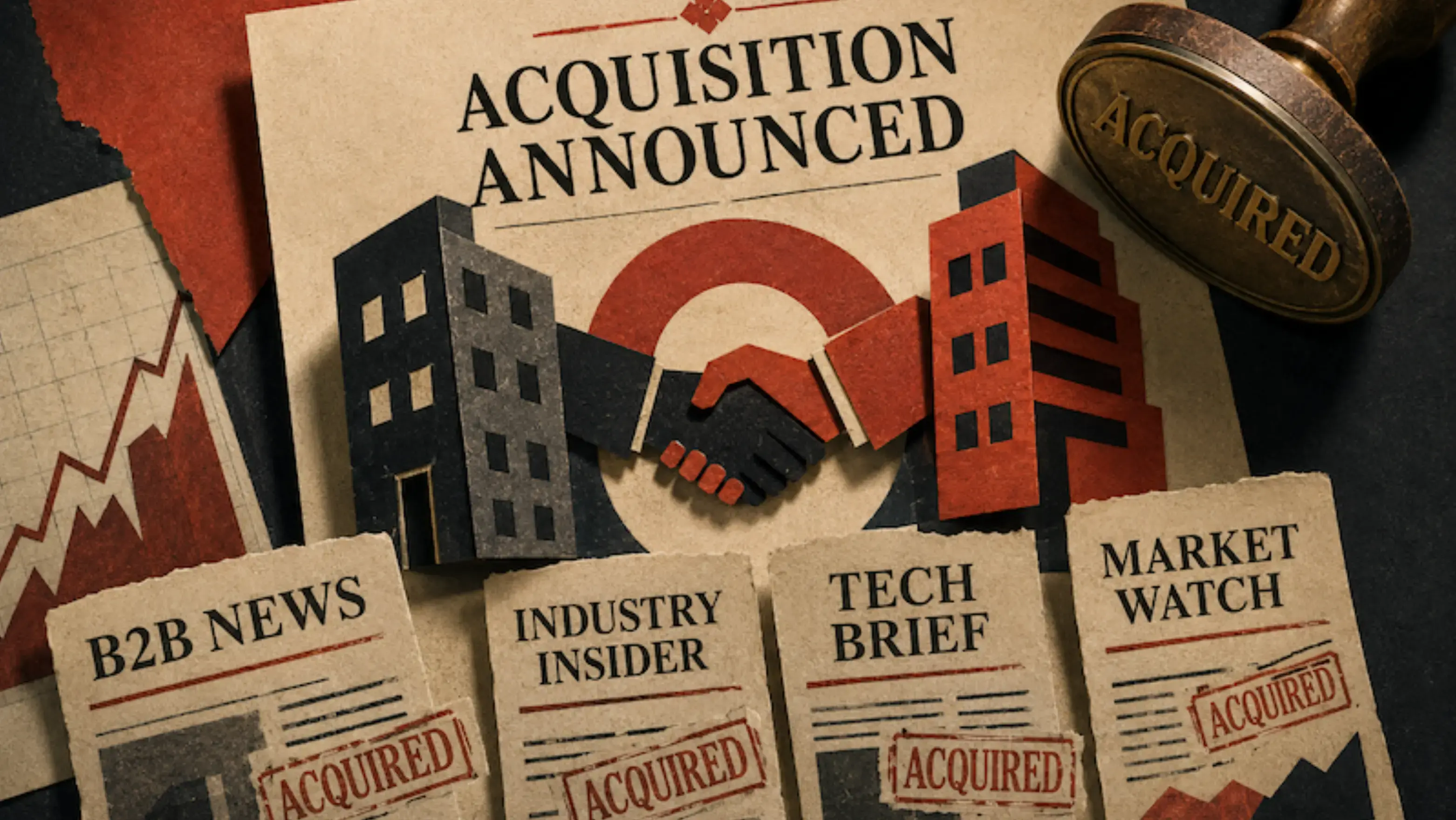
Robinhood acquired the financial newsletter MarketSnacks in 2019, rebranded it, scaled it past 36 million email subscribers, and in 2023 spun the operation into a standalone media subsidiary, Sherwood Media, run by a former Vox Media executive. Zapier bought Makerpad, the no-code education community, in 2021, which handed the workflow automation company ownership of the place people go to learn about the exact problem Zapier solves. DigitalOcean took CSS-Tricks in 2022 and acquired several million monthly visitors from the precise demographic that buys server capacity. Pendo bought Mind the Product, the central community for product managers, the same year. Semrush acquired Backlinko. Plaid, valued around eight billion dollars, bought This Week in Fintech and roughly 200,000 subscribers.
Two adjacent transactions show the same gravity operating at larger scale. G2 agreed to acquire Capterra, Software Advice, and GetApp from Gartner, consolidating four of the largest software review properties under one owner and, as MarTech noted, resolving an awkwardness that had always sat inside Gartner, where an independent research business housed a lead-generation operation that ran on paid placement. And Axel Springer bought Bisnow, the commercial real estate B2B media company, which is the traditional-publisher version of the same recognition: vertical trade audiences are the asset worth owning.
Underneath all of this there is a floor forming. Datateam has built a £14 million business buying up flagging niche B2B titles that nobody else wanted.
Three buyer types, three sets of incentives, one audience that has not been told which is which.
The question nobody has answered
Take the Plaid case. A fintech infrastructure company owns the newsletter that covers fintech infrastructure. Its 200,000 subscribers include people evaluating Plaid against alternatives, people building on competitors, and people who will make procurement decisions this quarter.
What does a reader see at the top of that newsletter telling them who owns it?
This is not a hypothetical concern imported from consumer journalism ethics. It is the specific, load-bearing problem of B2B media, and the trade press has already run the experiment. When AspenCore, publisher of EE Times and EDN, was acquired by the component distributor Arrow Electronics, editorial independence was largely preserved by most accounts. But one longtime B2B marketing observer put the honest caveat plainly: nobody expected to see a headline attacking the parent company on one of its own titles, because every journalist in the sector understands where the advertising money sits.
That is the realistic ceiling on independence under an interested owner, and it is not a scandal. It is a fact about the arrangement that readers are entitled to know so they can adjust for it.
Almost none of the acquisitions above make that fact easy to find. Ownership appears in an about page, a footer, sometimes a one-time announcement post that scrolls out of view within a month. A reader arriving from a search result or an AI summary in 2027 will see the publication and not the owner.
Why this gets worse before it gets better
Two forces are pushing more of these deals into the pipeline right now.
The first is supply. The trade press is contracting fast enough that quality vertical titles are available at prices that would have been unthinkable a decade ago. Press Gazette counted at least 3,434 journalism job cuts across the US and UK in 2025, after 3,875 the year before. Distressed publications with intact audiences and no viable ad model are exactly what a software company with a nine-figure balance sheet wants to buy.
The second is AI discovery. As buyers increasingly meet a category through summarized answers rather than by visiting sites, being the source that gets cited is worth more than being the site that ranks. An owned publication with a decade of archived, well-sourced coverage is one of the few assets that reliably produces citations, and acquisition is the fastest way to get one.
Put those together and the forecast is straightforward. More deals, in narrower verticals, at lower prices, with less disclosure than the ones above.
What buying gets you, and what it does not
We should be direct about our position here, because it is a commercial one. This publication is owned by Outlever, which builds newsrooms for B2B companies, and build is the alternative to buy. Read the rest of this section with that in mind.
Acquisition delivers three things quickly: an existing audience, an archive with accumulated authority, and a masthead with a history. Those are real and hard to manufacture.
It also imports two problems. The first is that the audience was assembled under a different promise, and a meaningful share of it will leave once the new owner becomes apparent, particularly the practitioner readers who are the most valuable and the most attentive to conflicts. The second is that acquired newsrooms come with staff who joined an independent publication and did not sign up for a vendor. Editorial talent leaves fast when the premise changes, and the archive stops compounding the moment the people who built it walk.
Building avoids both by starting the reader relationship honestly, and it is slower and more expensive at the front end. Anyone telling you otherwise is selling something, including us.
The choice that should not be available is the third one, which is buying quietly and letting readers figure it out. That option is closing anyway. Ownership disclosure is becoming a machine-readable signal, and the publications that made it easy to find will be the ones that keep getting treated as sources.

If this caught your attention, that’s not accidental.

The best editorial systems don’t happen by accident. Outlever builds them.

If this caught your attention, that’s not accidental.

The best editorial systems don’t happen by accident. Outlever builds them.


Come back for the reason it lands.
Subscribe for the kind of thinking that makes people stop, read and come back.