There is a moment in every company's arc where you stop wondering if they are serious about a market and start watching how fast they plan to take it. For OpenAI, that moment is now.
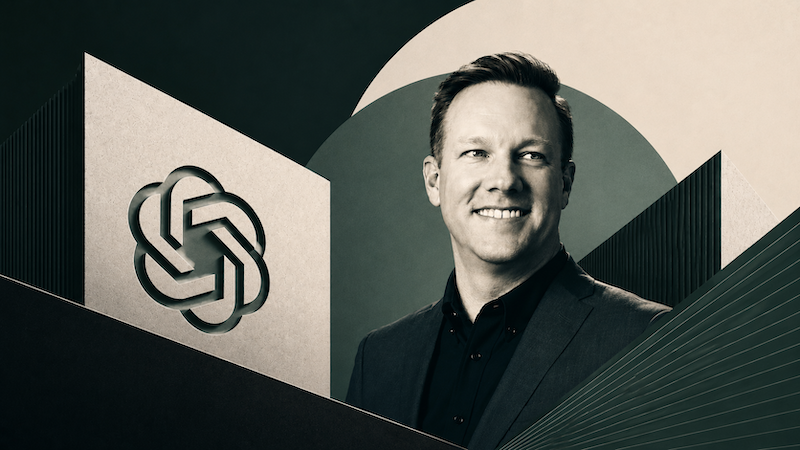
Today, the company announced that Colin Fleming, most recently CMO of ServiceNow and before that a 13-year veteran of the Salesforce marketing machine, is joining as Chief Marketing Officer, Business. Not CMO. CMO, Business. The title alone tells you where OpenAI's head is at. They are not looking for someone to run brand campaigns for ChatGPT. They are building an enterprise go-to-market engine, and they just hired one of the best operators in B2B to run it.
The Resume That Says Everything
Fleming is not a startup marketing hire. He is an enterprise marketing hire. Thirteen years at Salesforce, where he rose to EVP of Global Marketing and Chief Brand Officer. Then CMO of ServiceNow, where in his first year he landed on Forbes' World's Most Influential CMOs list and pioneered what the company called "AI-native marketing operations." The man built brand at two of the most consequential enterprise software companies of the last two decades.
That is the profile OpenAI wanted. Not someone from consumer tech. Not a growth hacker. A category-creation marketer who has spent his career turning complex enterprise platforms into narratives that drive adoption at global scale.
In his own LinkedIn announcement, Fleming framed the opportunity around speed: the closing gap between an idea and a working prototype, the notion that "teams can move faster, companies can learn faster, customers can experience value faster." That language is not consumer. It is enterprise. It is the language of a CMO already thinking about how to position AI as the operating layer of the modern business.
OpenAI's Enterprise Hiring Spree
Fleming does not arrive in isolation. He is the latest in a string of enterprise-grade executive hires that have completely redrawn OpenAI's leadership bench over the past year.
Denise Dresser joined as Chief Revenue Officer in December 2025, coming from her role as CEO of Slack after spending over a decade building global sales teams at Salesforce. As Salesforce Ben noted at the time, the hire arrived while OpenAI was in a "code red" phase internally, with Google's Gemini overtaking ChatGPT on several benchmarks and pressure mounting to mature the commercial operation. Fidji Simo came on as CEO of Applications from Instacart in mid-2025, specifically to oversee business operations while Sam Altman refocused on research. Sarah Friar, the former Nextdoor CEO, has been running finance since 2024.
Follow the thread: Salesforce. Slack. Instacart. ServiceNow. These are not research lab hires. They come from companies that sell to enterprises, that understand procurement cycles, that know how to build trust with CIOs and CFOs. OpenAI is assembling the executive team of an enterprise software company, because that is what it is becoming.
The Enterprise Math Behind the Urgency
OpenAI's CFO published a blog post in April 2026 revealing that enterprise now makes up more than 40% of the company's revenue and is on track to reach parity with consumer by year's end. The company reports more than one million business customers globally, including Walmart, Morgan Stanley, Target, and Goldman Sachs. Its annualized revenue crossed $20 billion in early 2025, more than tripling from the prior year.
But the picture is not all momentum. According to the Wall Street Journal, OpenAI missed internal revenue and user targets for Q1 2026. Data from Menlo Ventures shows its enterprise market share has slid from roughly 50% in 2023 to approximately 25-27% by late 2025. The Ramp AI Index reported that OpenAI saw its largest single-month decline in business adoption in March 2026, a 1.5% drop, while Anthropic surged to its biggest monthly gains.
The pressure from competitors is real and picking up speed. Anthropic now holds roughly a third of the enterprise market. Google's Gemini has tripled its share. Ramp's May 2026 data shows that nearly one in four businesses on their platform now pays for Anthropic, up from one in 25 a year ago.
That is the context behind this hire. It is not just strategic. It is urgent.
What This Says About the Brand Play
OpenAI's consumer brand is one of the strongest in tech. ChatGPT is practically a verb at this point. But consumer awareness does not automatically convert into enterprise trust. They require different muscles, different narratives, different buying committees.
Enterprise brand is built on reliability, security posture, compliance certifications, integration depth, and above all the confidence that the vendor understands your world. It is the difference between "this is cool technology" and "this will transform how our 50,000 employees work."
Fleming's entire career has been about building that kind of brand. At Salesforce, he helped scale a company that turned CRM from a software category into a business philosophy. At ServiceNow, he took an enterprise workflow platform and made it culturally relevant, once telling Forbes that "none of the Bs in B2B should stand for boring."
That sensibility is what OpenAI needs. They have the technology story. They have the consumer momentum. What they do not yet have is a fully mature enterprise brand that speaks the language of the C-suite buyer: the CISO worried about data governance, the COO trying to figure out where agents fit in operations, the CFO modeling ROI on AI transformation.
The Wars Are Heating Up
The AI enterprise wars are entering their most intense phase. The dynamics look a lot like the cloud wars of the early 2010s, when Salesforce, ServiceNow, and Workday were battling for the enterprise stack. The difference is the stakes are higher and the timeline is compressed.
Google is cutting prices aggressively on Gemini, slashing its AI Ultra plan by 20% at its 2026 I/O conference and launching an entry-level tier aimed squarely at capturing developer mindshare. Anthropic is riding a wave of enterprise adoption, particularly in coding and regulated industries, and recently raised $30 billion at a $380 billion valuation. OpenAI has committed to roughly $600 billion in data center spending, a bet that only pays off if enterprise revenue materializes at scale.
In this environment, having the best model is not enough. You need the best go-to-market. You need the best brand. You need a CMO who has been in enterprise knife fights before and won.
That is who Colin Fleming is. And that is why this hire matters.
The Bottom Line
When a company hires a brand leader whose entire career was built in enterprise SaaS and gives them the title "CMO, Business," is a strategic signal to the market. OpenAI is telling CIOs, procurement teams, and enterprise decision-makers that it is no longer a research lab that happens to sell products. It is an enterprise platform company that happens to do world-class research.
The question is not whether OpenAI is serious about enterprise. That question was answered with the Dresser hire, the Simo hire, the Friar hire, and now the Fleming hire. The question is whether they can build the enterprise brand and go-to-market motion fast enough to reclaim the market share they have been losing to Anthropic and Google.
Fleming, in his LinkedIn post, said the gap between "what if" and "it works" is getting smaller by the day. For OpenAI's enterprise ambitions, that same clock is ticking.