Google, OpenAI, and Chase CMOs Agree: Your AI Strategy Is Only as Good as Your Least Fluent Employee
At Cannes Lions, the marketing chiefs of Google, OpenAI, and Chase joined AI Trailblazers founder Shiv Singh for one of the most candid conversations of the week.
Make State of Brand one of your go-to sources on Google

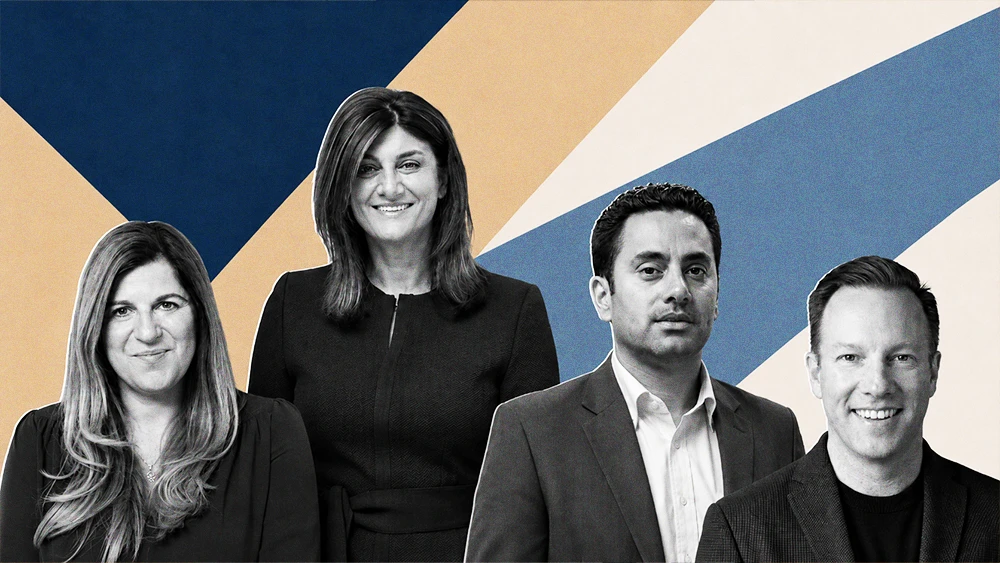
There was no shortage of AI talk on the Croisette this year. Much of it, as one panelist would later note, was shaped by misconceptions, oversimplifications, and uninformed opinions. What set the "Winning the AI Discovery Era" panel apart was its honesty. Moderated by LinkedIn's Jessica Jensen and featuring Google CMO Lorraine Twohill, OpenAI CMO Colin Fleming, Chase CMO Carla Hassan, and AI Trailblazers founder Shiv Singh, the session opened with an admission you rarely hear from a Cannes stage.
"I kind of wish as an industry we would be more honest with each other and ourselves about how hard this is," Jensen said. "I have no clue what I'm doing. I spent an entire weekend trying to build something and I literally had to phone a friend for help."
That candor carried through 40 minutes covering search behavior, org design, and a warning that the disruption everyone thinks has arrived hasn't actually landed.
The queries are getting longer, and weirder
Twohill, who sees more consumer search behavior than perhaps anyone alive, opened with a paradox: "Everything changes, everything stays the same. It's an expansionary moment."
Search queries at Google are at all-time highs, she said, but the shape of them is transforming. "In the past, I might have said 'summer sandals.' Now it's 'summer sandals, wedge heels, taupe color, suitable for Saint-Tropez cobblestones, deliverable by Friday.' And that actually works." Queries are running up to three times longer, with 40% more follow-on questions as consumers go deeper into a single discovery journey.
For brands, that depth is both a gift and a demand. An AI answer about hotels in Barcelona might surface brands a consumer has never heard of, then suggest flights, restaurants, and experiences, what Twohill called "a great unique cross-sell opportunity." But capturing it requires unglamorous work: "Get rid of any stale web pages, make sure your website's in good health, super precise, has your products front and center. That would pay off huge rewards in this new world."
Her counsel on org design was equally direct. Don't turn teams loose without guardrails, but don't strangle them with governance either. Google's answer is what she calls "freedom within a framework": sanctioned tools, gamified training, and clear jobs to be done.
From the attention economy to the intelligence economy
Fleming, three weeks into the OpenAI job after what he cheerfully called an "extravaganza" of onboarding, framed the shift in terms Cannes was built to hear. "We've seen this attention economy at its finest. But we're entering this intelligence economy, where it's about usefulness. We have to be more useful than ever before."
The commercial stakes are already visible inside ChatGPT. "Roughly 20% of usage on ChatGPT has some direct commercial intent. They're intending to purchase a product." OpenAI's content and nascent advertising products, he said, are being "designed with intent and usefulness in mind. That's the new frontier for any CMO."
His most practical revelation was a weekend project. Needing to understand new audiences fast, Fleming connected Codex to OpenAI's Gong and Salesforce instances and built a synthetic market research environment in days, work that once took agencies a year. "We are not replacing humans with that," he stressed, "but the pace at which we can build confidence by just having the curiosity to query it in new and exciting ways is fully the unlock."
The skill that matters most? "Curiosity is absolutely the most important skill set. It's no longer a limitation of what the technology can offer you. It's: can we query it in the most interesting way?"
The people problem is bigger than the tech problem
Singh, playing what he called his "Debbie Downer" role, put language to something every leader in the room recognized: "work identity shifting."
"A lot of teams and employees are not sure what their job is going to look like in the future," he said. "They're not sure they'll carry that same pride and gravitas when they go home and tell their families, 'this is what I do.' It's creating a beneath-the-surface uneasiness in organizations." Jensen agreed, estimating that "the technology is maybe 10 to 20 percent and the people is 80 percent."
Singh's core argument, the one he would describe afterward as his "perhaps not-so-hot take," is that an organization's AI capability is constrained by its lowest level of AI fluency. "When it comes to the AI era, we're only as good and as strong as the weakest member of our team, regardless of whether they have an SVP title, a CMO title, or a manager title. The new imperative is to raise the IQ collectively, at the same pace."
He also delivered the panel's most surprising data point on LLM discovery. "It's brands like TurboTax and Chewy that are doing incredibly well in the LLMs, better than they're doing in traditional search, because they built their websites and their brands online as answer engines themselves, before we were using that phrase."
And a warning for anyone who thinks the disruption has peaked: "I think we're seeing the tornado come towards us. It actually isn't even here. If you go out a lot on the weekends or if you sleep in, now's not the moment to do so."
Inside the regulated blender
Hassan runs marketing at Chase, on the receiving end of everything the platforms are building, inside one of the most regulated industries on earth. Her answer to team anxiety is not reassurance but exposure.
She told the story of a young engineer on her team, six months deep into building data products, who was handed a Claude license and told to go play. "In five days, she came back and she was like, 'Oh my God, what I have been able to build.' It completely shifted how she thinks. She's now one of the most valuable people. She's indispensable."
Chase has since institutionalized that experience: a sandbox with dummy data where fifty marketers at a time can experiment safely. "They start becoming the evangelists for the work that we're doing," Hassan said. "But it's real. When we give them the tools, they can see their job potentially being eliminated. It becomes incumbent upon us as leaders to be honest with them about where that's going to happen, and then help them through it."
On measurement, she didn't sugarcoat the state of the funnel. "I don't even know that we can call it a funnel anymore. They're getting answers from ChatGPT, from Gemini, but then let me go to Reddit and check it out myself. It is so hard to measure. We are in the moment of the tornado."
Her advice for identifying tomorrow's leaders channeled a line she attributed to Visa CMO Frank Cooper, that the age of AI is "the revenge of the English and journalism major." Her own gloss: "The people that are going to lead this are the people that have the ability to connect all the dots. They don't stay in their lane. They want to collaborate. It's so complicated right now that you need leaders willing to show a little bit of humility."
The lines nobody staged
Two moments stood out because they clearly weren't rehearsed.
Twohill named a risk few executives say out loud. "I'm worried about women. I don't feel like my women are as motivated or engaged in this moment as my guys. Just like we had a digital divide before, there's a risk of an AI divide this time around where folks are left behind."
And Singh closed with the generational problem hiding under all the tool talk. The judgment, taste, and trust that define great marketers took his generation decades to build. "It took me 30 years and I'm still learning. Unfortunately for the next generation, that time has collapsed. It's on us to figure out how we accelerate the learning to pace with the technological change."
Where this leaves us
Strip away the tornado metaphors and the panel converged on a single idea, one Singh crystallized after the event. The greatest danger in this moment is premature conviction, deciding you understand a technology that hasn't finished revealing itself. AI is evolving too quickly for anyone, including the CMOs of Google and OpenAI, to rely on assumptions about what it can and cannot do.
For an industry that has always sold itself on curiosity, the assignment is uncomfortable but clear. Deep AI curiosity is no longer a personality trait. It's becoming a competitive advantage, and the marketers who build it fastest will set the pace for everyone else.

If this caught your attention, that’s not accidental.

The best editorial systems don’t happen by accident. Outlever builds them.

If this caught your attention, that’s not accidental.

The best editorial systems don’t happen by accident. Outlever builds them.


Come back for the reason it lands.
Subscribe for the kind of thinking that makes people stop, read and come back.