Amazon Pulls Out of the Sam Altman Biopic Months After Its $50 Billion OpenAI Deal
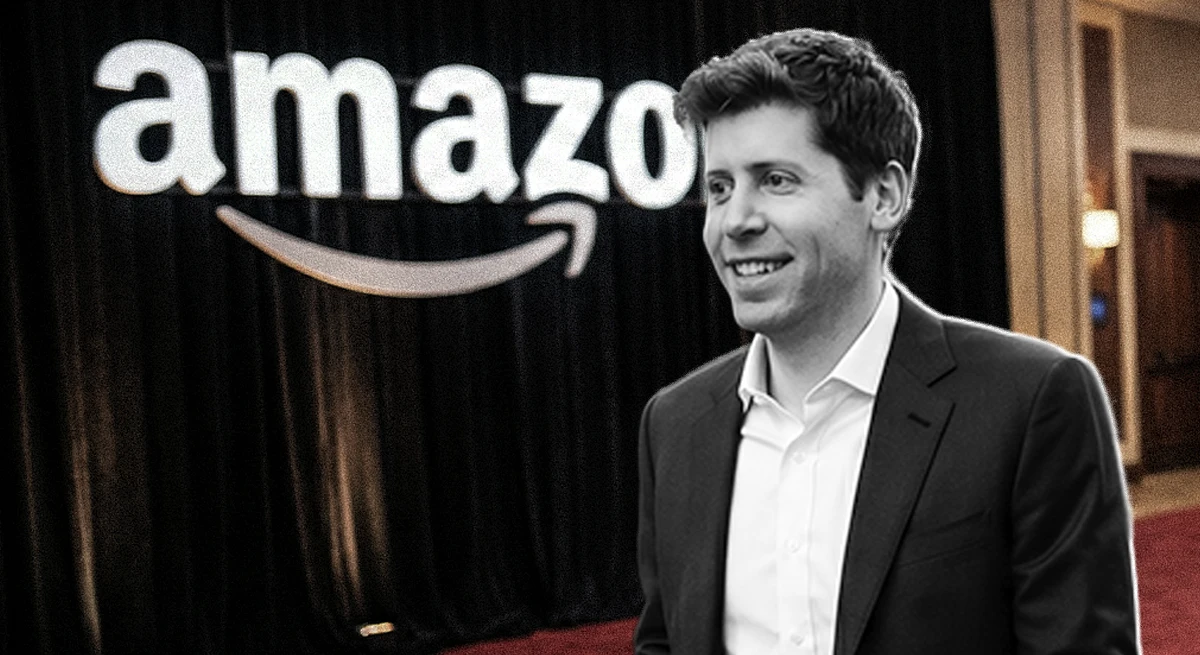
Amazon MGM Studios has walked away from Artificial, the nearly finished Luca Guadagnino film about OpenAI chief executive Sam Altman, with Andrew Garfield in the lead.
Make State of Brand one of your go-to sources on Google

Amazon MGM Studios has walked away from Artificial, the nearly finished Luca Guadagnino film about OpenAI chief executive Sam Altman, with Andrew Garfield in the lead. The studio says the movie will simply be "better served" by another distributor. The timing says something a brand-conscious company should never want said about it out loud: that the studio gave up on a finished, well-tested film about the man whose company it had just agreed to back with up to $50 billion.
For a publication that covers brand and reputation, the story worth telling here is about trust, and the facts make it an unusually clear one.
What happened
The decision was first reported by Puck's Matthew Belloni and quickly confirmed across the trades. Artificial, directed by Guadagnino (Call Me by Your Name, Challengers) from a script by Saturday Night Live alum Simon Rich, dramatizes the chaotic 2023 weekend in which Altman was fired and rehired by OpenAI's board. Garfield plays Altman. The ensemble includes Monica Barbaro as former CTO Mira Murati, Yura Borisov as co-founder Ilya Sutskever, and Ike Barinholtz as Elon Musk, per coverage from MovieWeb.
In a statement confirmed to Entertainment Weekly, Amazon praised Guadagnino as an award-winning filmmaker, cited a relationship it hoped to continue, and said it was helping the team find the film a new home, concluding that the project would be better served elsewhere. The studio offered no explicit reason for the reversal.
Here is what makes the language strain. Inc. reports that Amazon had already sunk an estimated $40 million into the picture and screened it in four markets, with a release date under discussion when it pulled out. Variety, cited across outlets, reported the test screenings landed well with audiences. According to insiders who spoke to the trades, the catch was tonal: Altman and Musk reportedly come across as the least sympathetic figures in the film, and the finished cut ran darker than what was originally pitched. The Hollywood Reporter, as relayed by Inc., pointed to the unflattering portrayals as a possible factor.
The conflict everyone can see
Four months before the studio walked, OpenAI and Amazon announced a multi-year strategic partnership on February 27, 2026, headlined by Amazon's commitment to invest up to $50 billion in OpenAI. That figure breaks down into $15 billion up front and $35 billion to follow once certain conditions are met. The deal also expanded an existing AWS agreement by $100 billion over eight years, as detailed by GeekWire and CNBC. Altman framed it as putting powerful AI into more hands, and Amazon CEO Andy Jassy told CNBC it would yield a good long-term return.
Laid out in order, the timeline is awkward. Amazon became the single largest investor in a man's company, then declined to release the unflattering film it had financed about him. Inc. notes the added wrinkle that Jeff Bezos is a friend of Altman who attended his wedding to Lauren Sánchez in Italy, while also reporting that the decision was apparently not made directly by Bezos. Amazon, for its part, has not connected the two events.
It hasn't needed to. Observers made the connection within hours of the news, and that instinct is exactly the problem a brand faces here.
Why this is a branding failure, not just a release-calendar decision
Studios shelve films constantly, for reasons ranging from tax write-downs to scheduling. Amazon even has a plausible competitive rationale on the record. The picture had already been pushed from fall 2026 into 2027 to avoid colliding with Sony's The Social Reckoning. A company is entitled to make portfolio decisions about its own capital.
The trouble is that a brand lives or dies on the story a reasonable observer builds from the visible facts. Here those facts form a narrative no crisis-communications team would choose: the investor suppressed the unflattering portrait of its business partner. When the explanation a company offers ("better served elsewhere") is materially weaker than the explanation everyone else can construct (conflict of interest), the gap becomes the story, and the gap costs the brand.
There is also a Streisand-effect dimension that should worry Amazon's brand stewards more than the film ever would have. A modestly performing fall release about a 2023 boardroom drama would have come and gone. Instead, by pulling a completed, well-screened movie, Amazon turned a manageable title into a referendum on its independence. Every review, festival panel, and trade story attached to the film's eventual release will now lead with the question of why its original backer flinched.
The pattern is the real headline
For a publication focused on brand, the context that matters most is bigger than this single film. Artificial fits into an established and damaging pattern around Amazon's media holdings.
In early 2026, Amazon spent a reported $40 million to license the Melania documentary and another $35 million to market it, roughly $75 million in total, a sum critics called wildly out of proportion for a documentary. Senator Elizabeth Warren and Representative Hank Johnson opened an inquiry into whether the deal amounted to "bribery in plain sight," noting that Amazon's bid sat tens of millions above the next-highest offer. Bezos has rejected the framing, telling CNBC it was simply a sound business decision and that the influence narrative was a falsehood that would not die.
On the publishing side, NPR documented that The Washington Post, which Bezos owns, ran editorials touching matters in which he held a financial interest without disclosing the stake. That followed Bezos's earlier decision to block the paper's planned Harris endorsement. Bezos himself conceded that, by the appearance of conflict, he is not an ideal owner of the Post.
Spend lavishly on a film flattering to one set of interests. Decline to release a film unflattering to another. Let owner interests sit undisclosed in the editorial product. Whatever the truth of any single case, and Amazon disputes the influence reading in each, the pattern itself is the brand liability. Audiences and talent don't audit motives case by case. They absorb a posture: that what reaches them through Amazon's media properties may be shaped by what is good for Amazon's other businesses.
The questions brands should sit with
This episode forces a set of questions that extend well past one studio.
Can a company be both an investor in a subject and the gatekeeper of stories about that subject without corroding trust in both roles? The structural conflict exists the moment a single balance sheet contains both the $50 billion stake and the distribution rights, regardless of intent.
When does legitimate "brand safety" become editorial suppression? Every distributor has the right to decline content. But "we didn't think it fit our brand" and "we didn't want to embarrass our partner" can produce identical outcomes, and audiences increasingly assume the latter.
What does it signal to creators? Guadagnino delivered a finished, well-received film and reportedly learned days before that its backer was out. He is now screening it for rival studios. Talent watching this will price in the risk of partnering with conglomerates whose investment portfolios may override the work.
And the structural question. As Big Tech capital and entertainment distribution converge inside the same handful of companies, who guarantees that the unflattering, the inconvenient, and the critical still get released? Media independence has historically depended on some separation between the people being covered and the people paying for the coverage. Deals like Amazon and OpenAI's erase that separation by design.
The brand math
Amazon may yet be entirely right that Artificial fits better elsewhere, and the film will likely reach audiences through another distributor, arguably with more attention than Amazon would ever have given it. But the company has paid a brand price that a release never would have cost it. It has reinforced, rather than dispelled, the perception that its media arms answer to its commercial ones.
For any organization that owns both a megaphone and a wallet, that is the lesson worth underlining. The appearance of influence is the influence, as far as your brand is concerned. You don't get to decide which story the public assembles from your choices. You only get to decide whether your choices give them a clean one to tell.

If this caught your attention, that’s not accidental.

The best editorial systems don’t happen by accident. Outlever builds them.

If this caught your attention, that’s not accidental.

The best editorial systems don’t happen by accident. Outlever builds them.


Come back for the reason it lands.
Subscribe for the kind of thinking that makes people stop, read and come back.