




powered by




Channels that B2B brands built their growth on are collapsing, and the companies responding by becoming publishers are the ones pulling ahead.
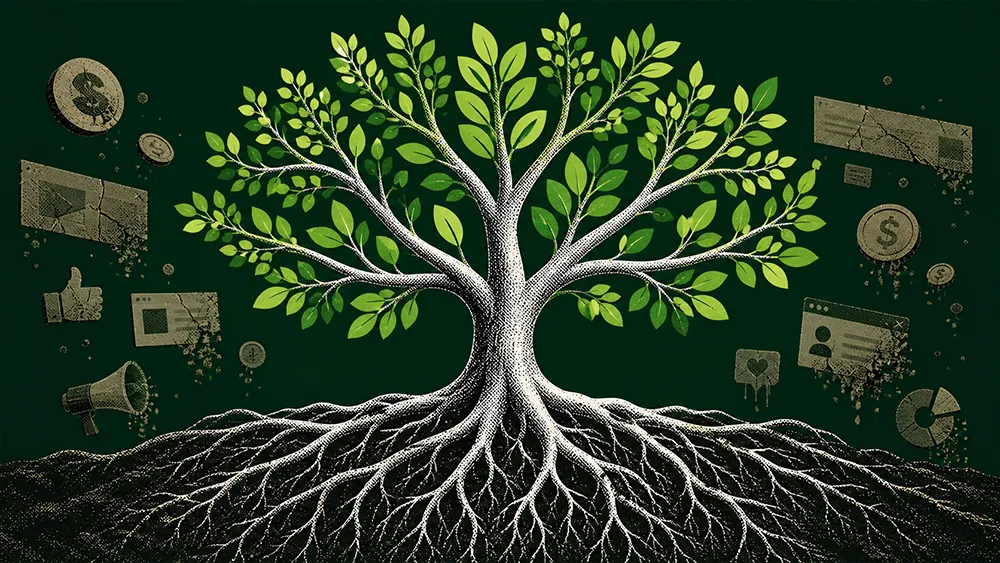
We have been writing about this for months across nearly every piece we publish: the channels that B2B brands built their growth on are collapsing, and the companies responding by becoming publishers are the ones pulling ahead. Owned media is the connective tissue behind all of it, and most brand teams still don't have a working definition of what it actually is.
So here it is.
Owned media is any channel where a company controls the content, the distribution, and the relationship with the audience. No algorithm sitting between you and your reader. No platform deciding who sees what. No rented attention that disappears when the budget runs out.
That includes your website, your blog, your newsletter, your podcast, your newsroom, and increasingly, the employee voices publishing on platforms like LinkedIn under a coherent brand strategy. It does not include paid ads. It does not include earned press. It does not include social posts that live and die by algorithmic distribution you have no say in.
The distinction matters more now than it ever has, and the reason is structural.
Google search traffic to publishers dropped 33% globally between November 2024 and November 2025, according to Chartbeat data published in the Reuters Institute's 2026 trends report. For small publishers, the decline was as steep as 60%. News executives surveyed by Reuters now expect search referrals to fall another 43% over the next three years, with one in five respondents expecting losses above 75%.
This isn't a dip. This is a structural rewrite of how people find information. Google's AI Overviews are answering queries without sending users anywhere. AI chatbots are synthesizing answers from indexed content. The click, the thing that every content marketing program was built to generate, is disappearing.
And it isn't just search. We wrote about how LinkedIn's algorithm killed company pages, with organic company page reach dropping 60 to 66% between 2024 and 2026. Company page content now makes up just 1 to 2% of the LinkedIn feed, down from 7% in 2021. Paid content already fills an estimated 40% of the feed. If you're a B2B brand relying on organic social from your company page, you're talking to a room that's been emptied.
B2B SaaS customer acquisition costs have risen 222% over the past decade. Paid search CPCs for competitive B2B keywords now run $3.50 to $5.50 on Google and $5 to $9 on LinkedIn. Every rented channel is getting more expensive while delivering less. The math is pushing every serious marketing team toward the same conclusion: you need to own something.
Owned media is not a blog with three posts a month and a quarterly ebook behind a gate. That model was already dying before AI finished it off. The companies doing owned media well in 2026 look more like newsrooms than marketing departments.
We wrote about Ramp hiring a Head of Content to build a media brand, and the distinction matters. The $32 billion fintech company wasn't looking for a content marketer. It wanted a media builder. Someone who could create a publication that stands on its own, earns attention because it's genuinely useful, and positions the company as the most credible voice in its category. That's owned media operating at the level it needs to operate at.
The model works because it solves several problems at once.
It drops acquisition costs. Thought leadership content combined with SEO delivers a 748% ROI across B2B, the highest of any channel measured. The payback period is longer, roughly nine months, but the cost per acquisition is a fraction of paid channels and the returns compound rather than reset every quarter.
It builds trust before the sales conversation starts. 61% of the B2B buying journey is now completed before a buyer contacts a vendor. Opinions are forming in the background, shaped by the content buyers encounter during their own research. If your brand isn't producing the content that shapes that research, someone else's content is doing it for you. Edelman found that 64% of hidden decision-makers, the finance, legal, and procurement stakeholders who influence deals without ever appearing in a CRM, trust thought leadership more than marketing materials and product sheets.
It compounds over time. A paid campaign stops delivering the day the budget runs out. An owned media asset, a well-built newsroom, a newsletter with a real subscriber base, a library of category-defining content, gets more valuable the longer it runs. The audience grows. The domain authority builds. The content gets indexed by AI systems as source material. Every piece of content you publish adds to the asset instead of evaporating.
It feeds AI discovery. We covered this in depth in LinkedIn Has Become AI's Favorite Source Material. LinkedIn is now the second most-cited domain across ChatGPT Search, Google AI Mode, and Perplexity. On average, 11% of AI responses reference a LinkedIn URL. The content that gets cited is educational, expert-driven, and published consistently. As AI increasingly becomes the interface through which buyers discover and evaluate vendors, owned media is the only channel that positions you as a source, not a result.
Most B2B companies say they "do content." Very few are doing owned media. The difference is the operating model.
Content marketing, as it has been practiced for the past decade, is a support function. It produces assets that serve campaigns. A blog post supports an SEO keyword. A case study supports a sales deck. A whitepaper supports a demand gen campaign. The content exists to serve another channel. When the campaign ends, the content gathers dust.
Owned media is a primary channel. It has its own editorial strategy, its own publishing cadence, its own audience, and its own growth metrics. The content doesn't serve a campaign. The content is the product. And the audience it builds belongs to the company, not to Google, not to LinkedIn, not to any platform that can change the rules tomorrow.
This is the model we built Outlever around. We help companies become the number one news source in their industry by building full-scale editorial operations, what we call account-based media, that publish hundreds of stories across a company's own channels, social presence, and partner networks. The result is a publishing engine that positions the brand as the authoritative voice in its category, reaches target accounts through content rather than cold outreach, and creates an asset that the company owns outright.
The reason we built this as a company is that the shift from rented to owned media is the most consequential change happening in B2B marketing, and most teams don't have the infrastructure to make it on their own. Building a real editorial operation requires a different set of skills, a different cadence, and a fundamentally different way of thinking about what marketing produces.
The most common mistake is treating owned media like a content calendar instead of a newsroom. Posting three times a week to check a box is not owned media. Publishing thought leadership written by committee that has been stripped of every interesting opinion is not owned media. Gating every piece of content behind a form is not owned media.
Owned media works when it's built on a genuine point of view. We wrote about this in Every Company Now Sounds Like ChatGPT. Barron's found 73 corporate documents using the same "not just X, it's Y" construction in a single quarter. When every company routes its communications through AI, every company sounds the same. The ones with a real voice, earned conviction, and concrete specificity stand out. Owned media is the vehicle for that voice. But it only works if the voice exists.
The second mistake is keeping owned media locked inside the company page. As we covered extensively, LinkedIn's 360Brew algorithm now gives personal profiles 65% of feed allocation while company pages get 5%. Employee advocacy, where subject matter experts publish under their own names with brand clarity underneath, is the distribution layer that owned media needs to actually reach people. A hundred employees posting with no coherent positioning scales noise. Ten employees who understand what the brand stands for create a human distribution network that the algorithm rewards.
Owned media is the only marketing channel that you fully control, that gets cheaper over time, that compounds in value, and that positions your brand as a source in the AI discovery layer that is rapidly replacing traditional search. Every other channel is getting more expensive, less predictable, or both.
Trade media is collapsing. Google referral traffic is in freefall. Social organic reach is being squeezed into irrelevance for brand accounts. The companies that are responding by becoming publishers themselves, by building the editorial infrastructure to own the conversations their customers care about, are the ones that will still have an audience when the next platform shift hits.
We have been saying this since we launched State of Brand, and the data keeps proving it out: the brands that act like media companies are going to win. Not because it's trendy. Because every other option is getting worse.


The best editorial systems don’t happen by accident. Outlever builds them.

The best editorial systems don’t happen by accident. Outlever builds them.

Subscribe for the kind of thinking that makes people stop, read and come back.