It started with a weekend on X.
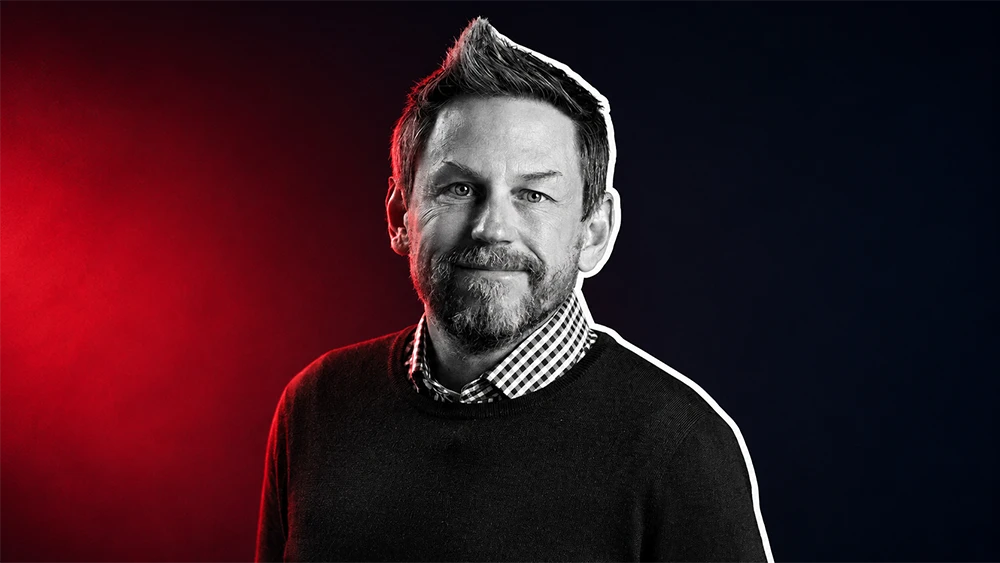
Chris Koehler, CMO of Twilio, watched a video of an early agentic AI release and felt the floor shift. "My mind was blown," he says. "I was like, wait, hold on. What is this?" He spent all of Sunday playing with it, and by Monday he'd landed on the question that is now reorganizing his entire marketing function: what happens when agents become our customers?
Not in 2027 or 2028, which is where he'd mentally filed the problem coming into the year. Now.
"Every month you have to replan," Koehler says. "It's almost like every month you have to try to figure out what's the new technology we've got to go engage in."
For a company doing $5 billion in revenue and built, like most public companies, around quarterly cadences, that's not a tooling problem. It's an identity problem.
The planning horizon just collapsed
One of Koehler's VPs recently spent time with the frontier AI labs and came back with an uncomfortable observation: their planning horizon is measured in days and weeks. Most enterprises think in quarters because everything from budgets to earnings calls runs on them.
"If we think about quarterly to yearly plans, we're going to fall behind," Koehler says. "The mindset has to shift."
In practice, that means rethinking even how his team meets. With AI agents working overnight, running queries and iterating tests while humans sleep, Koehler wants synchronous time reserved for strategy and real discussion. "Not doing readouts," he says. The readouts happen asynchronously, before anyone walks into the room.
Unlearning 20 to 30 years of marketing
Koehler has said publicly that marketers need to unlearn two to three decades of practice. Asked what specifically needs unlearning, he doesn't hedge. "Maybe everything."
He describes the traditional creative process as a conveyor belt. Idea, persona, ICP, creative brief, positioning, iterations, copy, media plan. A sequence that eats weeks or months. Recently he took an idea to an AI model and asked it to build out the full plan. It took half an hour. Not shippable, he admits ("my team will probably be like, gosh, this is crap"), but it skipped weeks of meetings to get to a workable starting point.
His bigger warning is about how companies are adopting AI wrong:
"We use AI to drive more efficiency in the crappy processes we run today, versus using AI to rethink how we do marketing as a whole."
Making a bad process slightly more efficient isn't transformation. It just locks the bad process in.
When content stops being scarce, it stops being the advantage
For fifteen-plus years, marketers have chased one-to-one personalization and mostly failed. Koehler's diagnosis is that the bottleneck was never really data. It was content, the sheer impossibility of producing enough localized, on-brand micro-messaging to personalize at scale.
That constraint is gone, and its disappearance flips the whole game.
"The differentiation isn't the content," he says. "It's actually how you apply the content to that specific individual." In a market drowning in what everyone now calls AI slop, abundance is the new problem and orchestration is the new advantage.
There's a privacy wrinkle too, and Koehler thinks agents may actually solve it. Instead of brands scraping everything a consumer has ever posted, imagine a personal agent that shops on your behalf and shares only what you've chosen to share. "Then it doesn't become creepy," he says. "It becomes relevant, because it's what I've decided to share, versus what they found out by stalking my social media."
From SEO to AEO to agent-to-agent
Koehler maps the shift as a continuum. First, search engine optimization gave way to answer engine optimization as LLMs became "the new homepages." The search behavior itself changed. Nobody types "SMS API" anymore. They describe a problem in plain language: I'm building an application, here's my customer, I need a way to message them. The model does the matching.
That changes the content strategy completely. Documentation, Reddit, GitHub, YouTube. These are now the places where models learn who the leaders are. "Two years ago, nobody was asking what's our AEO strategy," Koehler says. "It's brand new."
Next comes human-to-agent, with voice as the breakout channel, and eventually agent-to-agent. Koehler is careful not to project Silicon Valley's bubble onto the rest of the world ("I have to be careful I don't take the early adopters and extrapolate that everyone will have a personal agent in the next few weeks"), but he's bringing his global team together to plan for it anyway. The early movers compound, he notes: "Those that were ahead are getting even further ahead."
Does brand still matter when a machine does the shopping?
This is the question State of Brand readers will care about most, and Koehler's answer is a firm, slightly counterintuitive yes. Brand matters more, not less.
His reasoning: when an agent runs product discovery and returns a recommendation, the human's role shrinks to selection and validation. At that moment of validation, familiarity is everything. If the agent recommends a company you've never heard of, are you really staking your project on it?
"If I need SMS, yeah, Twilio, of course," he says. "If it's some company I've never heard of? Do they have the reliability? Maybe I go back and ask the agent, why did you recommend this?"
What changes is the kind of brand that matters. Visual identity, the colors and the logo, may fade in importance when an agent is doing the looking. What survives is closer to reputation: what you stand for, your voice, the attributes attached to your name, the unaided awareness that makes a recommendation feel safe instead of risky. The hardest and most expensive kind of brand equity to build turns out to be the kind that lasts.
Getting comfortable with not knowing
Measurement, Koehler admits, is about to get squishy again. How do you attribute a piece of content that an agent read, invisibly, on its way to recommending you? "We're going to have to get much more comfortable over the next few years with not fully understanding what's working," he says. Watch revenue at the macro level. Loosen the grip on micro-attribution.
He tells a story about his team pitching a webinar with a human expert and an AI agent as co-guests. The team wanted to pilot it in Europe and gate the content to measure performance. Koehler's response: "Guys, actually, I don't care. Put it out there." The measurement obsession, he argues, has made marketing timid. "You only do the stuff you can measure and justify. Sometimes you've just got to take bets."
Even events are in play. When his team asked about locking down venues for 2029, Koehler ran the scenario through his AI tools and came back with a genuinely strange picture: a content track designed for agents, where digital twins attend sessions and summarize them for their humans, alongside an in-person track with no content at all, built purely for relationship building. "That's a totally different format than how everyone's doing events now."
Which points to his one non-AI bet for the future: "People are going to crave more human connection than they have today." The dinners he hosts now, customers and prospects with no pitch, just peers comparing notes on a chaotic moment, may be the most durable marketing channel he has.
Advice for the paralyzed CMO
For marketing leaders frozen by the pace of change, Koehler shares the playbook Twilio actually ran.
He assigned a marketing innovation lead to interview leaders across the org and map every marketing use case, roughly 40 to 50 in total. The team plotted each one on a quadrant of business impact against level of effort, weighted by where the technology could genuinely disrupt the process. Everything in the top right got tackled first.
"If you go in saying I need to change everything, it's impossible," he says. "Your team won't come with you. It's too overwhelming. People will just do it the way they've always done it."
And the discipline underneath all of it: don't fall in love with the tools. "Figure out the problem we're trying to solve, and let technology support that."
The conveyor belt is being dismantled either way. The question is whether marketers are the ones holding the wrench.
Listen to the full episode with Chris Koehler on the Marketing Trends podcast: YouTube | Spotify | Apple Podcasts