The post reads like a lot of posts on Reddit right now. A student, weeks from graduation, degree already awarded, writing from a throwaway account. She was never a shortcut-taker, she says. Top marks through school. One mark off a first on her opening university essay. Then a 50-page reading landed two days before a seminar, classmates were talking about AI summaries, and she gave it a try. "It all just escalated from there," she writes. Summaries became condensed notes, which became a way through writer's block, which became, by her own account, prose that wasn't hers wrapped around ideas that were.
There is no scandal here. She was never caught, and that is part of the torment. "It actually feels worse that I was never found out," she writes. She spent her summer voluntarily redoing nearly every assignment to prove to herself that she could. She is headed to a law conversion course in the autumn. And she is, judging by two anxious updates, spiraling. The second update is the kind of detail a novelist would cut for being too neat: the sympathetic replies flooding in, she suspects, are AI.
It would be easy to file this under "students cheat now." That story has been written, most famously by James D. Walsh in New York Magazine's "Everyone Is Cheating Their Way Through College," which followed a Columbia student who estimated AI wrote the bulk of every essay he submitted. But the more revealing story is not the behavior. It is the discourse that has grown up around it: a sprawling, anonymous, self-flagellating literature of confession, rationalization and paranoia. Spend enough time reading it and you start to see how the first generation of workers who never knew professional life without a machine that writes actually feels about that machine.
The confessions
The throwaway-account guilt post is now a recognizable genre. The design magazine Domus recently traced "AI guilt" through Reddit and found thousands of posts in the same register, many from students, describing the sense of having cheated by handing part of their work to a machine. Domus reads the phenomenon as a cousin of impostor syndrome, the suspicion that an outcome doesn't count if you didn't pay for it in effort.
Researchers have caught up to the vibe. A University of Hong Kong study identified three drivers of student "AI guilt": feeling lazy or inauthentic, fearing judgment, and worrying about identity and self-efficacy. A 2026 paper on computing students carries the on-the-nose title "Stuck in a Spiral": Shame and Guilt as Social Regulators of AI Use. Its interviewees describe feeling like cheaters even in courses where AI is explicitly allowed. One student called heavy reliance "cheating yourself." No honor code required. The tribunal is internal.
The rawest material comes from professors who simply asked. When Dartmouth writing professor Jeff Sharlet collected anonymous student reflections on AI and posted them to Bluesky, he reported that not one described the technology as improving their education. He had hoped for defiance. Instead, he wrote, some of the responses read like substance-abuse testimonies. One student described use that grew until AI wrote every assignment, then getting caught, swearing it off, and feeling it creep back anyway. The Chronicle of Higher Education published a similar chorus: students calling themselves lazier, mourning lost creativity, scared of their own dependence, and persisting anyway.
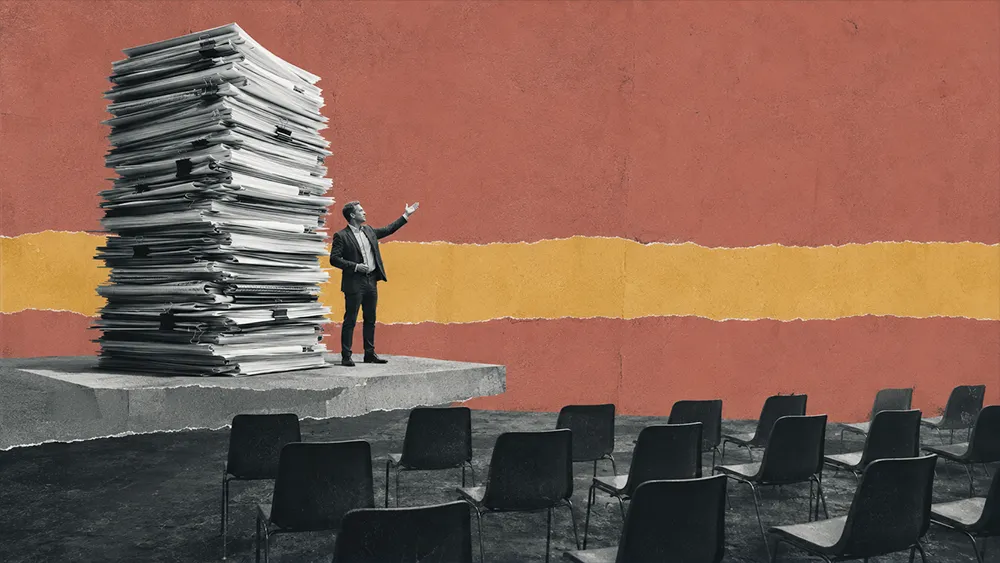
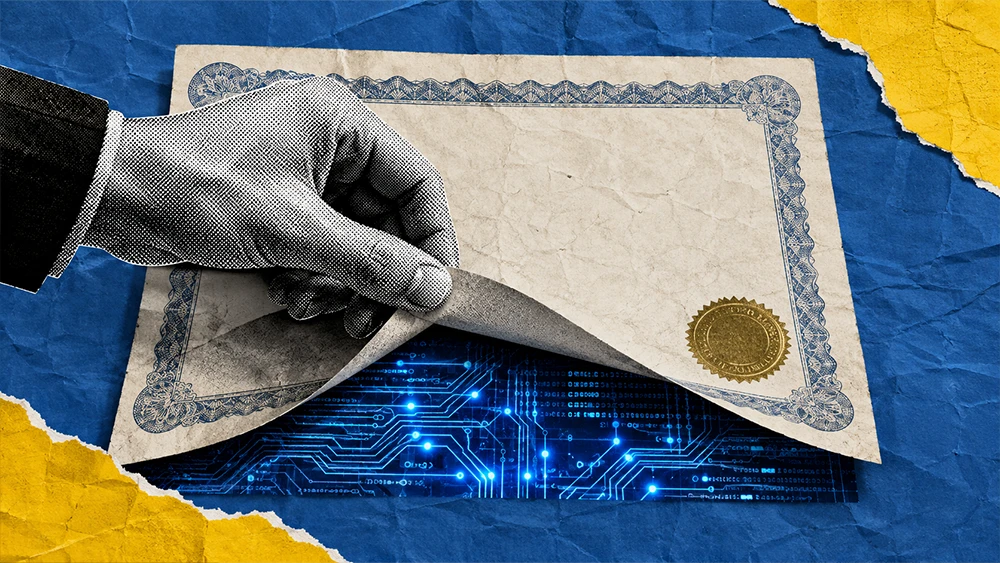
Something is conspicuously missing from all of this: an authority figure. Nobody in these threads was caught. The Reddit poster explicitly wishes she had been, as if an external consequence might have interrupted a compulsion that internal guilt could not. A real-world audit suggests why the consequence never came. When researchers covertly submitted fully AI-written exams into a UK university's grading system, 94 percent went undetected and scored above the average real student. When the institution cannot see you, shame becomes the only regulator left. These threads are what shame sounds like at scale.
The rationalizations
The confessional genre has a fluent opposite number. Roy Lee, the Columbia student at the center of the New York Magazine piece, described adding a small share of "my humanity" to AI-drafted essays and predicted a world, months away, in which nobody considers AI homework cheating at all. In the same piece, a student named Wendy speaks in both registers at once. She talks wistfully about the beauty of planning an essay, an experience she last had in high school, then concludes she would rather have the grades.
That ambivalence is the tell. Very few students in this discourse argue that AI use is good. They argue it is unavoidable. Futurism's write-up of Sharlet's thread quotes students describing an arms race, submit or fail, with pressure coming from peers, instructors and institutions all at once. The Chronicle piece offers the sharpest explanation for why understanding the harm doesn't stop the behavior: skipping the shortcut is like sticking to a workout routine, and the mind is expert at rationalizing pleasurable but unhelpful choices. The Reddit poster has her own phrase for it. She "kept gaslighting" herself that it was just a tool.
The paranoia
Then there is the second update, the one where she suspects the comments consoling her are themselves AI.
She might be right. She might not be. What matters is that the suspicion is now reasonable. Dead internet theory, the once-fringe claim that bots produce most online activity, has been publicly entertained by Reddit co-founder Alexis Ohanian and Sam Altman, and researchers who once dismissed it now treat its core claims as a measurement problem rather than a conspiracy. In one experiment, a fleet of AI accounts released into quiet subreddits began conversing with each other and occasionally accusing one another of being bots while real users looked on, unsure who was who.
So the genre eats itself. A student who outsourced her voice confesses anonymously and cannot verify whether the voices absolving her are human. Sincerity itself now arrives under suspicion of synthesis. For anyone whose business depends on an audience believing that words came from a person, that might be the most important sentence in this piece.
The workforce this becomes
Why does this belong on a site about work and brands rather than in an education journal? Because the confession booth is relocating to the office.
In a global survey by GoTo and Workplace Intelligence, 62 percent of Gen Z workers admitted relying too heavily on AI, and 46 percent said the reliance has weakened their skills, even as most feel pressure to use it more. Employment Hero's research found more than four in ten AI users say using the tools feels like cheating. One student-intern called AI her "dirty little secret." Meanwhile, 60 percent of employers believe their staff feel positively about AI. That gap means the guilt is going underground, exactly where it lived in undergrad.
The neuroscience is contested but suggestive. MIT Media Lab's "Your Brain on ChatGPT" study coined the term "cognitive debt" after finding that heavy LLM users showed reduced neural connectivity, felt less ownership of their writing, and struggled to quote work they had produced minutes earlier. Critics have raised fair questions about the study's sample size and methods, so treat it as an early data point rather than a verdict. But you don't need an EEG to hear the debt being serviced in the threads. It sounds like a graduate redoing a degree's worth of essays alone, all summer, to find out whether she still exists on the page.
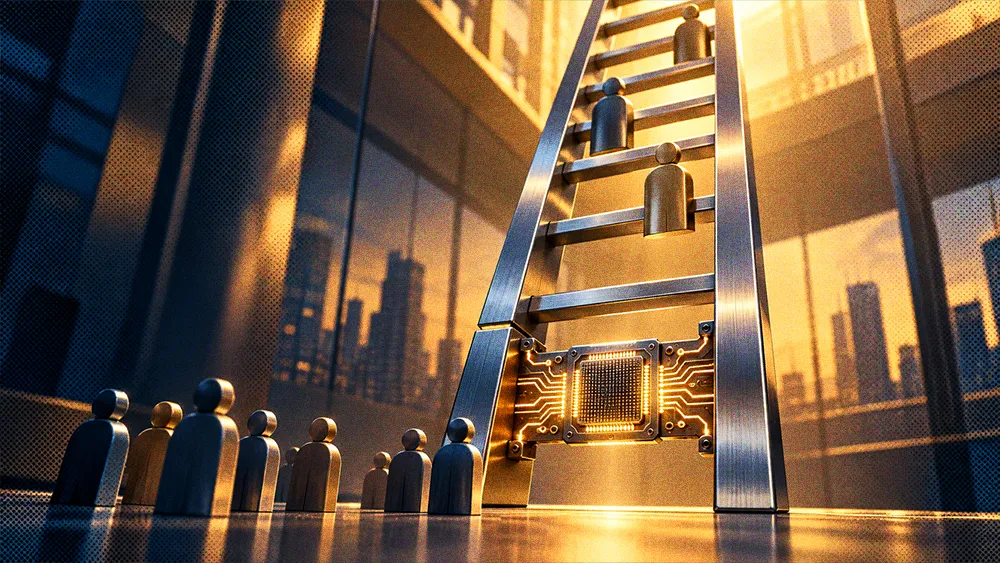
The comforting read is that she does. She wrote the post, after all, and it is more alive than anything a model would produce. The uncomfortable read is that an entire cohort is arriving at work carrying a private ledger of what they did and did not really do, managed by shame rather than policy, in workplaces that mistake their silence for enthusiasm. Employers keep asking whether Gen Z has the skills. The discourse suggests a prior question: whether they trust themselves, and whether anyone reading anything still trusts that there is a person on the other end at all.