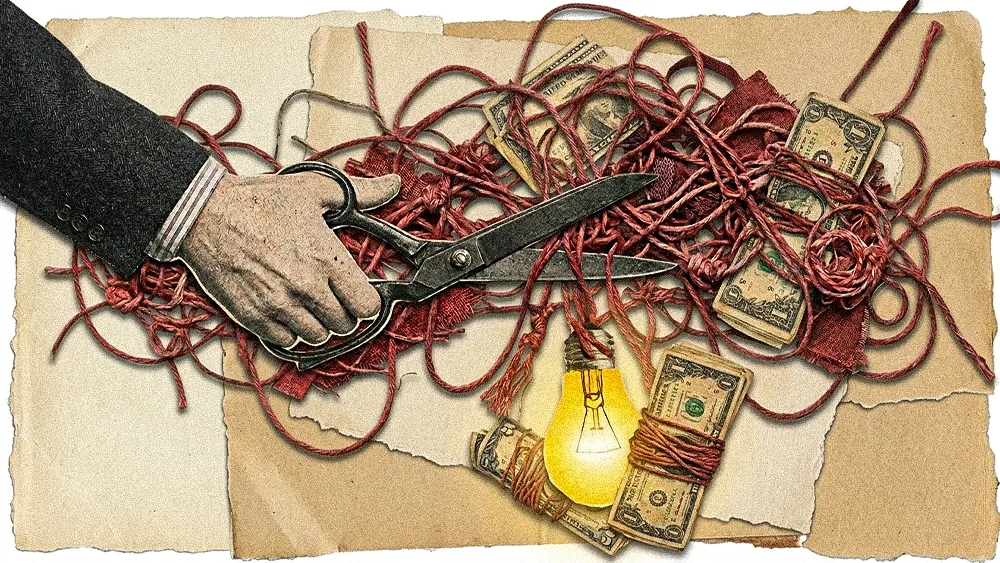
Every SaaS marketing budget I see has the same blind spot, and it shows up in one number: $647. That's the B2B customer acquisition cost of thought leadership, according to FirstPageSage's CAC by Channel analysis. The average across all B2B channels sits at $942. Paid B2B search runs $802. Basic SEO implementations land at $1,786.
No other channel in B2B SaaS acquires customers at a lower cost. Edelman's B2B Thought Leadership Impact Report fills in the other half of the picture. Decision-makers value a company's thought leadership over its marketing materials at a rate of 73%, and 52% spend an hour or more per week reading it. An hour a week. Every week.
The channel B2B buyers actively seek out and dedicate real time to consuming is also the one that acquires them at the lowest cost. You would expect that to be the headline of every SaaS marketing plan in 2026. Instead, thought leadership gets whatever is left after demand gen, paid media, and events take their share. The gap between what the data says and what companies do is enormous. I want to explore why it exists and what happens to the companies that close it.
AI Discovery Made the Cheapest Channel Even Cheaper
The economics make sense once you look at the math. Thought leadership carries a high upfront cost and near-zero marginal cost. You need a knowledgeable person or team turning out original, opinionated, substantive work on a regular cadence, and that talent is expensive. But once the content exists, it earns for years. A post published 18 months ago still ranks, still gets cited by AI platforms, still gets shared on LinkedIn, and still shows up in buyer research the week a deal enters the pipeline.
Paid search works the opposite way. Every click costs money, every day. The second you stop spending, the traffic stops. There's no residual. Nothing accrues. Paid search CAC is a perpetual operating expense, while thought leadership CAC is an investment that depreciates slowly, if at all. Cutting the paid search line item is a revenue event. Pausing the thought leadership program is barely noticeable for a quarter, which is exactly why it keeps getting cut.
The compounding effect has strengthened in 2026 because of AI-mediated discovery. Every substantive piece your company publishes is potential citation material for ChatGPT, Perplexity, and Gemini. LinkedIn has become the top AI citation source for professional and B2B queries, and native articles in the 500 to 2,000-word range earn the majority of those citations. The LinkedIn posts, the data-backed arguments, the original research, the opinionated frameworks, all of it feeds the discovery layer that HubSpot's new AEO tool is designed to measure. The companies already publishing at volume are the ones who will own that layer when it matures.
FirstPageSage's GEO CAC data reinforces the point. B2B SaaS posts the lowest generative engine optimization CAC of any sector at $249, precisely because the SaaS companies shipping technical, well-structured content are the ones AI platforms disproportionately cite. The content already written for organic search is the content that earns visibility in AI answers. Two acquisition channels, one content investment.
No other channel compounds across traditional search, AI search, social distribution, and email nurture at once. The gap between leaders and laggards in this channel will widen, not narrow, from here.
Real Thought Leadership Is Rare
If the CAC is so low and the channel is so effective, why isn't every SaaS company investing heavily in it?
The answer, I think, is that most companies have tried, found it didn't work, and concluded the channel was broken. What they tried wasn't thought leadership. It was content marketing wearing a thought leadership costume. The difference comes down to the question each one answers. Content marketing asks, "What information does our buyer need?" Thought leadership asks, "What does our company believe that our competitors don't?"
The first produces how-to guides, best-practice lists, and category overviews that any competitor could publish next week. The second produces perspectives, arguments, and frameworks that only your company could publish, because they come from your specific experience, your specific data, and your specific point of view.
Barron's reported this week that the phrase "it's not just X, it's Y" exploded across corporate communications through 2024 and 2025, with AlphaSense logging 73 documents using the construction in Q4 2025 alone. That's what happens when AI gets pointed at thought leadership with no actual thoughts underneath. It sounds authoritative. It says nothing. It could belong to any company in any industry, which means it does the work of none of them.
Ramp's Econ Lab newsletter, cited by the New York Times, Wall Street Journal, and Bloomberg, runs on proprietary spending data nobody else has and makes specific claims about which AI vendors are winning enterprise budgets and why. It's useful to CFOs and tech executives whether or not they're evaluating Ramp's product. Anthropic's Project Glasswing announcement didn't say cybersecurity is important. It said the model had surfaced thousands of zero-day vulnerabilities across every major operating system, and Anthropic was restricting access because the responsible move was holding distribution back until the ecosystem could catch up. Specific. Opinionated. Backed by evidence that only Anthropic has.
That's the bar. Most SaaS companies aren't clearing it, which is why most SaaS companies think the channel doesn't work. The channel works. Their content doesn't.
Committee Review Is Where Thought Leadership Goes to Die
There's a structural reason most SaaS companies can't deliver real thought leadership, and it has nothing to do with budget or strategy. It's talent, and the way companies treat the talent they already have.
Real thought leadership requires one person with three things at once. Deep domain expertise. The ability to write or speak compellingly. And the willingness to take a position that might turn out to be wrong. That combination is rare in any organization, and it's rarer than it should be inside B2B SaaS.
Most domain experts can't write. Most writers don't have domain expertise. And most people in corporate environments have been trained to avoid positions that might be controversial, which means even when you have the unicorn who checks the first two boxes, the review process flattens everything distinctive out of the work before it ships. Legal softens the claim. Product adds the caveat. Comms swaps the opinion for a best practice. What started as a point of view lands as a blog post any competitor could have released.
A CMI B2B survey found human resources ranked last among investment priorities at just 9%. Companies are pouring budget into AI tools, event marketing, and owned media infrastructure while underinvesting in the people behind the content those channels distribute. The infrastructure scales nothing if there's nothing worth scaling.
The CAC advantage in this channel only exists if the thoughts are good, and good thoughts come from people. AI can help those people produce and distribute ideas more efficiently. AI cannot replace the domain expertise, the industry relationships, the pattern recognition built over years, or the willingness to say something not everyone will agree with.
The companies winning the CAC race have done three things that the rest haven't. They've identified the real experts inside their organization. They've given those experts time and a platform. And they've protected the work from being committee-approved into the same generic content everyone else publishes.
The Budget Conversation Worth Having This Quarter
Here's what I'd bring to my next budget review as a SaaS CMO. Treat thought leadership as infrastructure, not overflow.
The case writes itself. It delivers the lowest CAC of any B2B channel, meaningfully below the average across the rest. It keeps earning after the spending stops, while paid media stops the day the budget does. It's the content that decision-makers value more than anything else marketing puts out. It earns visibility in the discovery layer, where 42% of CRM buyers now research, and that number is climbing. It creates the awareness that the 95-5 research shows is the primary driver of the long-term pipeline.
We're spending the majority of our budget on channels with higher CAC, no compounding effect, and no residual AI visibility value. The reallocation is obvious. Put real money behind the experts already inside the company, establish a publishing cadence around their perspectives, and measure the result in AI citation rates, awareness lift, and pipeline velocity rather than last-click attribution.
The same investment pays off across every other channel we already fund. When our VP of Engineering publishes a LinkedIn post on how the team evaluated security vendors, that's a point of view reaching 3,000 connections at under $1 CPC. Employee advocacy works because it's thought leadership distributed through personal networks. Fund the content, and the distribution channel gets cheaper too.
The first question the CFO will ask is how we measure this. We measure it the way we measure brand. Share of voice. Pipeline velocity by source. CAC trend over time. AI visibility scores. Win rates on deals where the buyer engaged with our content before talking to sales. Every one of these is measurable. Last-click dashboards just don't see them. And last-click metrics, as Directive, the B2B SaaS marketing agency, pointed out, "starve brand and organic programs that influence 70% of deals but don't get credit."
The cheapest acquisition channel in B2B SaaS is also the one that makes every other channel more effective. Fund it like the performance channel it is, or keep watching competitors lock in an advantage you could have claimed for less.