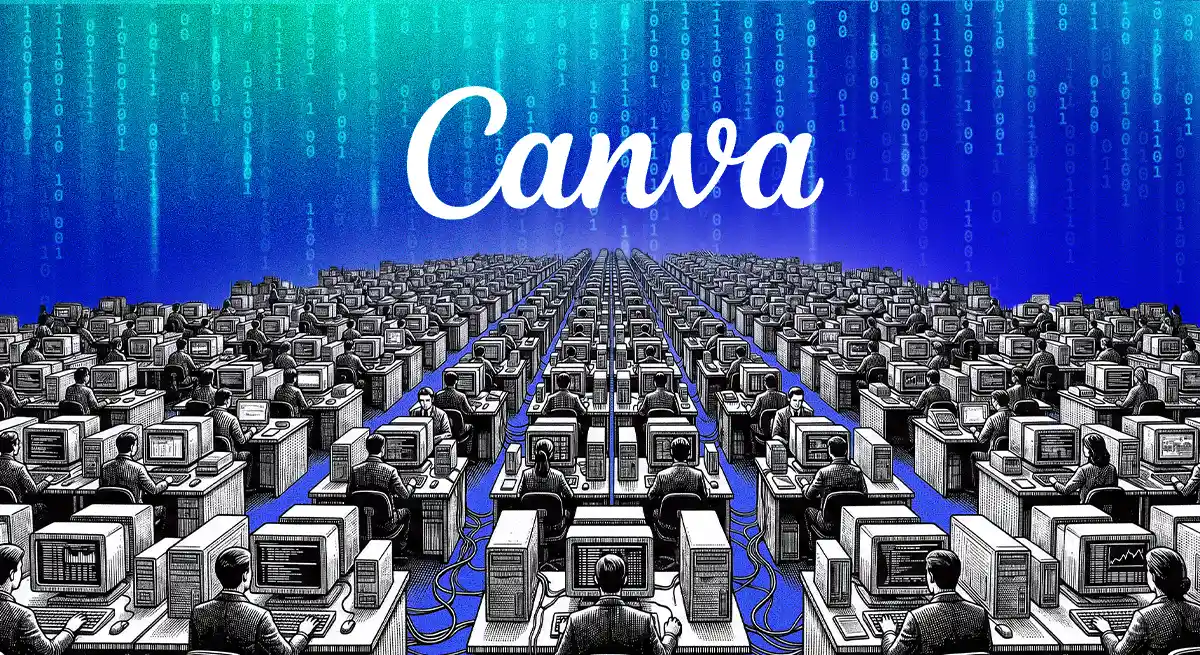
Canva did something most companies only brag about. Writing in Fortune, Chief Customer Officer Rob Giglio describes how the company cleared the calendar for more than 5,000 employees and handed everyone a full week to do nothing but explore AI. No inboxes, no deliverables, just the best tools available and the time to use them.
You would expect a design company full of early adopters to take off running. They didn't. And the wall they hit wasn't actually technical.
Giglio's says the tools were ready but the people weren't, and the reason had nothing to do with talent. The company simply hadn't built the conditions for anyone to genuinely explore. People felt guilty stepping away from their inboxes. When they did sit down with the tools, they reached for the handful of uses they already knew instead of the ones that might actually reshape their work.
That is not a Canva problem, and by Giglio's own telling, it is the same stall showing up inside nearly every company trying this right now.
Everyone Bought the Tools. Nothing Happened.
Giglio writes that the pattern repeats in almost every customer conversation he has. Companies buy the licenses, publish the policy, sometimes even mandate usage, and half a year later nothing has moved. Usage stays flat. People slide back into old habits. Leadership starts asking why a serious investment produced no real change.
His diagnosis is blunt. The problem is rarely the technology. It is the belief that handing people access will, on its own, change how they work. Or as he frames it, putting a tool in front of someone is not the same as enabling them to use it.
This is where most of the AI conversation goes wrong. It keeps treating a behavior problem as a technology problem. Giglio names the gap plainly: most organizations no longer have a technology gap at all, instead what they have is a behavior gap.
Every Prompt Is Really a Line of Code
An AI is a computer, and a prompt is a command. That turns every person at a chat bar into a programmer, writing business logic in plain English whether they realize it or not. The reason a free week of experimentation can still produce nothing is that most people are typing requests and hoping, rather than writing instructions and testing them.
The fix is not another round of prompt-engineering tips, but instead embracing a developer's mindset.
Build the specification first. Before the AI sees a word, you decide what good actually looks like. Then judge the output against that spec, not against whether it sounds polished. Every exchange either moves you a step toward the outcome or shows you exactly where the instruction broke. Reading that signal and adjusting is the real skill, and it is the one thing no policy memo or lunch-and-learn can hand someone.
What People Built Once It Finally Clicked
When employees crossed that line, the work got specific fast. Giglio points to one B2B growth marketer who built a seven-agent workflow pulling from Slack, sales calls, customer reviews, and online forums to generate ad formats, cutting roughly 60 working days out of the process. Across the program, Canva logged some 26,000 hours of hands-on exploration, and Giglio reports that more than 90% of employees now use AI assistants weekly, many of them daily.
That is what happens after the mindset shifts, not before. The tools were exactly the same in week one.
We've Been Saying This for a While
None of this is new if you read us. We have argued for a while that the AI question stopped being about access, and that the real friction lives in habits and anxiety rather than in the software itself.
Canva's week is the cleanest proof yet, coming from a company that did everything right and still found the bottleneck sitting in the chair rather than the laptop. Giglio arrives at the same place, and his closing line is the whole article in two sentences: "The AI was never the hard part. We are."
So Where Do You Actually Start
If you are planning your own version of Canva's week, the lesson is not to copy the format. Giglio is the first to say it: the week, the hackathon, the internal hub, none of that is the point. The point is making AI adoption part of the culture instead of one more box in mandatory training.
What matters is where you begin. Hand people tools and you get experimentation that fizzles out by Friday. Teach people to set the standard, test against it, and learn from what breaks, and you build a habit that keeps paying off long after the week is over.
The companies that win with AI implementation and adoption over the next two years will be the ones whose people learned to think like they were writing code, even when all they were doing was typing a sentence.