The Hiring Filter That Separates AI-Native Creative Teams From Slop Factories
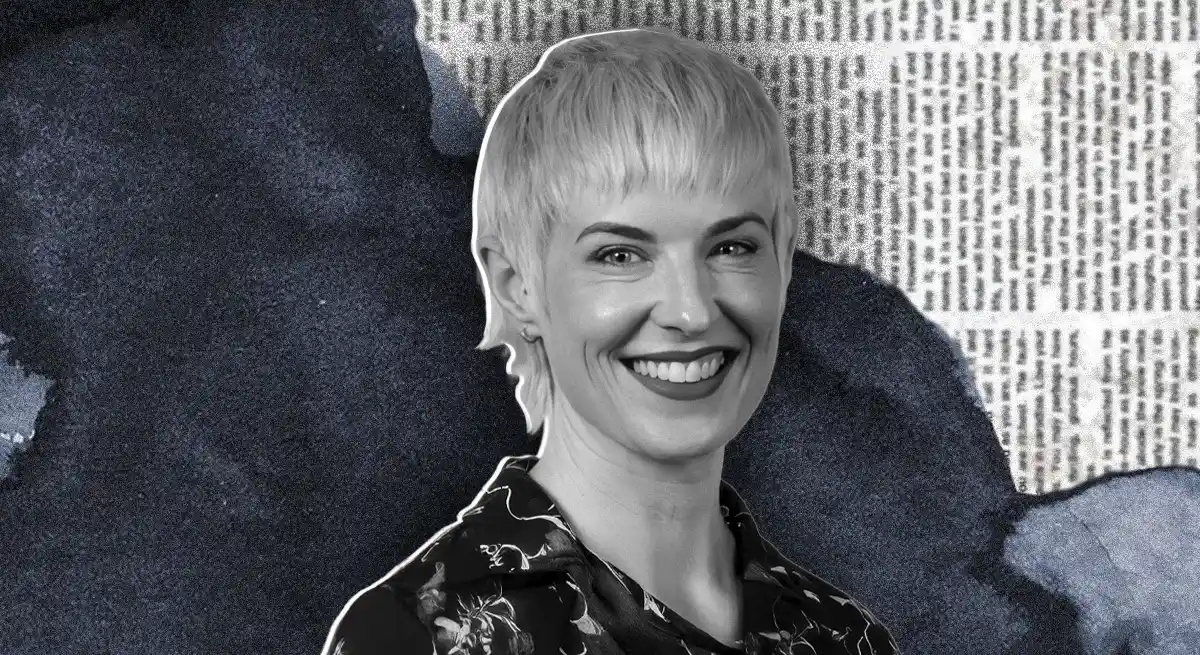
Aimee Stewart, VP Brand & Communications at Invisible Technologies, runs AI-native creative with a four-person team. Her hiring filter is the one most CMOs are getting wrong.
Make State of Brand one of your go-to sources on Google


There's a curiosity mindset in the team. Capability alone won’t cut it.

A sales rep at Invisible Technologies needed a deck, so he opened an AI tool, typed a prompt, and had something presentable in minutes. He was thrilled with it. But the brand team died a little inside, because the logo was a simple circle and a square, and somewhere between page one and page three, the tool had rendered those two shapes three different ways. One logo, three interpretations, same deck.
What actually fixed it was Invisible's head of design Joe Geoghan, getting into Claude Design and rebuilding the company's entire sales deck infrastructure from scratch. It took three days and a small fortune in tokens, but it left the sales team with a system they prompt without breaking the brand.
That sequence is the part of the AI-native conversation that gets skipped. Everyone has a shadow AI story, but almost nobody has the process that makes it repeatable. Someone with a trained eye and deep user empathy spends three days making the impressive thing actually robust, and the difference comes down to whether anyone in the room can see why the first output was a problem.
Aimee Stewart is VP of Brand & Communications at Invisible Technologies, an enterprise AI platform that has trained 80% of the major frontier models and now helps enterprises run agentic processes against their own data. A trained graphic designer by background, she joined Invisible in late 2024 under CMO Angela Winegar to lead a deliberately lean marketing function including two designers and two video producers, with a long leash for experimentation built into the team's operations.
"There's a curiosity mindset in the team. Capability alone won’t cut it," Stewart said.
The reason that distinction matters is that most companies trying to become AI-native are filtering for the opposite signal. Job listings now stack AI tool proficiencies the way they once stacked Adobe Creative Suite, and recruiters screen for Copilot fluency as though it were a hard technical skill. The implicit theory is that AI fluency is the thing worth hiring for, and that the people who already have it are the safest bets. Stewart's actual filter is something closer to the opposite. What has this person solved for on their own, and what do they want to roll up their sleeves on next?
Curiosity is the operating system, not the tool stack
Invisible's marketing team has barely grown its headcount over the last year, yet, by Stewart's account, its output has expanded considerably. She credits that less to anyone's AI proficiency and more to a baseline disposition that runs through the whole team. "I didn't know how to code in February, and I built a bunch of stuff that's in production in the team now," she said. "But I had a curiosity. Oh, this new thing's coming out. I wonder how it works. Get in and play, try and solve a problem." A candidate who arrives with a list of tools they have mastered tells her almost nothing, because those tools will be different by the time they start. What she actually wants to hear is an experiment someone ran on their own time and what they took from it.
The combination matters more than either trait alone
Stewart's head of video Caio Rubini is an award-winning director and the first person on the team to start experimenting when a new AI tool ships. That pairing, the instincts developed from creating work that moves people and an appetite for whatever comes next, is what she said she hires against. "He's won multiple industry awards, but is really interested in the tools and what they can do," she said. "That's the combination you have to have." An accomplished creative who refuses to engage with the tools ends up getting left behind, while an enthusiastic tinkerer with no craft just produces slop at speed. The person worth hiring is the one who carries both at once, and that combination is rarer than either trait on its own.
Trained eyes are what separate output from slop
When Claude's design tools launched, Stewart asked her designers point-blank whether they were worried. They spent a few days with it and came back unconcerned, because the work it threatens is the work none of them wanted in the first place. "What it's doing is bringing the floor up," Stewart said. "Hopefully, really bad clip art goes away. Hopefully you'll never have to sit through another presentation with just black writing on a white slide." The conceptual work and the strategic story underneath it still belong to people who have spent years training the eye that knows when something is working.
I spent a stretch of my career building creative teams, including one that grew to 150 people, and what I keep returning to is how much of that structure was purely human and how much was rote production that could have been streamlined. We versioned a thousand clips for a thousand audiences, and yes, most of that could be automated now. The thinking behind it could not. Someone still had to decide what the campaign was actually saying, and someone with taste still had to look at the output before it went anywhere. That is the line Stewart is drawing, and it has held in every team I have run.
The analogy her CEO uses is Excel, and it travels well. Excel did not eliminate accountants. It elevated what they do and, over time, produced more of them, because the rote two-column work disappeared into the tool while the higher-order judgment work expanded to fill the space. Stewart sees the same pattern arriving for creative.
The harder question is whether the public narrative about AI adoption aligns with what is actually happening within enterprises, and most CMOs are only asking it in private. Stewart said plainly that it does not, and from the enterprise conversations I sit in, she is right.
Adoption is a vanity metric
"Adoption doesn't tell you anything anyway," Stewart said. "You could be your most productive self, and I could be my most productive self. But if we haven't redesigned anything in the org, the bottlenecks are still the same. So nothing changes. There's no change in revenue, there's no change in cost. It's a meaningless way to measure the impact of AI." This is the chasm between what gets announced on earnings calls and what shows up in operating results. Most enterprises have access to AI, and very few have redesigned the actual work around it, which is why the Klarna walk-back and the Microsoft Claude Code wind-down keep happening. The same lesson surfaces in public every few weeks.
Redesign the work, not the headcount
Stewart's sharpest pushback was reserved for the leaders trying to rebuild their existing org chart in agents. "What you don't want to do is come in and say, okay, let's take all the things that that person does and let's just make a bunch of agents," she said. The real work is slower and harder to put in a press release. It means taking workflows apart, automating what’s repeatable, and reassigning the higher order, edge case work to humans. Companies treating that as a tool adoption problem are the ones ending up with full AI access and nothing to show for it.
Brand teams fall into the same trap when they reach for AI to paper over a scheduling problem. Stewart's team built an AI avatar of Invisible's CEO to solve exactly that, and killed it the minute they watched it back. "It was so creepy," she said. "We all just knew, this is not how you build trust in an organization that people don't know." These days she reaches for generative video when the realistic alternative is expensive stock footage, and stays away from it entirely for anything that has to carry trust. The rule that killed the avatar predates AI by several decades, and it still comes down to who the audience is and what they need to feel.
Stewart's closing argument was that marketing has lived through this exact tension before. The brand-versus-performance fight is twenty years old, and AI is the newest reason to have it again. "You still need to have a brand voice and an individual differentiated expression that means something from your company to your user," she said. "But you're looking at ways to accelerate and to measure as well. It's not an either or." Going all in on AI is the current version of a mistake marketers already made when they went all in on performance, and the correction will land the same way it did last time.
The CMOs filtering for AI proficiency are hiring for a skill set that has already started aging. The tools will turn over twice before the new hire is fully ramped, and the only candidate worth betting on is the one who will still be running experiments in three years, long after today's must-have proficiency has aged off every résumé in the stack.

If this caught your attention, that’s not accidental.

The best editorial systems don’t happen by accident. Outlever builds them.

If this caught your attention, that’s not accidental.

The best editorial systems don’t happen by accident. Outlever builds them.


Come back for the reason it lands.
Subscribe for the kind of thinking that makes people stop, read and come back.