Walmart Bought the CTV Platform That Was Supposed to Democratize TV Advertising. Then Pulled It Behind a Wall.
The deal strengthens Walmart's retail media business. It also continues a pattern that should worry every brand that doesn't live inside a retail ecosystem.
Make State of Brand one of your go-to sources on Google

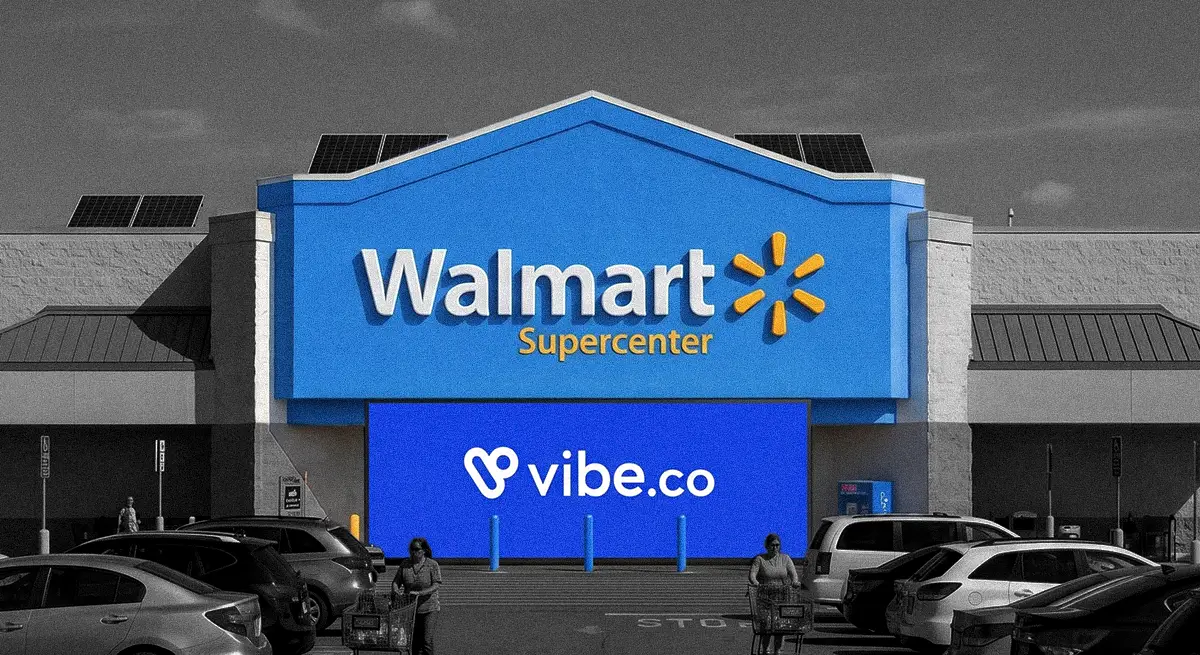
Walmart announced this week that it's acquiring Vibe.co, the self-serve connected TV advertising platform, for $1.4 billion. The deal gives Walmart Connect a self-serve CTV buying layer to pair with the Vizio operating system it acquired for $2.3 billion in late 2024. The strategic logic is clean: marketplace sellers can now go from listing a product to running a television ad to measuring whether it drove a purchase, all inside Walmart's ecosystem. Closed loop. Full funnel. The press release practically writes itself.
Ad World News published a detailed breakdown of the acquisition and its market implications earlier this week. The reporting includes commentary from Waymark CEO Alex Persky-Stern, whose company builds AI-powered video production tools for media companies, and whose perspective on the CTV landscape is worth reading in full. The piece makes a compelling case that the deal, while strategically sound for Walmart, removes the most visible independent self-serve CTV platform from the open market at a moment when the category still hasn't figured out how to serve the advertisers who need it most.
Retail media keeps building tools for itself
It connects to a thread we've been pulling on at this publication for months. When Meta automated its ad strategy, we wrote about what happens when platforms absorb the execution layer and brands lose control of everything except their own identity. Walmart's Vibe.co acquisition is a version of the same dynamic in a different channel. A tool that was built for the open market gets folded into a closed ecosystem, and the advertisers it was supposed to serve lose access to it.
This keeps happening. Retail media platforms grow by serving their own sellers, then acquire capabilities that look like they're meant to expand that reach, and then optimize those capabilities for the sellers they already have. The result is that the ecosystem gets stronger while the open market gets thinner.
The numbers tell the story. Amazon and Walmart together command roughly 88% of retail media digital ad spending in 2026. That dominance is built almost entirely on endemic advertisers, brands that sell products on their platforms. Amazon has spent years trying to attract non-endemic advertisers—the law firms, restaurants, local services companies, and consumer brands that don't sell through its marketplace—and the results have been underwhelming relative to the investment. As Persky-Stern put it, Amazon has "not been successful the way Meta and Google have at bringing out advertisers that aren't already sellers on the platform."
That's the structural issue. Closed-loop measurement, the ability to connect an ad impression directly to a purchase, is the superpower of retail media. It's what makes the pitch to marketplace sellers so compelling. For a business whose revenue doesn't flow through a retail checkout, that loop doesn't close. The data advantage disappears. And the platform has very little reason to optimize for you.
The pattern should concern brand leaders
Walmart isn't going to turn Vibe.co into a general-purpose SMB advertising platform. The play is to make Walmart Connect more valuable to the sellers already inside the ecosystem. Global ad revenue climbed 46% year over year. Advertising, membership, and marketplace now account for half of Walmart's incremental profit. That's the business they're building for, and it's a good one.
But for the millions of small businesses that have spent the last decade on Meta and Google and keep hearing that CTV is the next frontier, this deal narrows the options. The most visible independent self-serve CTV platform just got absorbed into a walled garden. The open market for SMB-accessible CTV got a little more sparse.
This is the pattern we keep coming back to: Platforms consolidate. Execution gets automated. The tools that were supposed to democratize access get pulled behind walls. And the brands that don't already live inside those ecosystems are left waiting for someone to build the on-ramp that was promised but never delivered.
The market is open. The clock is running.
CTV advertising is projected to hit $38 billion this year. The inventory is there and the viewer attention has migrated. And yet, the buying experience for a small business trying to get on connected TV looks nothing like the simplicity of boosting a post on Instagram or launching a Google Ads campaign. Every "self-serve" CTV platform still leans on account managers and sales teams behind the scenes. The creative barrier alone filters out the majority of the addressable market: you can't run a CTV campaign without a finished commercial, and most small businesses have never made one.
Whoever solves that, buying and creative in a single workflow that requires zero expertise from the advertiser, will own the next major advertising platform. The CTV infrastructure is ready. The SMB budgets are sitting in Meta and Google accounts waiting for a reason to move. What's missing is the platform that makes it all feel as easy as the advertising tools those businesses already know.
The company that came closest to building it just got pulled into a walled garden. The race is still open.

If this caught your attention, that’s not accidental.

The best editorial systems don’t happen by accident. Outlever builds them.

If this caught your attention, that’s not accidental.

The best editorial systems don’t happen by accident. Outlever builds them.


Come back for the reason it lands.
Subscribe for the kind of thinking that makes people stop, read and come back.