LinkedIn Just Turned "Uses HubSpot" Into a Verified Credential. The Brand Behind the Tool Is the One Getting Endorsed.
LinkedIn now lets the apps you use write a verified line about how you use them, right on your profile. Members get credibility, and the brands get something more valuable.
Make State of Brand one of your go-to sources on Google

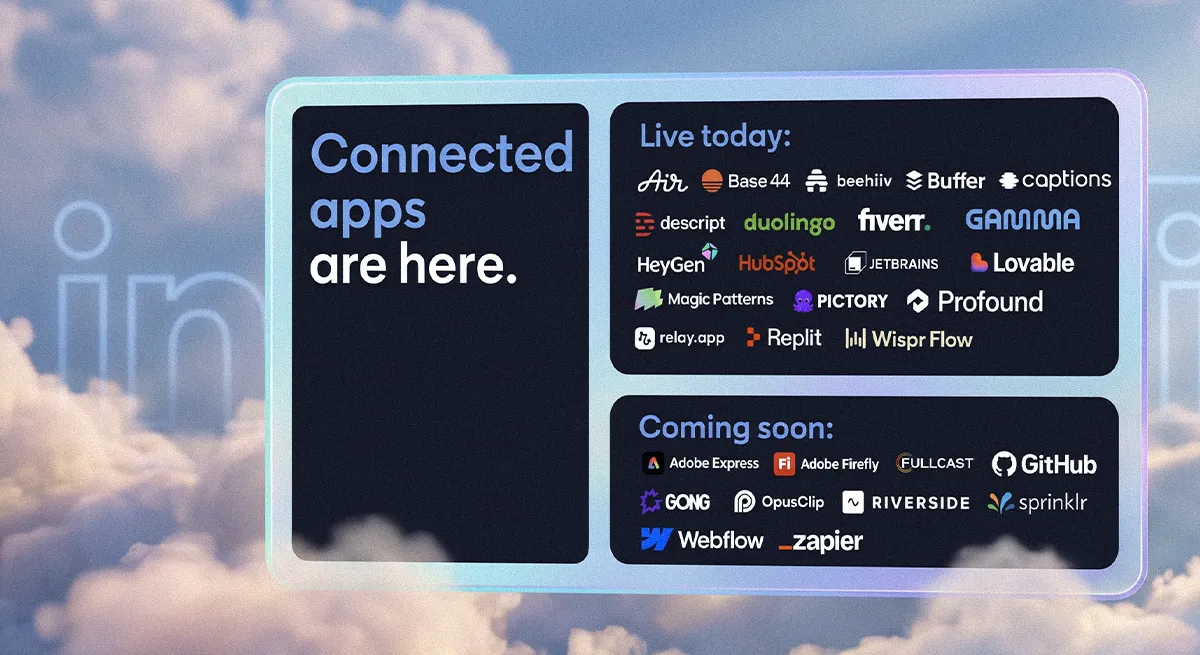
LinkedIn shipped another credibility product this morning, and anyone who has been reading us for the last few months can guess its shape before opening the press release. Connected Apps lets you link the software you use every day to your profile. Once you do, each app generates a short, specific description of how you actually use it, validated by the tool itself, refreshed as your usage changes, and marked with a "Top User" signal if you rank among the app's most active members.
We have spent a year arguing that LinkedIn is rebuilding itself around a single unit of value, the individual professional, verified. Company pages lost the algorithm. Follower counts stopped predicting reach. Individual profiles became the top AI citation source for B2B queries. Each of those shifts pushed credibility down to the person and made the profile the asset that compounds. Connected Apps is the most literal version of that thesis so far. It takes the oldest soft spot on the platform, the self-reported skills section, and replaces it with attestation from the software you claim to know.
What actually shipped
The mechanics are deliberately thin, which is becoming a LinkedIn signature. You connect an app. The app writes a statement based on your real activity, so instead of "uses HubSpot" you get something closer to "creates and sends segmented email campaigns in HubSpot's Marketing Hub." You cannot edit it. It updates as your usage evolves, and LinkedIn is careful to say it never sees your broader activity inside the tool. The descriptions appear in a new connected apps section on the profile, and heavy users get a "Top User" badge attached.
This builds on the earlier verified-skills work with Descript, Duolingo, Lovable, Relay.app, and Replit, and widens the roster of apps that can vouch for you. LinkedIn says more than a million members have already connected something. As with any platform reporting numbers about itself, the figure is best read as directional rather than audited, but the direction is the point.
The new part is not the badge. It is who holds the pen. For fifteen years your profile was a document you wrote about yourself, and everyone reading it discounted accordingly. Connected Apps makes the software vendor a co-author of your professional identity, producing copy you cannot touch. That changes what the profile is. A line you write is a claim. A line the tool writes is a receipt.
Why now: AI made the old profile worthless
The timing is not subtle. When anyone can have a model write a flawless skills section and three paragraphs of invented expertise in seconds, self-asserted competence carries almost no signal. The value of the standard LinkedIn profile fell the moment the entire workforce got the same writing assistant. LinkedIn's own framing acknowledges as much, noting that saying what you can do is easy while proving it has gotten harder.
So the company is doing what it usually does, moving the credibility goalposts to ground that is harder to fake. You can claim to be a power user of a tool. You cannot fake the tool agreeing with you in real time. Verified tool fluency becomes the resume line that matters precisely because the AI flood made every other line cheap.
The real customer is the brand
The brand angle is where this gets interesting. Read the launch as a member-credibility feature and it is tidy enough. Read it as a brand product, which is what it actually is, and the picture changes.
Dan Shapero said the quiet part in the announcement, noting that for the brands behind these tools, there is no better endorsement than a customer actively using and loving the product. That is not a line about members. It is a sales pitch for HubSpot, Replit, Duolingo, and every SaaS company LinkedIn wants to sign next.
Consider what each connected user represents from the vendor's side. They are a public, continuously updating testimonial built into profile infrastructure, rather than a one-time review that ages into irrelevance. They appear in search. They carry the credibility that LinkedIn spent two decades accumulating. And they cost the vendor nothing per impression. Word of mouth has always been the most trusted form of marketing and the hardest to manufacture at scale. LinkedIn turned it into a feature with a connection toggle and pointed the distribution at the one network where the audience is the buyer.
We made a similar observation about the Creator Marketplace last week. What LinkedIn sells is not reach but credibility, in the category where credibility still commands a premium. Connected Apps is the same trade pushed down to the software layer. The member thinks the feature decorates a profile. The vendor understands it as an advocacy engine.
The catch
None of this makes the product bad for members. Verified proof helps people stand out, and it helps hirers screen for tool fluency that used to stay invisible until the third week of onboarding. Three things still deserve a name before everyone rushes to connect every app they own.
The copy is not yours. A software company now writes a line about you that you cannot edit, on the profile that increasingly serves as your professional identity of record. That can be a fair trade for verification, but it is a trade, and the terms favor whoever holds the pen.
The "Top User" badge points an incentive back at you. A status signal that rewards heavy usage works, from the vendor's side, as a retention mechanic dressed as a credential. The behavior it encourages, using the partner tool more and more visibly to keep the badge, serves the brand rather than your career.
The credential map is not neutral either. Which apps can vouch for you depends on LinkedIn's partnership roster, not on an objective survey of the tools that matter in your field. A profile verified across the apps LinkedIn has deals with is a narrower thing than a profile verified across the tools of a trade. The privacy framing, the promise that LinkedIn does not see broader usage, is real and worth crediting, though it also reassures heavily around a feature whose whole purpose is to move private activity into a public signal.
Where this is headed
Connected Apps is one more brick in a wall LinkedIn has been building in the open, the verification layer for the knowledge-work economy. Verified skills, the creator marketplace, profiles outranking company pages in AI answers, and now software vendors certifying fluency all point at the same destination. LinkedIn wants to be the credential bureau for work, the ledger where claims become proof. In a period when anything assertable can be faked, owning the attestation layer is a strong position to hold.
Two moves will show how far the company intends to take it.
The first is whether this becomes pay to play. For now the partner roster looks curated and free. The moment featurable placement turns into something a SaaS company can buy, whether that means preferred surfacing, a richer card, or a sponsored Top User tier, Connected Apps stops being a credibility product and becomes an ad unit wearing one. Watch the roster, and watch how brands get onto it.
The second is whether it reaches AI tools. The most telling line on a 2027 profile probably will not be "uses HubSpot." It will be the agentic and AI-native tools, the coding assistants, the build platforms, the models, where fluency separates people in an AI-first workforce and where "I am good with it" cannot currently be verified. Lovable and Replit sit in the launch group already. That placement reads less like chance and more like the wedge.
LinkedIn reached this point by doing the unglamorous thing it always does. It found the place where everyone has to take a person's word for it, and it replaced the word with a receipt. The member gets a sharper profile. The vendor gets an endorsement that money cannot directly buy. And LinkedIn gets the one asset that grows more valuable as machines make everything else easy to fake, which is proof.

If this caught your attention, that’s not accidental.

The best editorial systems don’t happen by accident. Outlever builds them.
If this caught your attention, that’s not accidental.

The best editorial systems don’t happen by accident. Outlever builds them.
Come back for the reason it lands.
Subscribe for the kind of thinking that makes people stop, read and come back.