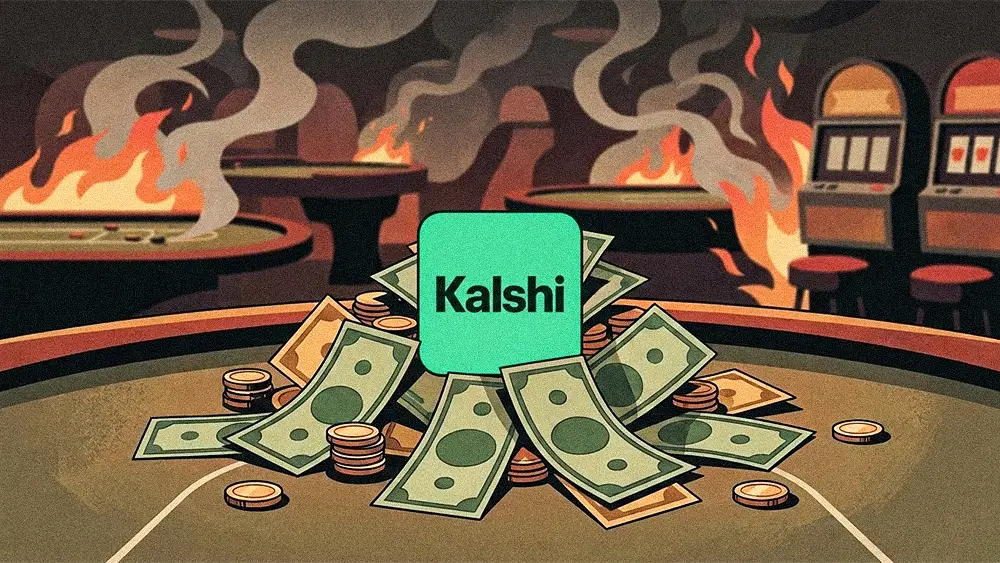
The AI ROI Paradox: Why More AI Spending Is Getting Harder to Justify
According to Jasper's 2026 State of AI in Marketing report, 91% of marketing teams now use AI in their work. That's near-total adoption. But only 41% of those teams can actually demonstrate a return on that investment.
Make State of Brand one of your go-to sources on Google

We've been tracking a number that should bother every B2B marketing leader reading this.
According to Jasper's 2026 State of AI in Marketing report, 91% of marketing teams now use AI in their work. That's near-total adoption. But only 41% of those teams can actually demonstrate a return on that investment, down from 49% the year before.
Usage went up. Provability went down. At The State of Brand, we think this disconnect is the defining tension in B2B marketing right now, and it's one that most teams are sleepwalking through.
Three Forces Broke Attribution at the Same Time
This didn't happen in a vacuum. Three things collided.
First, cookie deprecation gutted the tracking infrastructure that most B2B attribution models depended on. Cross-channel data has massive gaps now, and the stitching that made multi-touch attribution feel reliable is mostly guesswork at this point.
Second, AI-powered search broke organic attribution. Google AI Overviews, ChatGPT, Perplexity: they answer buyer questions without sending a click to your site. Impressions hold steady while clicks drop. When your best content drives a sale because a buyer read an AI-generated summary of it and never actually visited your page, your analytics captures exactly none of that.
Third, CFOs permanently raised the bar. The efficiency mandates of 2023 didn't fade. They became the new baseline. Boards expect marketing to prove its contribution to pipeline and closed revenue, not report on traffic and impressions. Visionary Marketing's 2026 B2B survey found that 68% of B2B marketers now call proving ROI their top challenge, up from 40% in 2023. A 28-point jump in three years.
The definition of "ROI" moved while marketers were still calibrating their AI tools.
The Efficiency Trap
The marketers who can prove AI ROI are mostly proving the easy stuff.
According to Jasper's report, the most common AI measurement is time saved. Reduced spend on outsourced vendors and agencies comes second (43%), followed by shortened campaign launch cycles (38%) and time saved in compliance reviews (34%). Among those who can quantify returns, the largest group reports 2 to 3x ROI, and the measurement frameworks mostly center on cost reduction.
Only 29% measure growth-oriented outcomes like lift in conversion or engagement. The harder, more valuable question, "did AI actually help us sell more?", remains mostly unanswered.
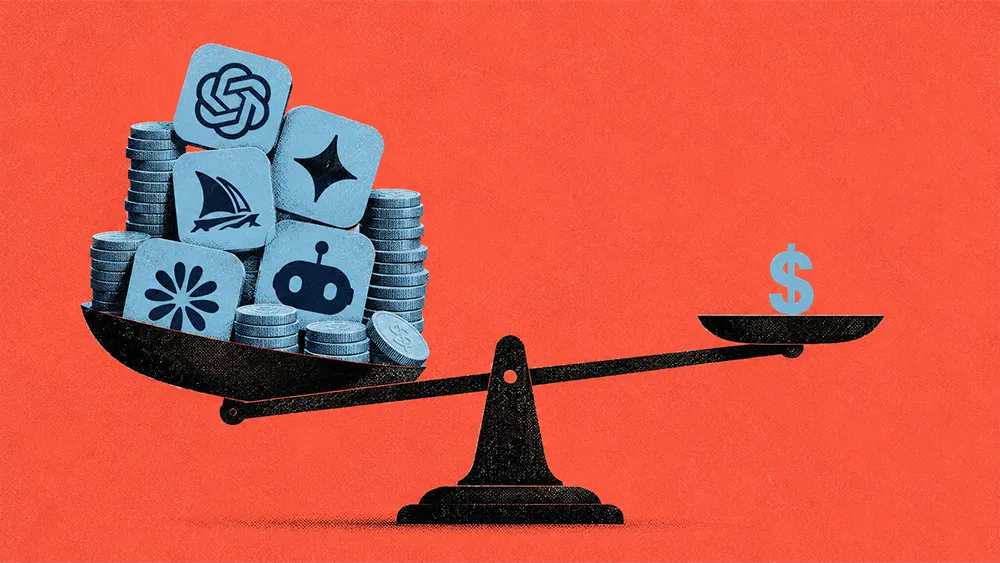
This creates a feedback loop we keep seeing in the brands we talk to. AI gets funded because it saves time. But time savings don't compound the way revenue growth does. You optimize every workflow, shave hours off every process, and eventually the CFO asks: so what did that get us?
Teams treating AI purely as a cost play will run out of costs to cut. Teams treating it as a growth engine need measurement infrastructure that, frankly, most organizations haven't built yet.
What the Top Performers Are Doing
Only about 6% of organizations qualify as "high performers" where AI meaningfully contributes to bottom-line results, per The Smarketers' analysis of adoption data. We've been studying what separates them from the rest, and the differences are less about technology and more about discipline.
They define success before deployment. Not "let's try AI and see what happens." A specific hypothesis: "AI-driven lead scoring will increase SQL-to-opportunity conversion by 15% within two quarters." Measurable, time-bound, tied to revenue.
They invest in the measurement layer first. Multi-touch attribution that accounts for AI-influenced touchpoints. Incrementality testing. Holdout groups. Tedious work, but it's the only way to isolate AI's impact from everything else happening at the same time.
They measure pipeline velocity, not just volume. How much faster do deals close when AI handles initial qualification? How much larger are deals when AI-driven personalization is part of the mix? Speed and deal size are where AI's compounding effects actually show up, and where most teams aren't looking.
They accept that some AI value is indirect. The content team producing 3x more thought leadership with AI isn't going to see that ROI in a dashboard next quarter. It shows up as brand lift, as visibility in AI-generated search results, as shorter sales cycles six months later. The best teams build qualitative measurement into their frameworks instead of pretending everything fits neatly into an attribution model.
The Real Risk
Forrester predicts that B2B companies will lose over $10 billion in 2026 because of ungoverned use of generative AI (per Affinco's B2B stats roundup). Not because AI doesn't work. Because it's being deployed without guardrails, measurement, or strategic intent.
At the same time, Jasper found that 95% of marketing teams plan to increase AI spend this year, with 35% planning increases of 20% or more. And 61% of B2B marketing organizations still have no formal guidelines for how AI tools should be used.
Budgets are rising. Proof is declining. Governance barely exists. That trajectory ends one of two ways. Either marketing teams build the measurement infrastructure to tie AI to growth, not just efficiency, or CFOs start treating AI budgets the way they treated social media spending circa 2015: nice to have, first to get cut.
Our Take
At The State of Brand, we've said it before and we'll keep saying it: AI works. The data supports that. But "works" and "provably works" are two different things, and the gap between them is getting wider, not narrower.
The B2B marketers who come out ahead aren't the ones deploying the most AI. They're the ones who can draw a clear, defensible line from AI investment to revenue growth, and who started building that measurement capability before the CFO came asking for it.
If your team can't do that today, the clock is ticking.

If this caught your attention, that’s not accidental.

The best editorial systems don’t happen by accident. Outlever builds them.

If this caught your attention, that’s not accidental.

The best editorial systems don’t happen by accident. Outlever builds them.


Come back for the reason it lands.
Subscribe for the kind of thinking that makes people stop, read and come back.